

Desk shopping sounds simple until you start comparing measurements and realize every listing has a different number. That’s where an ideal vs standard desk size comparison actually helps. Standard desks are built to common manufactured dimensions, usually 24 to 30 inches deep and 40 to 60 inches wide, while your ideal desk size is based on your height, your workspace, and how you use the desk day to day. Knowing the difference helps you shop smarter instead of just grabbing whatever’s popular.
Key Takeaways:
- Ideal vs. standard desk sizes differ in that standard desks follow common dimensions suitable for most users, while ideal desk sizes are tailored to fit a person’s specific needs, body type, and workspace setup.
- Proper desk dimensions and adjustable height ranges prevent physical strain by keeping your elbows at a comfortable 90-degree angle and maintaining correct monitor viewing distances.
- Your choice of desk size should be dictated by your specific equipment and tasks, ranging from compact laptop setups to spacious dual-monitor workstations.
What Is a Standard Desk Size?
When furniture brands say “standard,” they’re talking about sizes that fit most people and most rooms without much fuss. These dimensions come from decades of ergonomic research and manufacturing habits, so they’re more about a safe average.
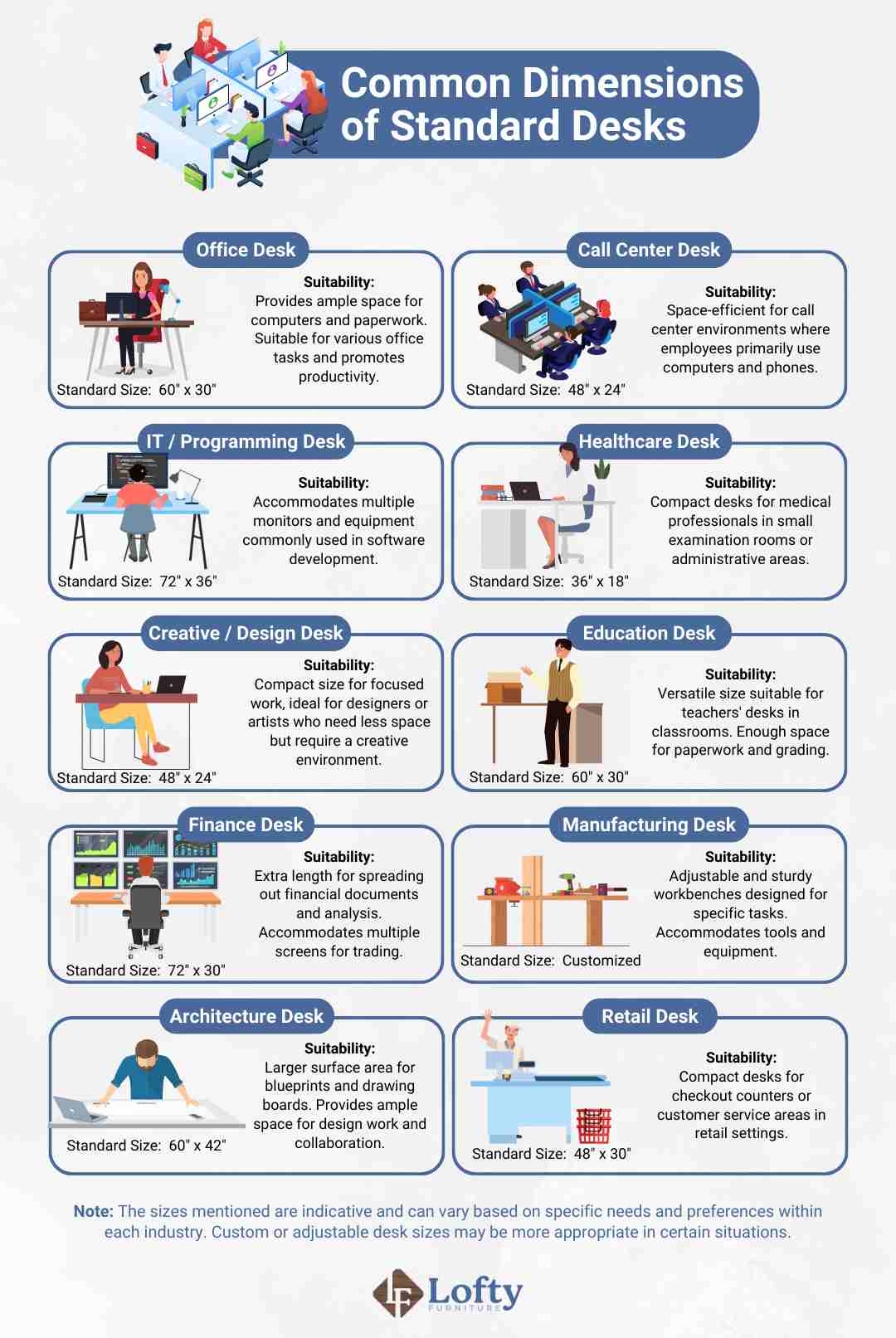
Most standard desks land somewhere between 24 and 30 inches deep and 40 to 60 inches wide, with a height around 28 to 30 inches. That range covers everything from compact writing desks to larger executive setups. But “standard” isn’t one fixed number, it shifts depending on the type of desk you’re looking at.
Here’s how those dimensions typically break down across different desk styles.
What Is an Ideal Desk Size?
The word “ideal” is often used as if one desk size works for everyone, but the right desk depends on your height, monitor setup, and how you work each day. Standard desk dimensions are only a starting point.
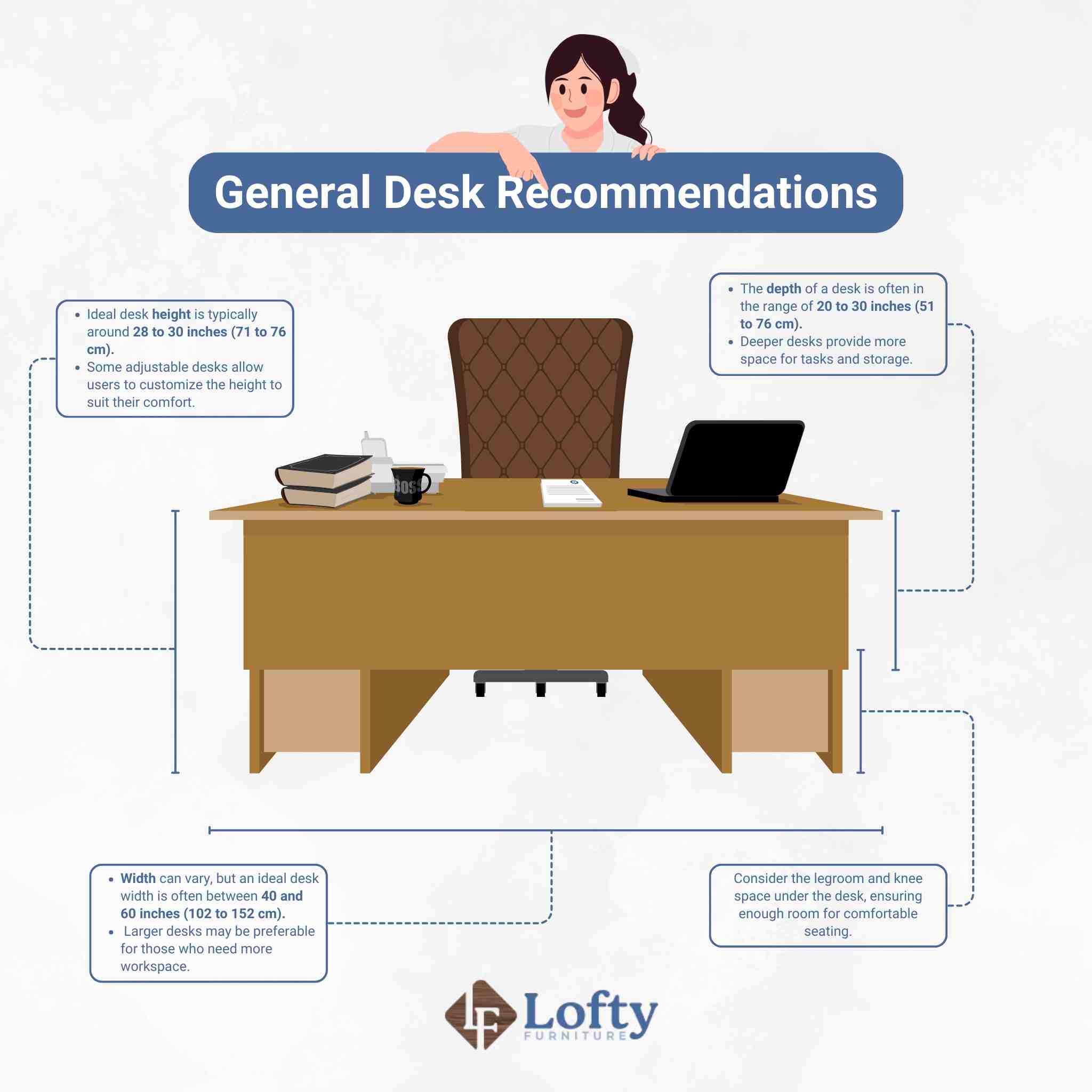
Desk depth should be chosen based on your monitor distance. A monitor should usually sit 20-30 in (50-76 cm) from your eyes, so a deeper desk is often necessary for larger screens.
Desk width should match your workflow. The goal is to have enough clear surface area that your keyboard, mouse, and daily work materials can remain in place without feeling crowded. A useful rule is to leave at least 8-12 in (20-30 cm) of clear space on both sides of your keyboard area.
If you switch between sitting and standing, prioritize an adjustable desk with a range of roughly 22-48 in (56-122 cm). That range fits most adults and is far more versatile than a fixed-height desk.
What are The Benefits of Having Ideal Desks?
Compared with a one-size-fits-all standard desk, an ideal desk is designed around your body, equipment, and work habits. The benefits include:
Higher productivity: When your monitor, keyboard, mouse, and work materials are positioned within easy reach, you spend less time adjusting your setup and more time focused on your tasks.
Better customization: You can choose the surface size, storage layout, and features that match your workflow, whether that means extra space for multiple monitors, creative tools, or organized document storage.
Improved ergonomics: Proper desk height and ergonomic accessories such as monitor stands, keyboard trays, and desk mats help support better posture and reduce strain on the neck, shoulders, wrists, and back.
Greater comfort during long work sessions: A desk that fits your height and seating position allows your arms, legs, and feet to rest naturally, making extended periods of work more comfortable.
What Determines the Ideal Desk Size?
A few key factors decide what actually fits for you, and once you know them, picking a desk gets a lot easier.

Your Height and Ergonomics
Your height determines how high your desk should sit and how your arms and eyes line up with your screen. Taller people usually need a higher desk surface to avoid hunching, while shorter people need a lower one to keep their shoulders relaxed. Elbows should rest at roughly a 90 degree angle when typing. Get this wrong and you’re looking at neck strain or wrist pain down the line.
Type of Work You Do
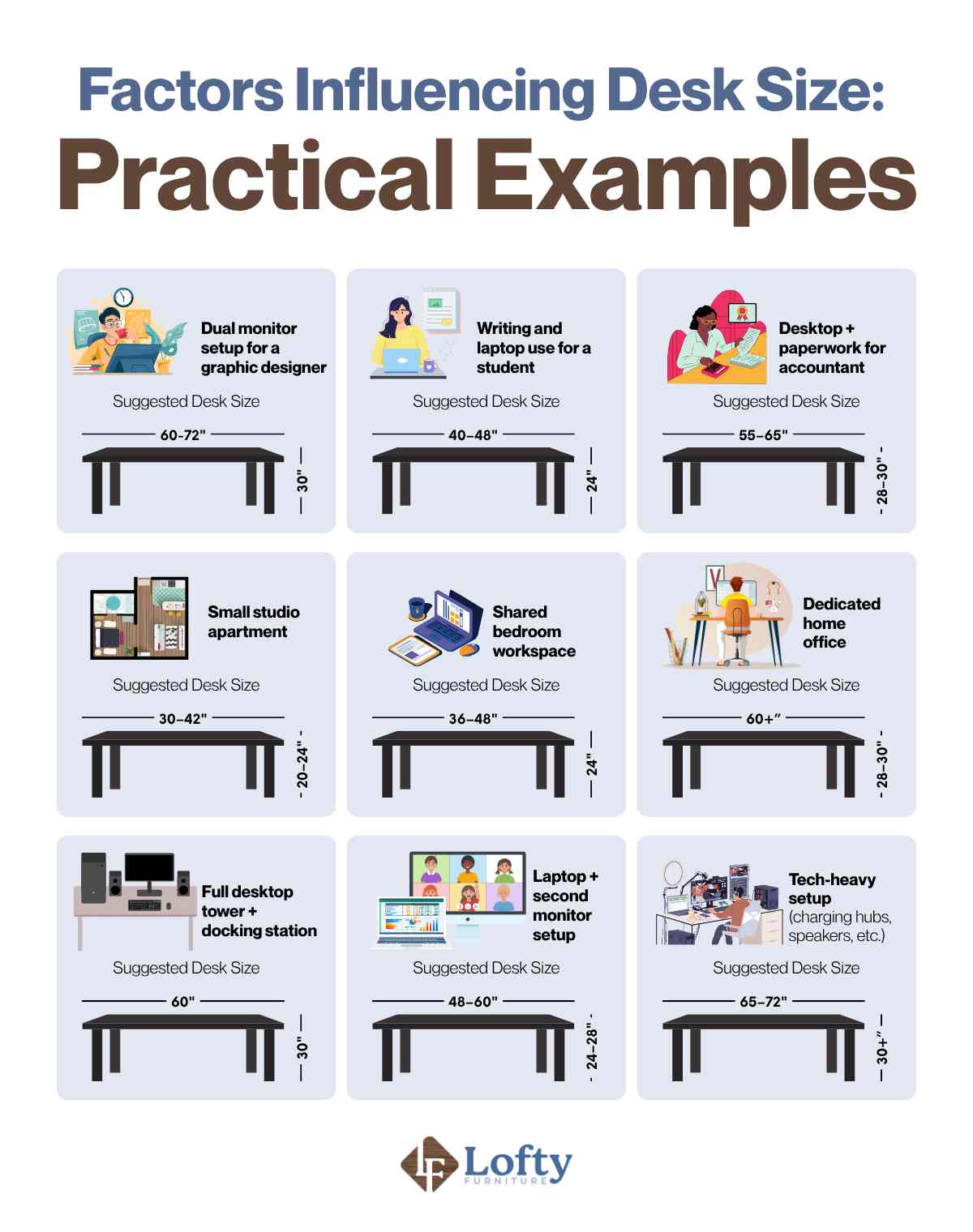
Someone who just needs space for a laptop has very different needs than someone juggling design work, paperwork, or multiple screens. Writers and students often do fine with smaller desks. Designers, gamers, and multitaskers usually need more surface area and depth to spread out comfortably. Your daily tasks should shape the size, not the other way around.
Equipment You’ll Place on the Desk
A single monitor setup takes up far less room than a dual monitor rig, a desktop tower, speakers, and a printer. The more gear you use daily, the more width and depth you’ll need to avoid clutter. It also helps to think about cable management space, since cramped setups get messy fast. Measuring your equipment first saves you from buying a desk that looks fine empty but crowded once it’s actually in use.
Available Room Space
Even the perfect desk size on paper won’t work if it doesn’t fit your room. Measure the space you have, including walkways and door swing, before buying a specific size. Corner desks, compact desks, and standing desks all solve space issues differently. The goal is a desk that fits your room without making it feel cramped or blocking movement.
Standard vs Ideal Desk Size: Side-by-Side Comparison
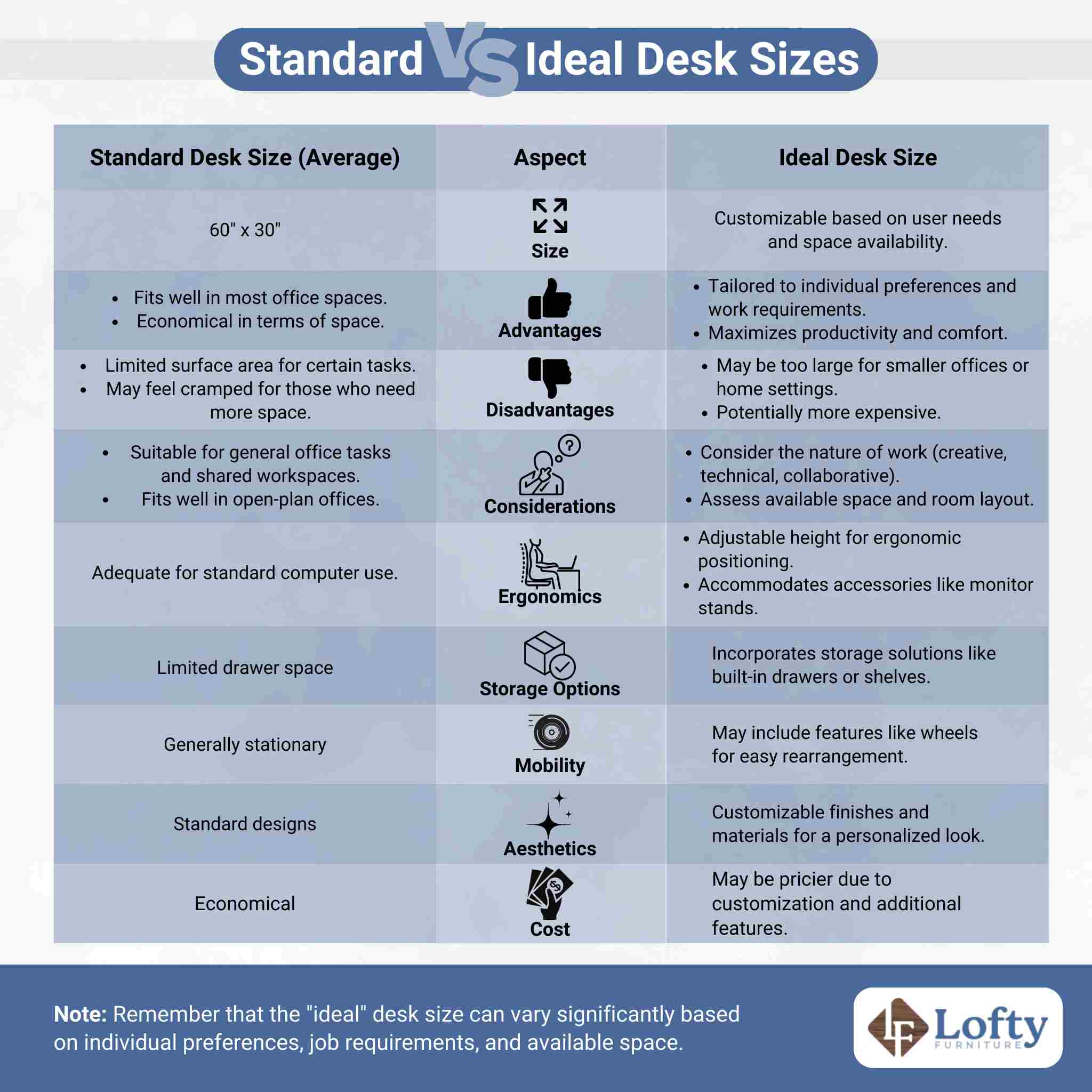
When comparing the standard and ideal desk sizes, it is important to note their significant differences. Industry standards often determine standard desk dimensions and tend to be more generic in nature. On the other hand, ideal desk sizes consider ergonomic design principles that prioritize comfort and productivity.
Ready to combine timeless craftsmanship with personalized comfort? Explore our collection of Amish adjustable desks to find a desk that perfectly matches your ideal size requirements.
Finding Your Fit: Ideal vs Standard Desk Size
Choosing the right desk is not simply about following a standard measurement. The best desk is one that fits your height, supports your daily tasks, and feels comfortable from the first hour of work to the last. Standard dimensions can be a helpful starting point, but an ideal desk takes into account your posture, monitor setup, available space, and long-term work habits.
If you are looking for a desk that combines ergonomic flexibility with lasting craftsmanship, explore Lofty Furniture’s collection of Amish-made desks and height-adjustable workstations. Remember, finding the perfect desk size is like finding the perfect pair of shoes. It should fit just right and make you feel comfortable throughout your workday.ks that offer adjustable features such as height, tilt, and storage solutions. These ergonomic adjustments can greatly enhance your working experience by allowing you to customize the desk to your needs.
Frequently Asked Questions
Are standing desks considered ‘ideal’ or ‘standard’ sizes?
Standing desks don’t fall neatly into either category. Many come with standard width and depth measurements, but their height adjustability and modular features push them closer to the “ideal” category, especially when tailored to individual needs.
Can I modify a standard desk to make it more ergonomic?
Yes, absolutely. You can improve the ergonomics of a standard desk with simple upgrades like a monitor riser, an adjustable chair, a keyboard tray, or a footrest.
What’s the best desk size for a dual monitor setup?
For a dual monitor setup, a desk width of at least 55 to 60 inches (140 to 150 cm) is recommended. This allows enough horizontal space for both screens without crowding, and leaves room for peripherals like a keyboard, mouse, and note-taking space. A depth of 28 to 30 inches (71 to 76 cm) also helps maintain proper viewing distance and posture.
How much desk space do I need if I mostly use a laptop?
If you’re primarily working on a laptop, a smaller desk with around 36 to 48 inches wide and 24 inches deep can be more than enough. Just make sure there’s still space for comfortable hand placement, any external devices, and accessories like a lamp or notebook.