
Choosing a chair for long work or gaming sessions isn’t about which one looks best. For long hours, an ergonomic chair is usually the better buy; it’s built around posture, adjustability, and support, while most gaming chairs prioritize a racing-inspired look. But gaming chairs aren’t a waste of money; the right pick depends on how many hours you sit and what your body needs.
Key Takeaways:
- An ergonomic chair focuses on spinal health and adjustability, whereas a gaming chair prioritizes aesthetics and flat-recline relaxation.
- The main differences come down to four things: design, adjustability, seat comfort, and cost — and the price ranges overlap more than people expect.
- Regardless of type, look for a chair with crucial adjustments (height, depth, lumbar, armrests) and breathable materials that fit your body to prevent pain.
Why the Chair You Sit in All Day Really Matters
Since remote work took off, people are sitting more than ever. A University of Vic study found that on the days they work from home, hybrid workers sit for 6.68 hours out of an 8.07-hour day — often in stretches longer than an hour at a time. [link to UVic study]
That matters because prolonged sitting in poor posture is linked to real long-term risks, including heart disease, type 2 diabetes, and weight gain. The chair you spend those hours in is doing more for your health than most people assume.
Ergonomic Office Chair: An Overview
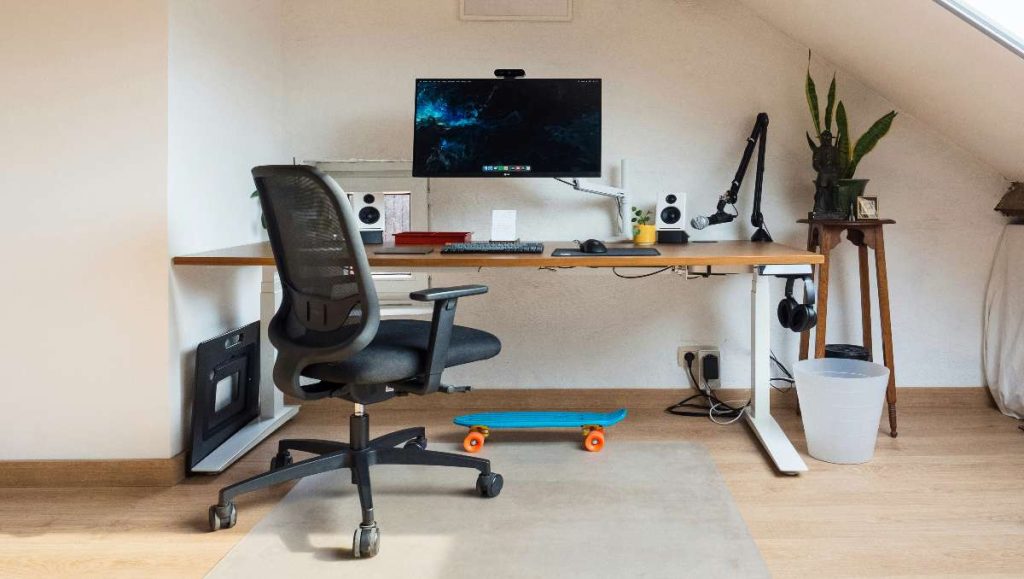
Ergonomics is about designing a chair that works *for you*, not forcing you to fit the chair. A good ergonomic office chair supports your body’s natural posture, especially your spine’s curve, even during long hours of sitting. It gives you options to adjust things like seat height and depth, lumbar support, backrest tilt, and armrest position. Plus, materials like breathable mesh help keep you cool and comfortable all day. All these features add up to less pain in your back, neck, and shoulders, better circulation, and less fatigue overall.
Need the ultimate support for those marathon work or gaming sessions? Upgrade to a premium ergonomic computer chair designed for long-lasting comfort and productivity today!
A Look at The Gaming Chair
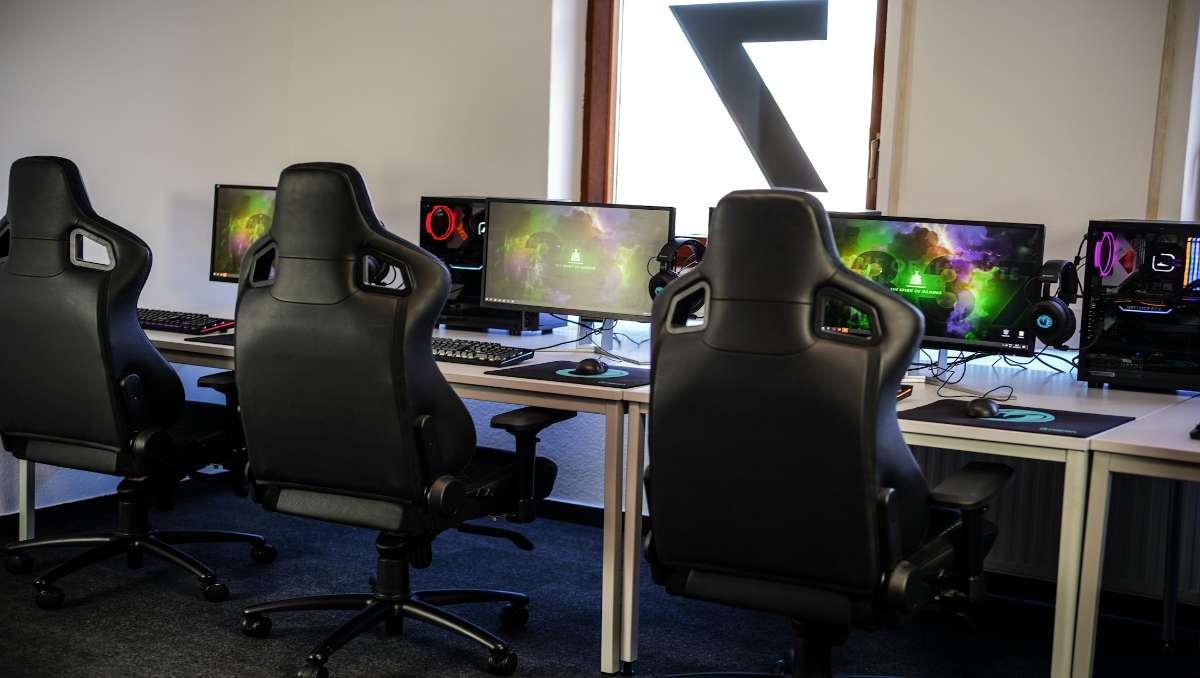
Gaming chairs come straight from the world of racing and immersive gaming experiences. Their high backs, winged shoulders, and bright colors are inspired by racing car seats. For gamers, that means a chair that looks bold and aggressive, making you feel fully locked into the action.
Gaming chairs usually feature a high backrest with a bucket seat design, removable lumbar and headrest pillows, the ability to recline way back, and armrests that adjust in multiple directions. Most gaming chairs use PU leather because it looks sharp and is easy to clean after long sessions.
Ergonomic vs. Gaming Chair: Head-to-Head Comparison
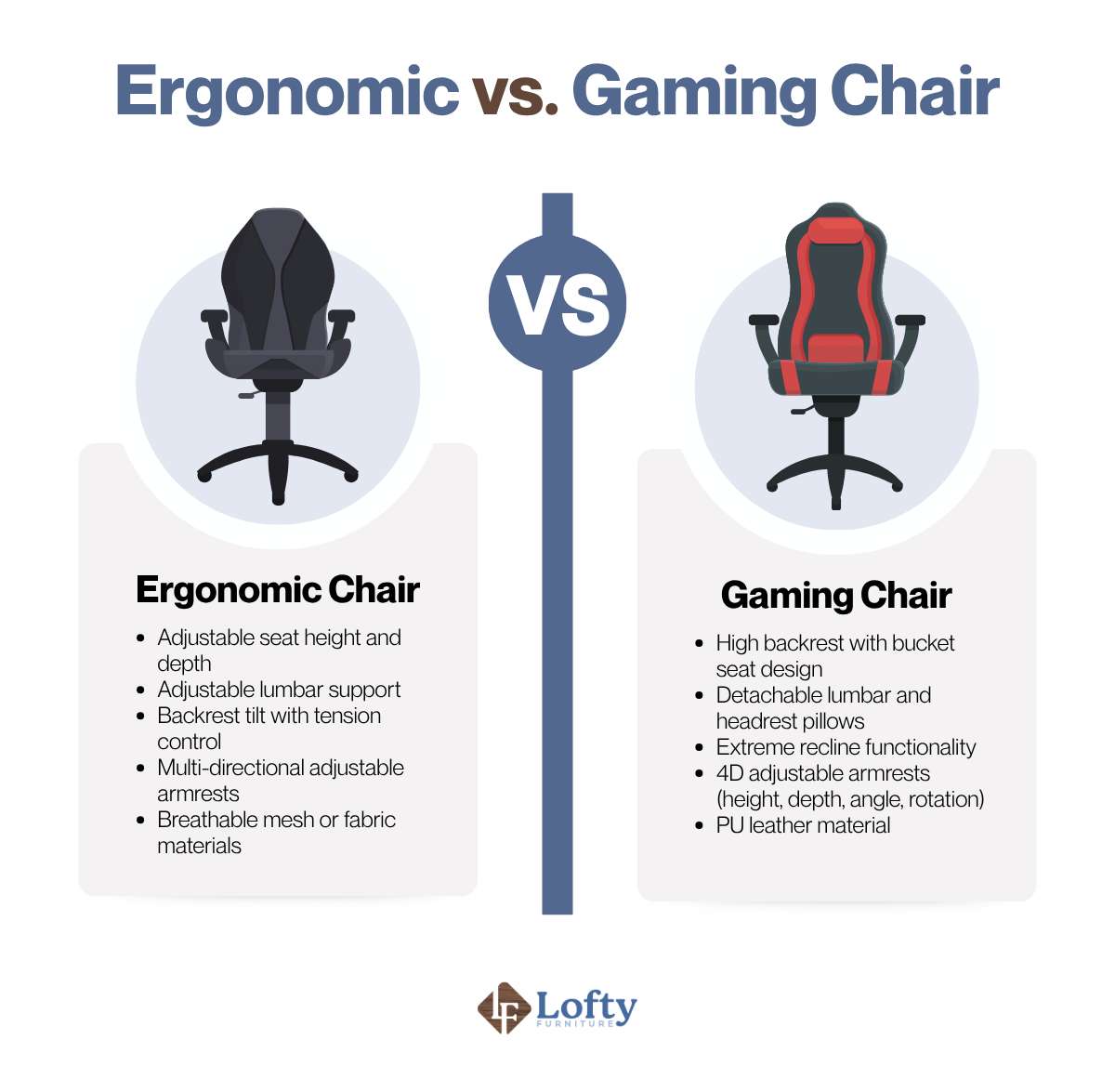
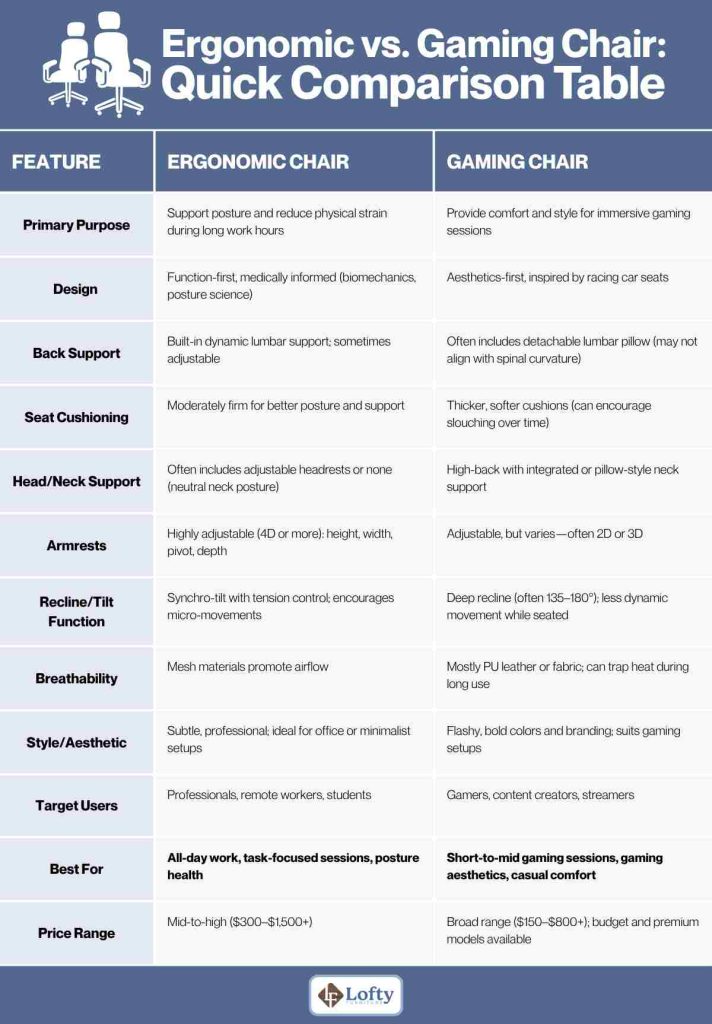
For long hours, you should go with an ergonomic office chair because it provides better support, comfort, and long-term health benefits. Gaming chairs often don’t offer the precise adjustments or ergonomic features needed to keep you comfortable and healthy during extended sitting sessions.
Design
The visible difference is build philosophy. Ergonomic chairs use a profiled backrest that follows the spine and often a breathable mesh back; the shape is dictated by posture science. Gaming chairs use a flat, high “bucket” back borrowed from racing seats — great for a locked-in feel, but the straight back and side bolsters can fight your natural posture over a long day. Neither is objectively “better looking”; they’re solving different problems. If the chair lives in a shared home office, the ergonomic look also blends in better than a racing seat.
Support and Ergonomic Adjustability
This is where ergonomic chairs really stand out for long hours. They offer a wide range of adjustments, and many even have tilt mechanisms that keep you moving and prevent pressure from building up. Gaming chairs usually have a high back and can recline, but their ergonomic features and adjustability tend to be more limited.
Seat Comfort, Posture, and Pressure Distribution
Ergonomic chairs are designed with varied densities of foam or suspension systems to evenly distribute weight. Gaming chairs, with their often plush padding and bucket-seat design, can feel immediately comfortable but may restrict movement and contribute to pressure points over time, especially for wider individuals.
Cost
Cost varies widely in both categories, and the ranges overlap more than most people expect. Entry-level gaming chairs run about $150–$300; mid-range models with better materials land around $400–$600. Ergonomic chairs aren’t all in luxury territory — solid entry and mid-range ergonomic chairs sit around $250–$600, right on top of the gaming range — while premium ergonomic models (think Herman Miller, Steelcase) start near $1,000 and climb from there.
How to Choose a Chair for Long Hours of Sitting
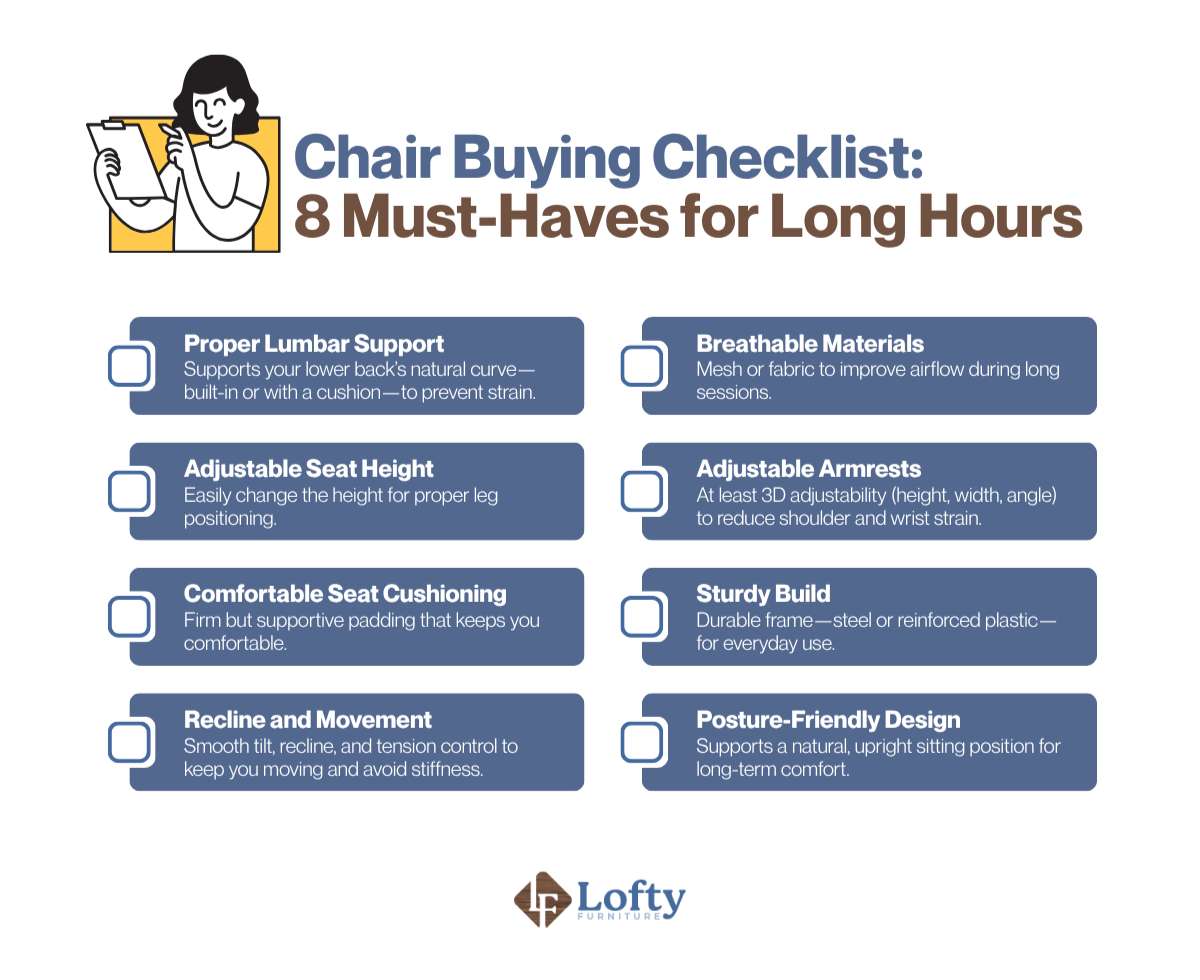
Regardless of whether you lean towards the ergonomic office chair or the gaming chair aesthetic, certain features are non-negotiable if you truly intend to spend long hours seated comfortably and safely. At the top of this list is adjustability. A quality chair for extended use must offer comprehensive adjustments for seat height and precise control over backrest tilt and tension. Crucially, lumbar support is paramount; whether integrated and adjustable or provided by a very effective and customizable pillow.
Beyond adjustability, consider the materials and overall construction of the chair. For long hours, breathability is key. Look for mesh backs or breathable fabrics to prevent heat and moisture buildup. Finally, fit matters most: a chair loaded with features is useless if it’s not proportioned to your height and weight. A chair, no matter how many features it boasts, is only effective if it’s proportionate to your height and weight.
Final Verdict: Which Chair Should You Really Buy for Long Hours?
If you sit for 8+ hours a day, whether working, gaming, or both, prioritize the ergonomic features over the aesthetic. Casual users or those who value deep recline and style may still get plenty of value from a well-built gaming chair. Either way, the best chair is the one that fits your body and encourages you to move throughout the day, not just sit still in it.
At Lofty Furniture, we design our ergonomic chairs around exactly this principle; real adjustability and lumbar support built for people who spend their day at a desk. If you’re ready to stop choosing between comfort and productivity, explore our modern ergonomic chairs and see the difference proper ergonomics makes.
Frequently Asked Questions
Is a gaming chair or ergonomic chair better for lower back pain?
For existing lower back pain, an ergonomic chair with adjustable lumbar support is usually the safer choice, because you can dial the support to your spine rather than relying on a fixed pillow. If you already own a gaming chair, position its lumbar cushion at your natural curve and take a movement break every 30–60 minutes.
Can an ergonomic office chair be used effectively for gaming?
Absolutely. In fact, many streamers and pro gamers use ergonomic chairs because they’re built for posture and long-term comfort. While they may lack the “gamer” aesthetic, they often provide better support during extended play sessions.
What are the disadvantages of ergonomic chairs?
Ergonomic chairs can be more expensive than standard office or gaming chairs, especially models with advanced adjustments. They also have a learning curve, since you’ll need to properly adjust the seat height, lumbar support, armrests, and recline to get the full ergonomic benefits.
How many hours can you comfortably sit in an ergonomic chair?
A well-adjusted ergonomic chair is designed to support comfortable sitting for 6 to 8 hours or more, making it suitable for full workdays. However, no chair eliminates the need for movement, so it’s still recommended to stand up, stretch, or walk for a few minutes every 30 to 60 minutes to reduce stiffness and improve circulation.