

If your shoulders feel tense after a few hours at your computer, your desk height might be the problem. Many people assume neck stiffness or shoulder fatigue comes from long workdays, but the real issue is often your desk being too high for your body. When a desk sits higher than your natural elbow position, your shoulders are forced to lift and your wrists bend upward while typing. These small posture changes may seem harmless at first, but over time they can place constant strain on your neck, shoulders, back, and wrists.
Key Takeaways:
- The correct desk height is usually at elbow level when seated, which keeps shoulders relaxed and wrists neutral.
- Poor desk height can contribute to neck pain, rib pain, shoulder tension, and repetitive strain injuries.
- Aligning your desk height with elbow level improves posture and reduces long-term ergonomic risk.
In this guide, we’ll explain the signs your desk is too high, the potential health effects, and how to adjust your workstation for better ergonomics and comfort.
Why Desk Height Matters for Ergonomics

Desk height plays a major role in maintaining proper posture during computer work. Even small differences in workstation height can affect how your muscles and joints behave throughout the day. Ergonomic research consistently shows that workstation design strongly influences comfort. According to occupational health research, awkward postures such as raised shoulders and bent wrists are among the leading contributors to work-related musculoskeletal disorders.
As Daniel Cham, MD, Physician, explains:
“Desk height is fundamental to ergonomics because it directly affects shoulder position, wrist alignment, spinal posture, and overall musculoskeletal strain during prolonged work.”
Common Signs Your Desk Is Too High
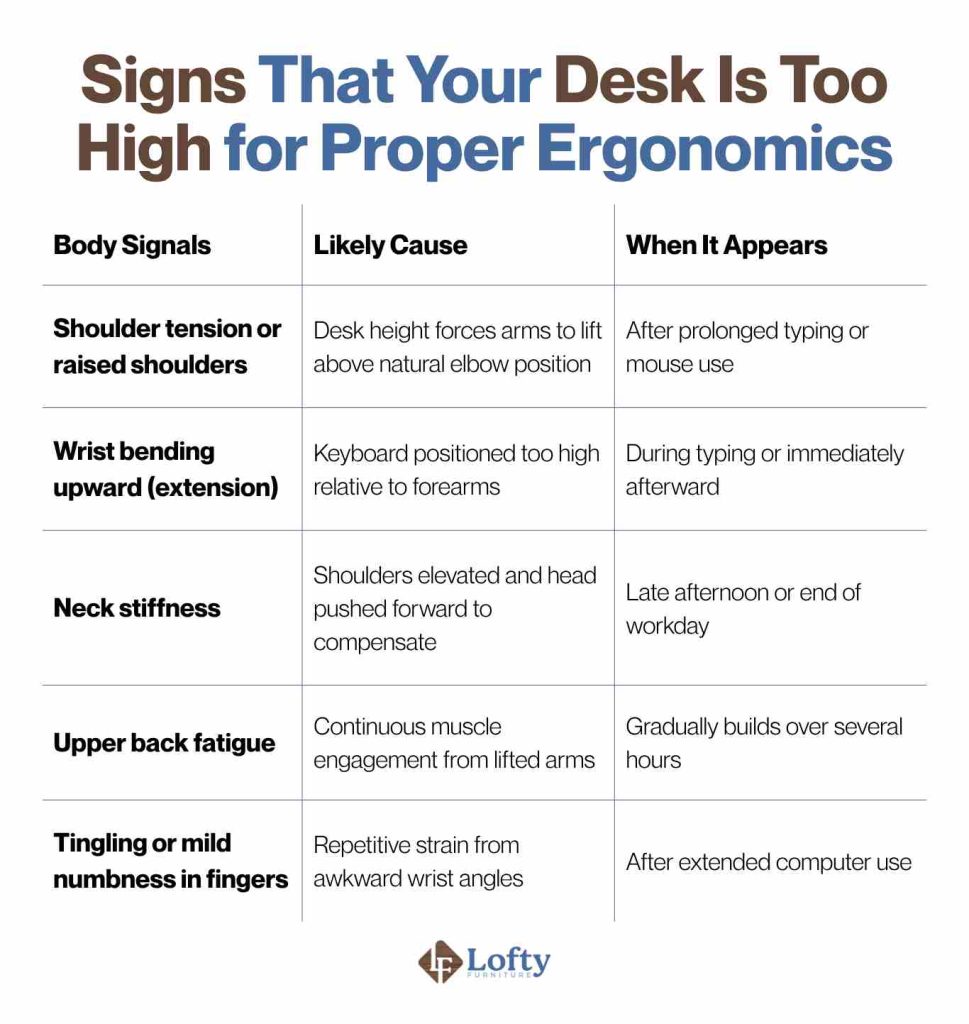
One of the clearest indicators of incorrect desk height is persistent tension in the shoulders or upper back. When your arms must reach upward to type or use a mouse, the trapezius muscles remain slightly engaged for hours at a time. The same review from occupational health researchers found that more than half of computer users report neck, shoulder, or wrist discomfort related to workstation or desk set up.
According to Priyank Patel, D.C., a Doctor of Chiropractic at Brooklyn Chiropractic Care:
“Shoulder shrugging is the most reliable sign. If someone took a photo of you sitting at your desk right now, would your shoulders be level and relaxed, or would they be slightly elevated as if you’re subtly shrugging?”
If you’re unsure whether your desk height is correct, look for these common warning signs.
Long-Term Health Risks of a Desk That Is Too High
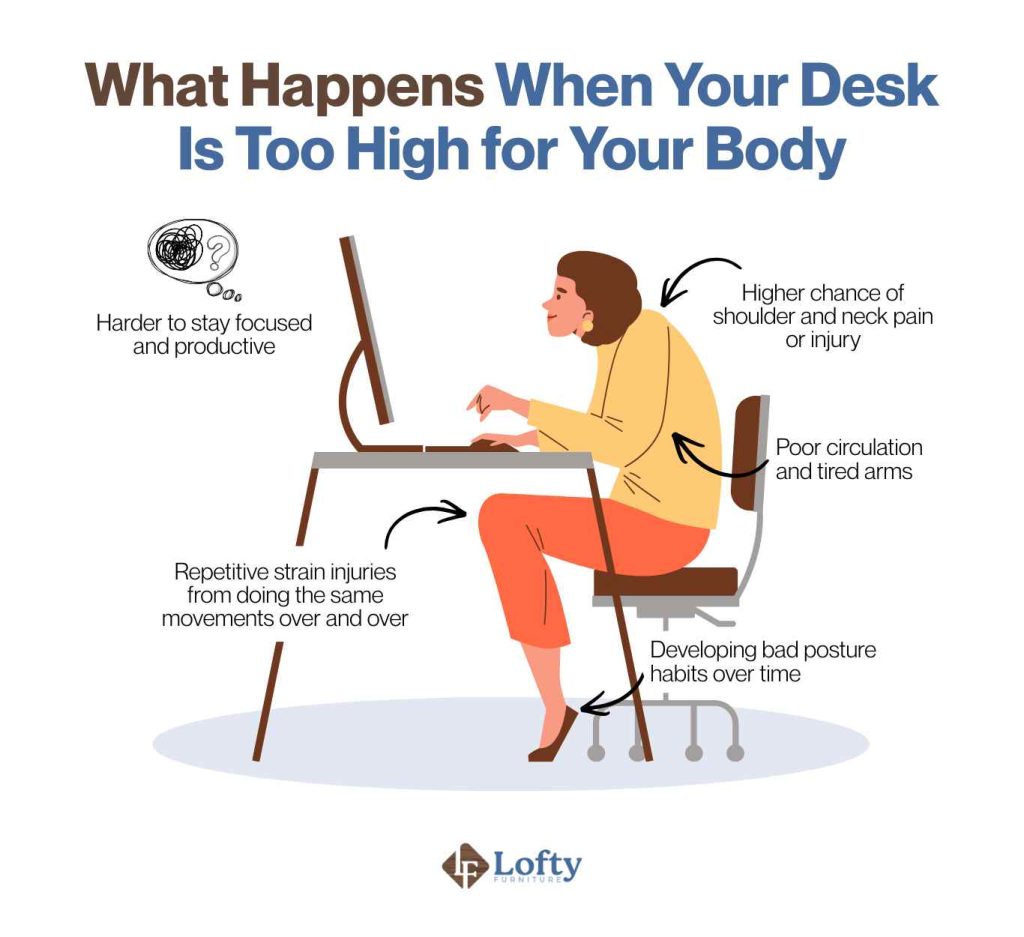
Occasional discomfort from a poorly adjusted workstation may seem minor. However, when a desk that is too high becomes part of your daily routine, the strain can accumulate over time.
Below are some of the most common long-term effects.
1. Increased Risk of Shoulder and Neck Injuries
When a desk sits above elbow height, your shoulders remain slightly elevated throughout the workday. This constant muscle activation places additional stress on the neck and shoulder region.
Research has linked sustained elevated shoulder posture with a higher risk of musculoskeletal disorders among computer users. Dr. Patel explains the biomechanical consequences:
“A head positioned three inches forward puts the equivalent of 42 pounds of force on your neck instead of the normal 10–12 pounds. That constant loading accelerates disc wear and can contribute to disc herniation over time.”

2. Development of Repetitive Strain Injuries (RSI)
A desk that is too high often forces your wrists to bend upward during typing, which can lead to repetitive strain injuries over time. These may include wrist tendon irritation, nerve compression, reduced grip strength, and carpal tunnel syndrome.
3. Circulation Issues and Arm Fatigue
Holding your arms slightly elevated for long periods keeps the shoulder and upper arm muscles constantly engaged, which can restrict blood flow and cause faster fatigue. Over time, this may lead to heavy arms, tingling, or mild numbness in the hands.
Dr. Joseph Nicola, D.C., owner of NuSpine Chiropractic, explains that posture-related imbalance can affect more than just muscles, noting that it may reduce oxygen intake, increase fatigue, and eventually contribute to joint stiffness, disc degeneration, and chronic inflammation.
4. Reduced Productivity and Focus
Physical discomfort can reduce mental performance by shifting attention away from tasks. Muscle strain, fatigue, and poor workstation design, even something as simple as incorrect desk height, can gradually lower focus and efficiency.
5. Poor Long-Term Posture Habits
A desk that is too high can lead to lasting posture issues. Over time, the body adapts to awkward positions, causing problems like raised shoulders, forward head posture, and a rounded upper back that become harder to correct.
What Is the Correct Desk Height for Proper Ergonomics?
The correct desk height allows your arms to rest naturally while keeping your shoulders relaxed and your wrists neutral. In most ergonomic setups:
- Elbows remain close to a 90-degree angle
- Forearms stay parallel to the floor
- Wrists remain straight while typing
A simple ergonomic rule is:
Desk height should roughly match your elbow height when seated, with your forearms parallel to the floor and your shoulders relaxed.
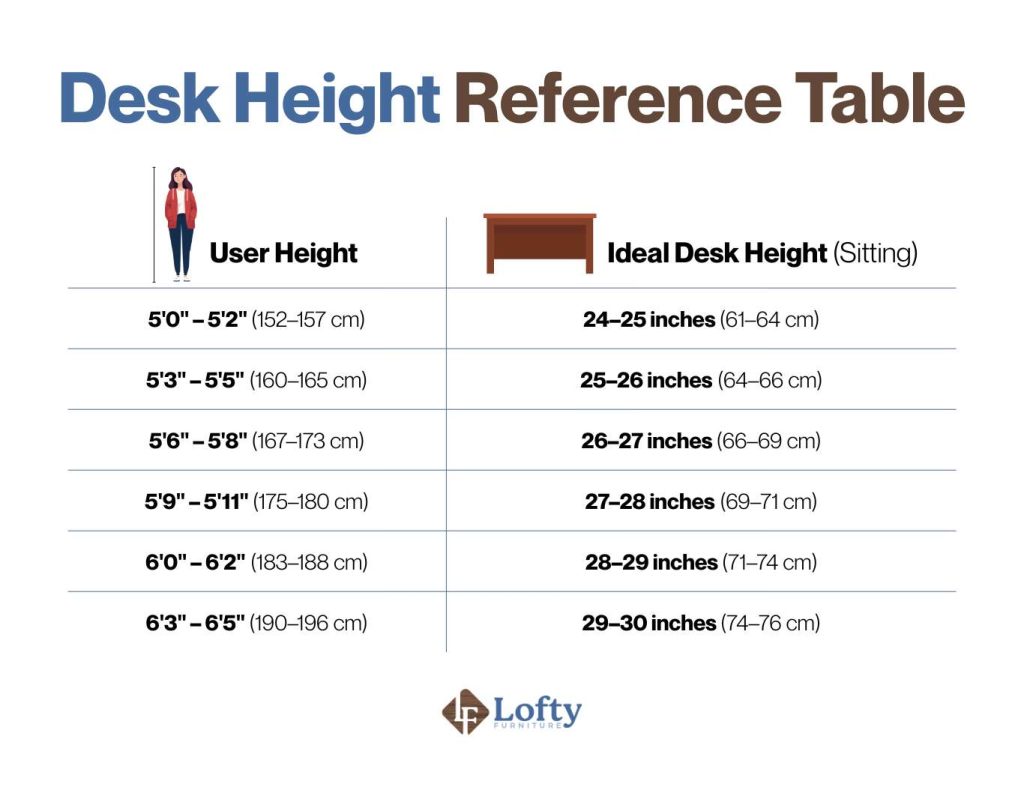
For most adults, standard desks are around 28–30 inches (71–76 cm) high. This works well for individuals roughly between 5’8″ and 5’10”, but ideal height varies depending on chair height, arm length, and posture. Because body proportions vary, elbow alignment is usually a better guideline than fixed measurements.
How to Fix a Desk That Is Too High
If your desk is too high causing discomfort, the good news is that it’s often fixable without replacing your entire workstation. Below are several practical ways to adjust your setup and create a more ergonomic workspace.
1. Adjust Your Chair Height
One of the quickest ways to deal with a desk that is too high is to raise your chair so that your elbows align more naturally with the desk surface. Use the desk height reference table above as a starting guide. Adjust your chair until your elbows align with the recommended desk height range for your body.
2. Use a Footrest
When you raise your chair to compensate for a desk too high, your feet may start to dangle. This can put pressure on the underside of your thighs and reduce circulation in your lower legs. A footrest solves this problem by supporting your feet and maintaining proper leg posture. Ideally, your knees should remain at roughly a 90-degree angle with your feet resting comfortably on a stable surface.
3. Switch to an Adjustable Desk
If your current workstation constantly feels uncomfortable, switching to an adjustable desk can be a long-term solution. Many modern sit-stand desks provide the added benefit of alternating between sitting and standing throughout the day. Dr. Patel recommends combining desk adjustments with supportive accessories:
“If you have a height-adjustable desk, bring it down until your elbows relax. If it’s fixed, raise your chair and add a footrest to keep your feet flat. You can also add an under-desk keyboard tray that drops your typing surface 3–5 inches below the desk level.”
4. Utilize Keyboard Trays and Ergonomic Accessories
Another effective way to correct a desk too high without replacing the desk itself is by using a keyboard tray or ergonomic accessories. A keyboard tray mounted under the desk allows you to lower your typing surface while keeping the main desk height unchanged. Other helpful accessories include ergonomic keyboards, wrist rests, and adjustable monitor arms.
If your current setup leaves your shoulders cramped, upgrading to an L-shaped lift desk offers the ergonomic range needed to find your perfect typing height.
When You Should Consider Replacing Your Desk

Sometimes adjustments just are not enough to fix the problem. If your desk is much higher than what your body needs, you may end up relying on workarounds like raising your chair, stacking thick footrests, or lowering your keyboard tray just to feel comfortable.
If you still feel discomfort after trying several adjustments, it may mean your desk simply is not the right fit for you. In that case, replacing it with a more ergonomic desk can be the more practical option. A properly sized desk allows your workspace to match your body naturally and helps prevent strain over time.
You might also like: Our guide on requesting a doctors note for a standing desk.
Conclusion: The Hidden Impact of a Desk That’s Too High
A desk that does not match your body can quietly affect your comfort, posture, and productivity throughout the day. When a desk is too high, your shoulders lift and your wrists bend upward while typing. These subtle adjustments may seem minor, but over time they can lead to muscle strain, fatigue, and reduced focus.
The good news is that desk height problems are often easy to fix. Simple changes, such as raising your chair, adding a footrest, installing a keyboard tray, or switching to an adjustable desk, can help restore proper alignment. By adjusting your workstation to fit your body rather than forcing your body to adapt to the desk, you can create a workspace that supports both long-term health and daily comfort.
Frequently Asked Questions
What is the ideal desk height for typing comfortably?
The ideal desk height allows your elbows to remain close to a 90-degree angle while your forearms stay parallel to the floor. Your shoulders should feel relaxed rather than lifted, and your wrists should remain in a neutral position when typing.
Do taller people need higher desks?
Yes. Taller people typically need slightly higher desks to maintain proper ergonomics. Ideally, desk height should allow the elbows to rest at about a 90-degree angle when typing, which often requires a higher desk for taller individuals.
Is 75 cm too high for a desk?
No, 75 cm (about 29.5 inches) is a common standard desk height. It works well for people around average height (about 5’6″–5’10”), but shorter users may need an adjustable chair or footrest for proper posture.
Should your desk be higher than your chair?
Yes. Your desk should be slightly higher than your chair so your forearms can rest comfortably on the desk while your elbows stay level with or slightly below the desk surface. This helps maintain good posture and reduces strain on the shoulders and wrists.