
Amish furniture design has long been celebrated for its timeless craftsmanship, attention to detail, and unyielding commitment to quality. Today, these age-old principles are quietly shaping the world of modern ergonomic chairs. While contemporary office furniture often emphasizes technology, aesthetics, or trend-driven features, it can sometimes neglect the subtle, human-centered elements that make seating genuinely supportive and comfortable.
Key Takeaways:
- Amish furniture design inspires modern ergonomic chairs through its focus on proportion, craftsmanship, and human-centered comfort.
- Traditional joinery and solid hardwood construction highlight what many modern chairs lack: stability, longevity, and structural integrity that supports the body naturally.
- The biggest advantage of Amish-inspired ergonomics is longevity, emphasizing repairability, sustainability, and emotional connection over disposability.
Let’s explore how the core tenets of Amish building provide a powerful blueprint for the creation of ergonomic chairs that are as supportive as they are enduring.
The Essence of Amish Furniture: Styles and Principles
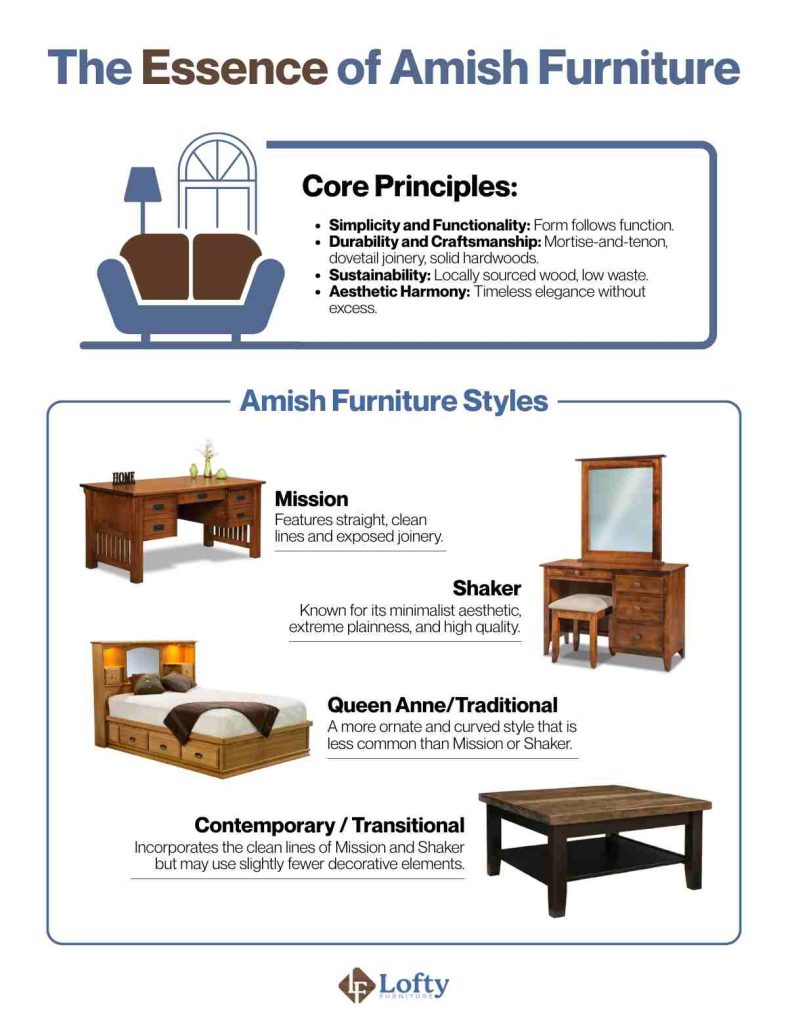
Amish furniture design draws on a handful of timeless styles that reflect its roots in simplicity and function. Traditional Amish pieces often feature elegant, graceful lines, while Mission style emphasizes strong, straight edges, exposed joinery, and the rich character of solid woods like oak and maple. Likewise, the Shaker style is deeply embedded in Amish craftsmanship.
At its core, genuine Amish furniture design is rooted in a philosophy of integrity, hard work, and simplicity. Craftsmen commit to using locally sourced, solid hardwoods to ensure durability and longevity. Traditional joinery techniques like mortise-and-tenon and dovetail joints underscore a respect for true craftsmanship and traditional construction. Moreover, Amish principles extend beyond aesthetics: their work embodies a sustainable, community-focused ethic, balancing minimal waste, long-lasting materials, and a dedication to craftsmanship.
The Common Gap in Modern Ergonomic Chairs
Modern ergonomic chairs promise comfort through adjustability and advanced features, yet many still fail to deliver true, long-term support. In a study of 511 frequent computer users, 88% reported work-related musculoskeletal pain. Even with multiple levers and customization options, many chairs remain poorly aligned with human proportions—seat depth, backrest curvature, or lumbar placement often don’t match the body’s natural structure.
This is where Amish furniture principles quietly highlight what’s missing: genuine stability, proportional balance, and an inherent understanding of the body’s relationship with structure. Research shows that ergonomic chair interventions often provide mixed long-term results, with limited evidence supporting sustained pain reduction. In contrast, Amish craftsmanship emphasizes measured dimensions, solid joinery, and designs that distribute weight naturally—elements that could help address the comfort and durability gaps seen in many modern ergonomic chairs.
How Amish Furniture Inspires Modern Ergonomic Chairs
Here’s how key Amish values are influencing ergonomic innovations today:
1. Heirloom Quality and Durability
Amish custom furniture is built with structural integrity that makes each piece capable of lasting decades, even generations. Traditional joinery methods like dovetail and mortise-and-tenon joints create tight, movement-resistant connections without relying on metal fasteners or cheap hardware. This commitment to longevity is exactly what modern ergonomic designers are adopting. As Yan Margulis, a design contractor, puts it:
“One of the major principles that carried over is the firm and never-ending dedication to durability. The Amish builders always use solid hardwood and build every joint to last for decades — and that same philosophy is now used in the manufacturing of premium ergonomic chairs.”
2. Material Influence
One of the most direct Amish influences is the thoughtful use of solid hardwood. Amish artisans hand-select wood species for their strength, feel, and natural beauty. Their craftsmanship highlights the tactile warmth and organic texture of real wood; qualities that are increasingly sought after in ergonomic seating. Yan also notes:
“The other well-translated Amish principle is the honesty of the materials. Amish artisans build in a way that accentuates a material’s natural strengths instead of forcing it into shapes or uses that compromise performance.”

3. Functional Minimalism
Amish furniture is admired for its functional minimalism: clean lines, purposeful construction, and zero unnecessary ornamentation. This approach aligns remarkably well with modern ergonomics, which prioritizes function, posture support, and long-term comfort.
Moosa Esfahanian, founder of Dannico Woodworks, explains:
“Their proportional thinking influences posture-supporting dimensions today. Seat height, back angles, and weight distribution are all rooted in timeless functional design rather than trends.”
4. Sustainability and Longevity
Durability isn’t just about structure; it’s about sustainability. Amish furniture is built to last, dramatically reducing waste. Using solid wood, traditional joinery, and finishes designed to age gracefully, Amish pieces can be refinished or repaired instead of discarded.Modern ergonomic chairs inspired by this ethos might emphasize replaceable parts, recyclable materials, or modular designs that extend the life of each chair.
5. Mindful Design and Emotional Resonance
Amish furniture carries not only physical functionality but also a deep psychological and emotional impact. Its simplicity, symmetry, and craftsmanship create a calm, grounded presence that evokes a sense of legacy, trust, and human care. Translating these qualities into modern ergonomics means designing chairs that support both the body and mind. Yan Margulis highlights this connection:
“Posture-related measurements are very much a part of Amish design, albeit accidentally. Classic Amish chairs were built around natural sitting postures and even weight distribution long before ergonomic science named these concepts.”
Blending Amish Craft with Modern Ergonomics
Though Amish furniture and modern ergonomic chairs come from very different design worlds, there’s a surprising synergy when you map Amish techniques onto contemporary seating needs.
Changing Mass-Made to Custom-Fit Comfort
Amish craftsmanship has traditionally emphasized bespoke creation. Translating that into ergonomic settings means moving away from one-size-fits-all, throwaway chairs toward designs that consider biomechanical individuality. Research in ergonomic design underscores how biomechanics can ground furniture in actual human proportions and behavior.
Turning Traditional Joinery into Modular Ergonomic Parts
A major way Amish techniques are showing up in modern ergonomics is through modular construction. Designers are borrowing concepts from traditional joinery to build ergonomic chair systems that are both highly stable and highly serviceable. Moosa adds:
“As a woodworker focused on durable design, I appreciate how Amish principles still show up in modern seating. The big carryovers are material integrity, using solid, honest hardwoods and joinery that prioritizes long-term stability.”
Blending Wood with Modern, Eco-Friendly Materials
Amish furniture often showcases the tactile warmth of solid hardwoods, finished by hand to feel natural and rich. Today, ergonomic chair makers are blending that heritage with modern performance materials.
Upgrade your workspace with the unparalleled comfort and durability of our Amish handmade chairs designed for the office. Explore our collection now!
Challenges and Limitations of Amish-Inspired Ergonomic Design

While Amish craftsmanship offers timeless design principles, integrating these into modern ergonomic chairs is not without challenges. Traditional Amish methods rely heavily on solid hardwoods and handcrafted joinery; techniques that create durability but aren’t always compatible with the dynamic flexibility ergonomic seating requires. There’s also the practical issue of scalability and cost.
Another limitation lies in balancing authenticity with innovation. Ergonomic seating often integrates complex biomechanics and customization features. This can lead to tension between maintaining the purity of Amish design. Additionally, not all Amish principles translate seamlessly into office environments. For example, wood-heavy construction may offer aesthetic warmth but add weight or reduce mobility.
Bringing Tradition Into Tomorrow’s Seating: Final Thoughts
Amish furniture design may come from a world far removed from modern workspaces, but the principles behind it speak directly to the comfort gaps we see in today’s ergonomic chairs. As designers look for ways to create seating that feels less mechanical and more naturally supportive, these traditional values are offering a refreshing blueprint.
Ultimately, the influence of Amish craftsmanship challenges the furniture industry to rethink what “ergonomic” really means. Instead of relying on complexity or constant adjustability, many of the most effective solutions are rooted in timeless design logic: proportion, stability, and intention.
Frequently Asked Questions
What specific Amish styles influence ergonomic chair aesthetics?
Mission and Shaker styles have the strongest influence. Their clean lines, balanced proportions, and focus on structural honesty translate well into ergonomic frames, armrests, and lumbar designs that prioritize simplicity and natural support.
Can handcrafted wood-based chairs meet ergonomic standards?
Yes—when designed with proper biomechanics in mind. While wood alone doesn’t offer the flexibility of mesh or engineered polymers, a well-shaped hardwood frame with contoured support, balanced angles, and modular components can meet (and sometimes exceed) ergonomic comfort expectations.
Is it possible to balance Amish-inspired design with affordability and mass production?
To an extent. Pure Amish craftsmanship is labor-intensive, but many manufacturers now apply the principles—clean structure, honest materials, and functional minimalism—while using modern production methods. This hybrid approach helps reduce cost while preserving the spirit of Amish design.
Where can I find modern ergonomic chairs that are genuinely influenced by these traditional craftsmanship principles?
Amish artisan shops and stores like Lofty Furniture offer modern seating that blends handcrafted wood elements, clean lines, and durability with ergonomic shaping.