
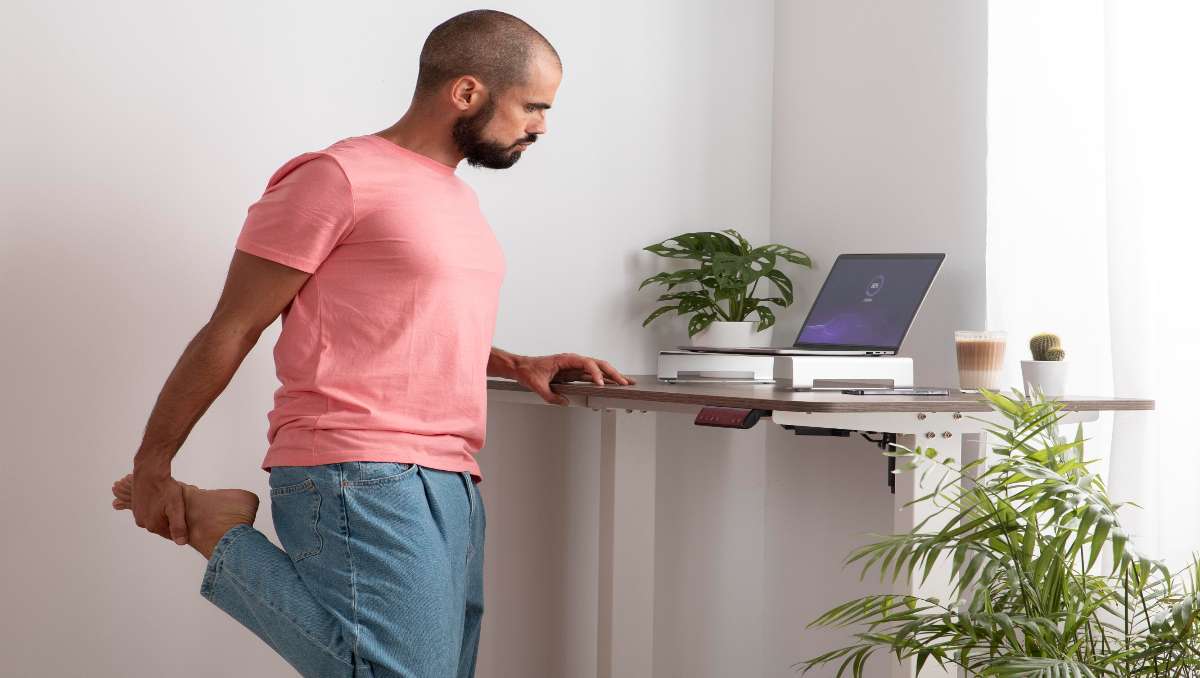
A well-designed home workspace goes beyond premium furniture and elegant finishes. It also depends on how your desk is positioned within the room. The direction your work desk faces can subtly influence focus, comfort, and overall efficiency, especially when using a standing desk. For homeowners who value craftsmanship, performance, and intentional design, understanding the best direction for a work desk at home is a refined yet practical decision that supports both productivity and long-term well-being.
Key Takeaways:
- East- or north-facing desks offer the most balanced light and comfort for standing work.
- Desk direction matters more when standing because eye level and movement increase strain.
- Try testing different directions using a simple rotation method to find the setup that best supports your body and focus.
In this guide, we’ll explore how natural light, ergonomics, and room layout influence the best direction for a work desk at home when using a standing desk—helping you create a workspace that feels as intentional and refined as the rest of your home.
Why Desk Direction Matters When Using a Standing Desk
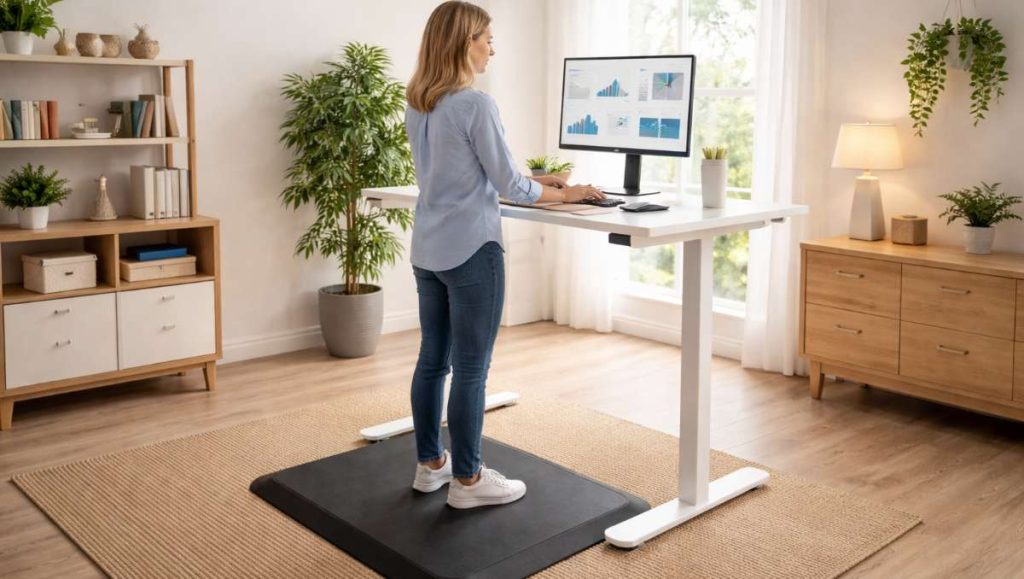
Desk direction refers to how your desk is positioned in relation to windows, walls, doors, and natural light, and it plays a key role in focus, visual comfort, and overall balance in a home office. This is especially important with standing desks, as standing raises your eye level and increases sensitivity to glare, lighting changes, airflow, and posture alignment. Poor orientation can lead to neck strain, uneven lighting, and restricted movement, while proper desk direction supports a neutral spine, easy posture shifts, and sustained comfort throughout the workday.
Best Desk Directions and Their Benefits
Natural light is key when deciding where to place a work desk at home, especially for standing desks. Proper desk orientation can reduce glare and eye strain, improve comfort, and boost well-being, while aligning with natural light makes the workspace feel brighter and more pleasant throughout the day.
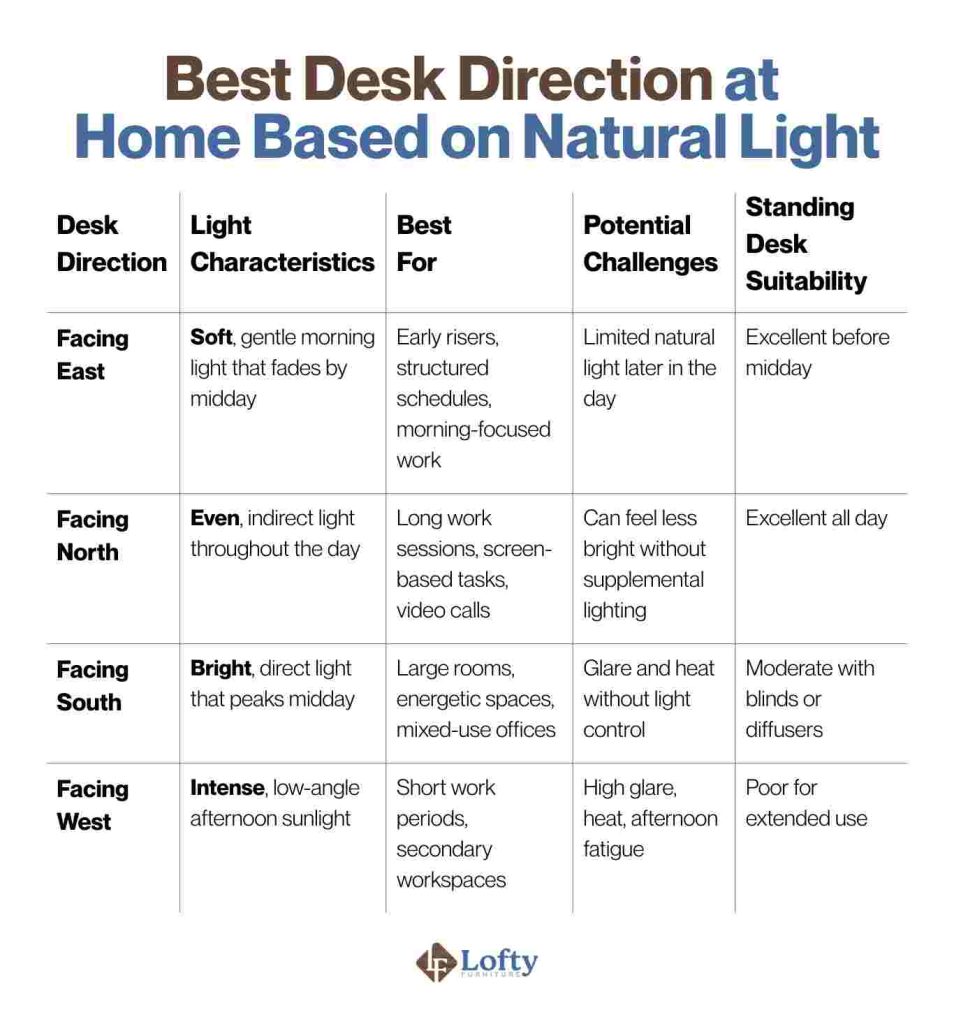
Facing East: Morning Energy & Focus
An east-facing desk is ideal for people who start their workday early. Research by Mushfiqul Anwar Siraji and colleagues shows that exposure to morning light can influence chronotype, mood, and cognitive function, leading to earlier peak alertness and improved morning focus. Gentle morning light helps ease into work without harsh brightness, supports concentration during the first half of the day, and reduces the need for artificial lighting. This desk set up works especially well for standing desk use before midday and for those with structured daily schedules who want a positive, focused start to the day.
💡 Did You Know?
Morning sunlight exposure can boost alertness and mood by regulating your circadian rhythm. That’s why an east-facing desk can help you feel more awake and focused early in the day.
Facing North: Minimal Glare & Consistent Light
A north-facing desk provides the most stable and predictable lighting throughout the day. Because it avoids direct sunlight, it minimizes glare and visual distractions, making it comfortable for long work sessions. This direction is particularly well-suited for standing desk users who spend extended time at their workstation, as it creates even light, reduces eye strain, and supports activities like writing, video calls, and computer-based work in a calm, visually balanced environment.
Facing South: Bright but Challenging
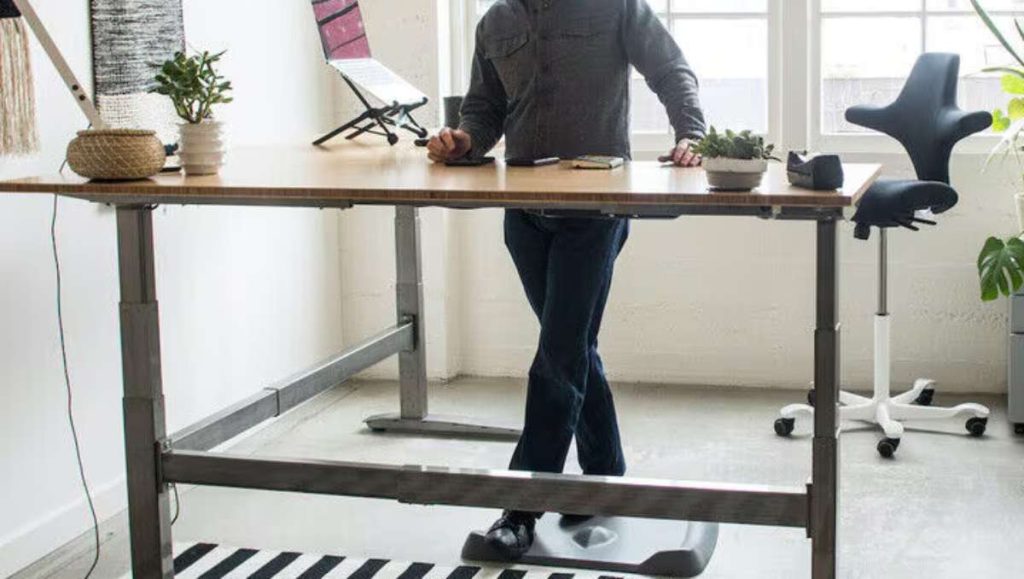
South-facing desks receive abundant natural light, which can make a workspace feel open and energized. The downside is that brightness often becomes intense around midday, especially for standing desk users. Without proper light control, glare and heat can interfere with comfort and focus. This orientation works best in larger rooms with good airflow and usually benefits from blinds, light-diffusing treatments, or adjustable lighting solutions to manage changing conditions throughout the day.
Facing West: Afternoon Productivity Issues
West-facing desks are typically the most difficult to manage due to strong, low-angled afternoon sunlight. This light increases glare and heat at a time when energy levels naturally decline, which can lead to discomfort and reduced concentration for standing desk users. Maintaining comfort often requires strong light control, and even then, this orientation is generally less suitable for extended standing desk use later in the day.
Best Desk Direction According to Ergonomics Experts
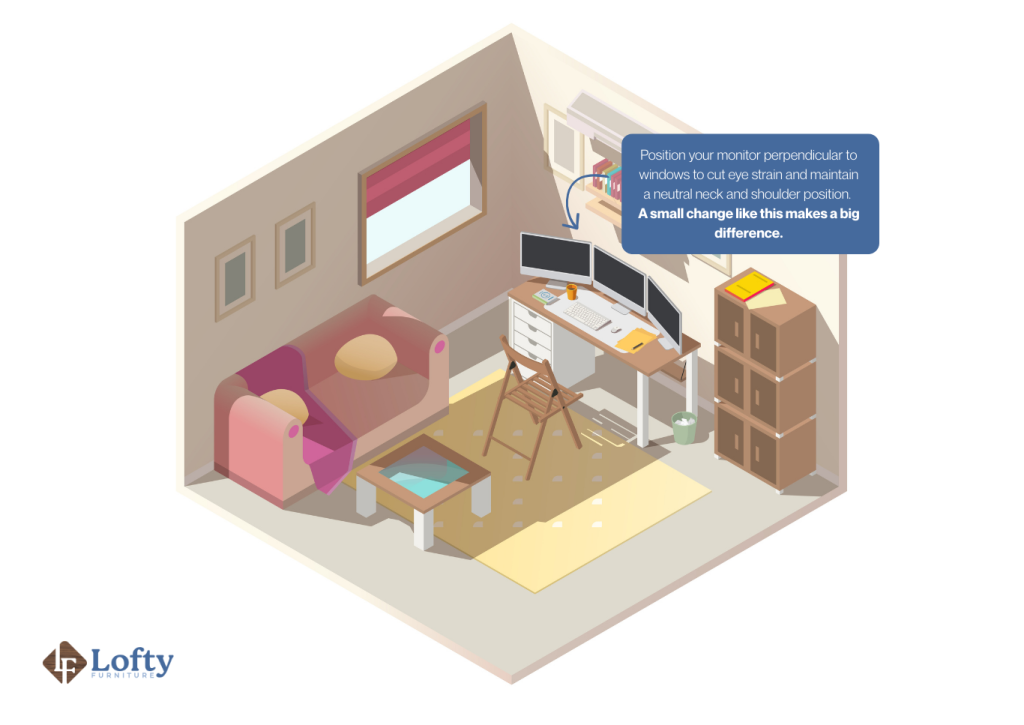
Ergonomics experts recommend positioning a standing desk to support a neutral, forward-facing posture, with your head, shoulders, hips, and feet naturally aligned and no need to twist or lean. Even slight rotation toward windows or doors can cause strain over time. Desk direction also affects screen comfort, since placing monitors perpendicular to windows helps reduce glare and eye strain. When oriented correctly, your shoulders stay relaxed, your neck remains neutral, and your hips stay square to the desk, supporting easy movement and sustained focus throughout the day.
How to Choose the Best Direction for Your Standing Desk
Choosing the right direction for your standing desk is about more than just the window; it is about how you work. Think about when you are most productive. Morning people may benefit from an east-facing desk with gentle sunlight, while afternoon workers might prefer steady, glare-free light from the north. Also consider the room itself. Window size, layout, and airflow affect comfort, and bright south-facing windows can get hot or glaring without proper control. Simple fixes like blinds, curtains, or small desk adjustments can make a big difference, helping you find the sweet spot where light, comfort, and focus come together.
For a more methodical approach, try the 3-Day Rotation Method.
Step 1: Use the 3-Day Rotation Method
Position your standing desk in one direction and work from it for three consecutive days. Keep your routine, ideal desk height, and equipment consistent. After three days, rotate the desk to a different direction and repeat the process.
Step 2: Measure Comfort and Fatigue
At the end of each day, assess how your body feels. Pay attention to your lower back, neck, shoulders, hips, and legs. The right desk direction should feel supportive, with minimal tension and fewer posture adjustments as the day progresses.
Step 3: Track Productivity and Mood
Observe your focus, energy, and mental clarity throughout the day. Notice whether you feel more engaged, less distracted, or mentally fatigued at certain times. A good desk direction often results in steadier concentration and a more positive work experience.
Step 4: Compare and Adjust
After testing multiple directions, compare your notes. Choose the orientation that consistently delivers better comfort, improved focus, and balanced energy. Fine-tune lighting or monitor placement as needed to optimize the final setup.
Discover Amish adjustable desks that combine durability and timeless craftsmanship—designed to complement your raw wood office while helping you create the best direction for work desk at home.
Common Mistakes to Avoid When Choosing Desk Direction for a Standing Desk
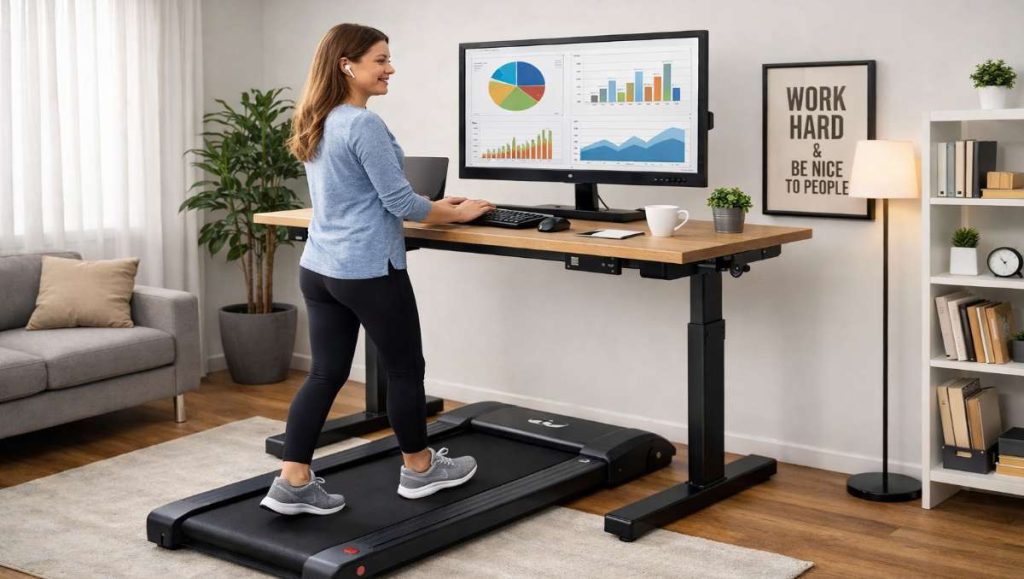
Even the best-designed home office can feel off if your desk isn’t positioned right. With a standing desk, small placement mistakes show up fast, quietly affecting your comfort, focus, and daily productivity. Paying attention to direction and setup keeps your workspace working for you without sacrificing style.
Watch out for common pitfalls like light that causes glare or eye strain, not leaving enough room to move and shift naturally, screens set at the wrong height that stress your neck and shoulders, or choosing desk placement based just on looks instead of comfort and function. Fixing these issues helps your home office feel comfortable, efficient, and built for long-term performance.
As Nala Fox, a workplace wellness specialist, puts it:
A common mistake I see is placing the desk facing a wall or a window with glare. People think “natural light is good,” but direct glare makes you lean forward, squint, and twist your neck. Another issue is having the desk angled toward the door or hallway, which creates constant distraction and makes the brain feel “on alert.”
Conclusion
Even the best-designed home office can feel off if your desk isn’t positioned right. With a standing desk, small placement mistakes show up fast, quietly affecting your comfort, focus, and daily productivity. Paying attention to direction and setup keeps your workspace working for you without sacrificing style.
Watch out for common pitfalls like light that causes glare or eye strain, not leaving enough room to move and shift naturally, screens set at the wrong height that stress your neck and shoulders, or choosing desk placement based just on looks instead of comfort and function. Fixing these issues helps your home office feel comfortable, efficient, and built for long-term performance.
Frequently Asked Questions
Does desk direction influence virtual meeting presence?
Yes. Desk direction affects lighting and eye level, which can influence how professional and engaged you appear on video calls. Positioning the desk perpendicular to a window helps create balanced lighting without glare or backlighting.
Is desk direction important if I alternate between sitting and standing?
Yes. Standing increases exposure to light and room activity, so a well-chosen desk direction helps maintain comfort, posture, and screen visibility in both positions.
How does desk direction affect room temperature or airflow?
Desk direction can change how heat and airflow are felt, especially near windows or vents. Avoiding direct sunlight or drafts helps maintain a more comfortable working environment.
Can desk direction impact motivation or mood over time?
Yes. Proper desk direction can support focus and energy by reducing visual strain and distractions, while poor orientation may contribute to fatigue or restlessness over time.