
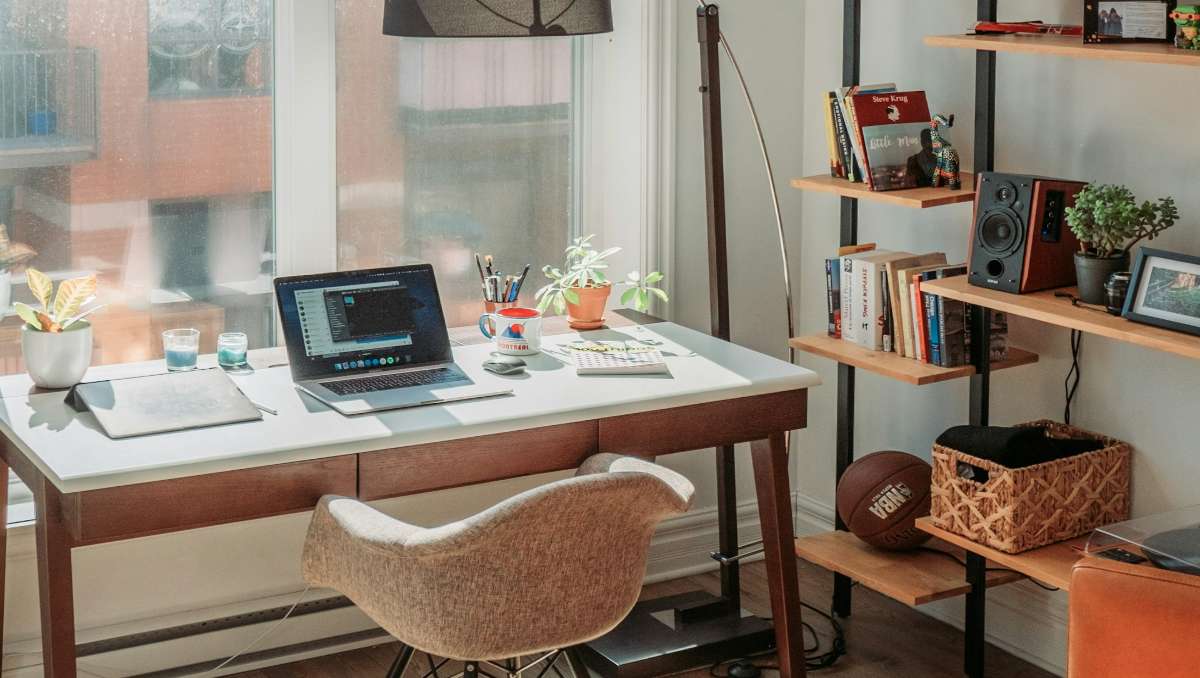
Finding the right flow when you’re working from home is more than just a comfortable chair. Since our homes have become our primary hubs for productivity, many of us have realized that the vibe of the room actually dictates how much we get done. If you’ve ever felt inexplicably drained or find yourself distracted by the laundry pile across the room, it might be time to look at your layout. Optimizing your feng shui office desk direction is about positioning in a way that commands the room and minimizes subconscious stress.
Key Takeaways:
- For optimal Feng Shui, position your office desk in a supportive direction and in the command position, where you can see the door without being directly in line with it.
- Avoid common desk placement mistakes such as sitting with your back to the door, facing a blank wall, or placing your desk in a direct line with fast-moving energy.
- Use small adjustments and symbolic enhancements if your desk can’t be moved; mirrors, plants, lighting, artwork, and directional objects can help redirect energy.
In this article, we’ll break down the essential “command position,” common layout mistakes to avoid, and how to balance the energy of your room so your workspace feels like a place of focus rather than a source of clutter.
What Is Feng Shui?
Feng Shui is an ancient Chinese practice focused on arranging spaces to promote the smooth flow of qi, or life energy, creating environments that feel balanced and supportive. It uses principles such as natural orientation, yin-yang balance, and the Five Elements: Wood, Fire, Earth, Metal, and Water. In home offices, feng shui emphasizes desk setup and placement because it influences energy, focus, and productivity. Each element plays a role, with Wood encouraging growth, Fire boosting motivation, Earth providing stability, Metal improving focus, and Water supporting flow and intuition, helping create a workspace that feels energizing rather than draining.

The Dos of Feng Shui Office Desk Direction
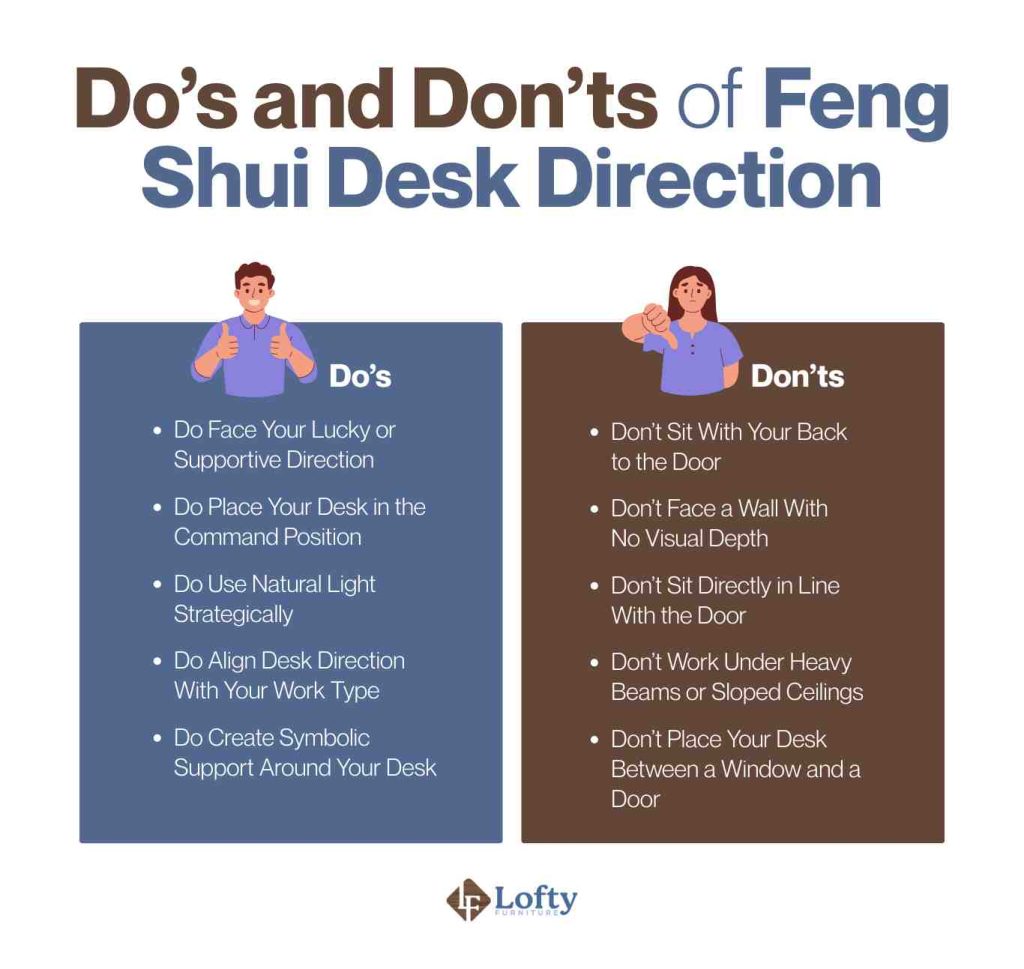
Getting your desk placement right is one of the easiest ways to boost energy, focus, and productivity in your home office. Here are some key dos to keep in mind when orienting your desk for optimal Feng Shui:
1. Do Face Your Lucky or Supportive Direction
Feng Shui often uses your personal Kua number to determine which directions bring the most energy and support. Facing your lucky direction can increase focus, confidence, and overall well-being while working. You can find your Kua number using this Kua number calculator.
💡 Pro Tip
Even small shifts in your desk position or angle can subtly change energy flow and improve focus. Experiment with slight rotations to find the direction that feels most supportive and comfortable.
2. Do Place Your Desk in the Command Position
The command position means placing your desk so you can see the door without being directly in line with it. This placement helps you feel in control of your environment. According to The Spruce, this is one of the most powerful ways to improve feng shui in your office. As Feng Shui Specialist Marla Stone, MSW, explains:
“In Feng Shui, the most important principle for desk placement is the command (power) position. The person seated at a desk serves as the decision-maker for that space, akin to a president or CEO.”
When your desk is positioned to support authority and awareness, it can naturally enhance confidence, focus, and decision-making.
3. Do Use Natural Light Strategically
Natural light energizes your workspace and supports mental clarity. Power position your desk to take advantage of daylight without creating glare on screens, and consider soft, diffused lighting to complement sunlight.
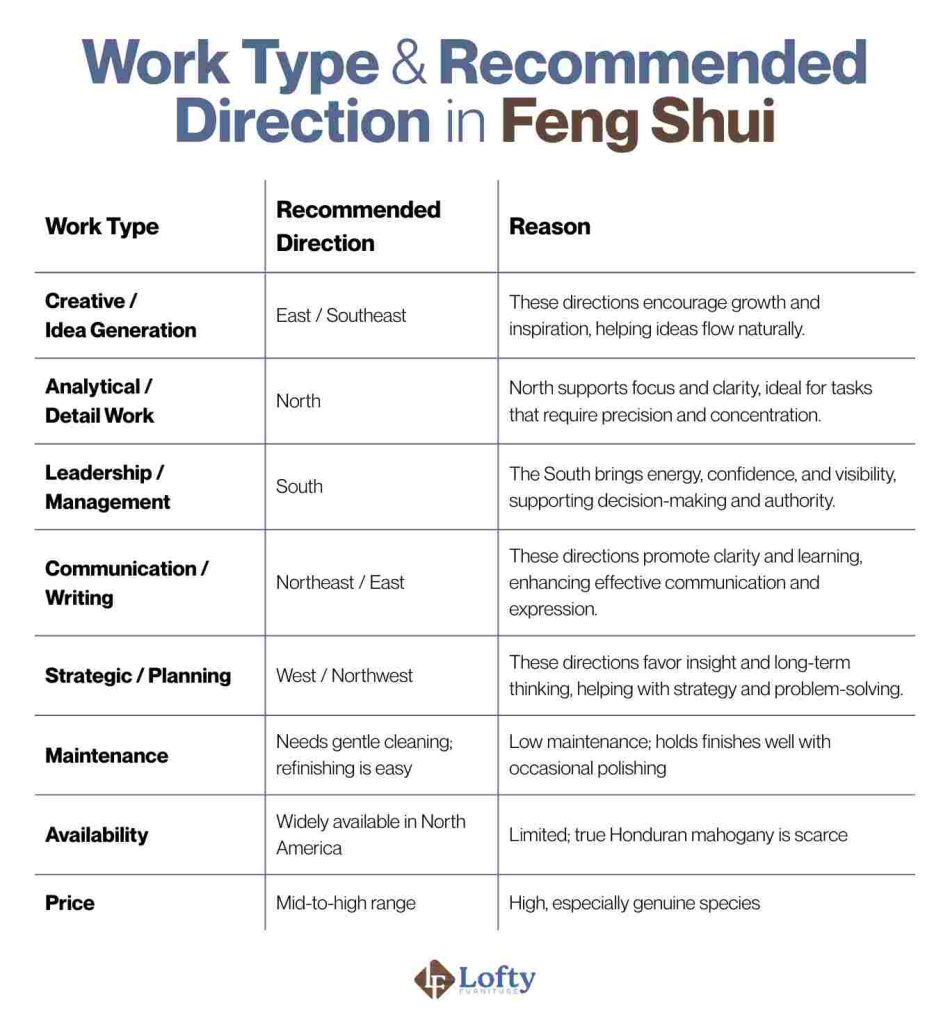
4. Do Align Desk Direction With Your Work Type
Different types of work benefit from different energy flows. For example, creative tasks may benefit from facing east or southeast, directions associated with growth and inspiration, while analytical or detail-oriented work may do better facing north for focus.
5. Do Create Symbolic Support Around Your Desk
Surrounding your desk with supportive objects reinforces positive energy. These symbolic supports act as reminders of stability and intention.
Examples include:
- Plant – encourages growth and vitality
- Small water feature or bowl of water – promotes calm and flow
- Vision board or goal items – reminds you of priorities and motivation
- Crystals or stones – focus and clarity
- Personal or inspiring artwork – uplifts mood and creativity
- Clock or hourglass – encourages mindful time management
The Don’ts of Feng Shui Office Desk Direction
Just as important as knowing where to place your desk right is understanding what to avoid.
1. Don’t Sit With Your Back to the Door
Sitting with your back to the door is widely considered poor feng shui because it creates a sense of vulnerability; you can’t see people or opportunities approaching, which can subconsciously heighten stress and reduce comfort in your workspace. Marla reinforces this guidance:
“Position the desk so you face into the room and can clearly see the door. This creates a sense of control, focus, and psychological safety…Place the desk slightly angled or sideways when necessary, as long as the door remains within your line of sight.”
2. Don’t Face a Wall With No Visual Depth
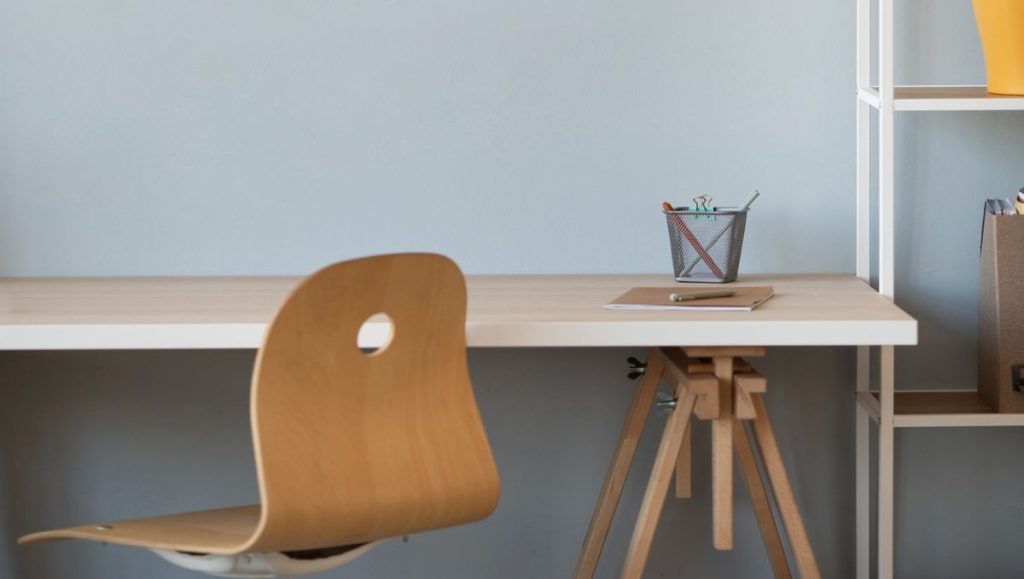
Placing your desk so you face a blank wall may feel like a practical space-saving move, but feng shui interprets this as facing “obstacles.” Without visual depth or perspective, your mind can feel boxed in, blocking creative thinking and limiting your sense of opportunity. A simple fix like adding artwork, a mirror, or a small shelf with plants can instantly create depth and invite positive energy. As Marla explains:
“Avoid facing a blank wall for long periods without visual depth or reflection, as this can restrict creativity and momentum.”
3. Don’t Sit Directly in Line With the Door
If your desk sits directly in line with the door, you’re in the path of fast‑moving energy (called sha qi), which in feng shui refers to harsh or negative energy that can feel unsettling or disruptive. This constant “rush” can distract your attention and create tension. Feng shui sources describe this as the “poison arrow” effect, where incoming energy hits you too aggressively. Adding a sheer curtain, folding screen, or room divider can slow the flow and soften the energy.
4. Don’t Work Under Heavy Beams or Sloped Ceilings
Ceiling beams or downward slopes directly above your desk can create a sensation of pressure or “weight” over your workspace. In feng shui, this is often described as oppressive energy that can contribute to tension, headaches, and a feeling of being “held back” in your goals.
5. Don’t Place Your Desk Between a Window and a Door
Positioning your desk in the direct traffic path between a window and a door leads to energy that flows too quickly through the space without settling where you need it most. Feng shui guidelines suggest creating some separation such as adding gentle room dividers so energy circulates more calmly around your work area.
Maximize your productivity and positive energy by upgrading to a smart desk that seamlessly aligns with your modern Feng Shui office layout.
Best Office Desk Directions by Life Area (Bagua Map Applied to Home Office)
The Bagua map is a feng shui tool that divides your space into different life areas. Each is associated with specific directions, energies, and goals. Applying the Bagua to your home office allows you to align your desk placement with the areas of life you want to enhance, whether it’s career growth, creativity, or health. By choosing the best desk direction and incorporating complementary colors and objects, you can create a workspace that supports not only productivity but also your broader life intentions.
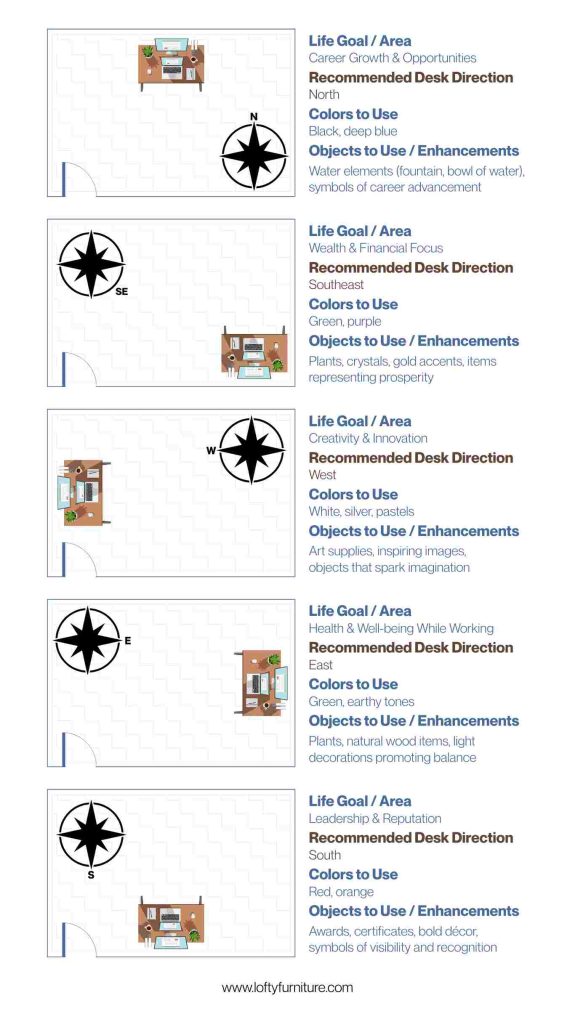
This table helps you see how desk orientation, colors, and objects can reinforce your goals in a subtle but effective way. Even small adjustments, like adding a plant in the health area or placing a symbolic award in the south, can enhance the energy flow and support the life areas that matter most to you.
Conclusion: Harmonize Your Home Office with Feng Shui
Creating a home office that truly supports focus, energy, and well-being isn’t just about ergonomics or décor; it’s about aligning your space with the natural flow of energy. Paying attention to feng shui office desk direction, even in small adjustments, can subtly influence how comfortable, motivated, and productive you feel throughout the day. By following the do’s, avoiding common mistakes, and applying life‑area guidance from the Bagua map, you can make your workspace feel intentional, energizing, and supportive—no matter the size or layout.
Frequently Asked Questions
Does desk direction really affect productivity and focus?
Yes. While it may not be a magic switch, desk orientation affects both comfort and energy flow. Being able to see entrances, avoid stagnant energy, and face supportive directions can reduce stress and help maintain focus throughout the day.
What should I do if my desk is permanently fixed facing a wall?
You can use quick feng shui fixes such as adding a mirror to see the door behind you. You can also place inspirational artwork or goal symbols on the wall and incorporate plants or lighting to energize the space.
How does sitting under a ceiling fan or a sloped ceiling affect my Feng Shui?
Heavy beams, sloped ceilings, or fans directly overhead can create a sense of pressure or oppressive energy. This may increase tension or fatigue. If you can’t move the desk, softening the effect with light décor or fabric hangings can help alleviate the impact.
Does the direction of my desk matter more than the room it is located in?
Both matter. Desk direction influences your immediate energy, focus, and comfort, while the room itself affects overall energy circulation. Ideally, your desk orientation complements the room’s layout, natural light, and Bagua life‑area zones for maximum benefit.