
When choosing a desk, most buyers compare materials like plywood vs solid wood based on price, durability, or appearance. However, environmental impact is becoming an increasingly important factor. While both materials come from trees, the way they are harvested, processed, and used can create very different sustainability outcomes.
Key Takeaways
- Both plywood and solid wood can be sustainable if sourced from responsibly managed forests.
- Plywood often uses wood more efficiently because thin veneers allow more panels to be produced from each log.
- Solid wood desks usually last longer and can be repaired or refinished multiple times.
In this guide, we’ll break down the environmental impact of plywood vs solid wood, including resource efficiency, production processes, and what happens to each material at the end of its life.
What Is Solid Wood?
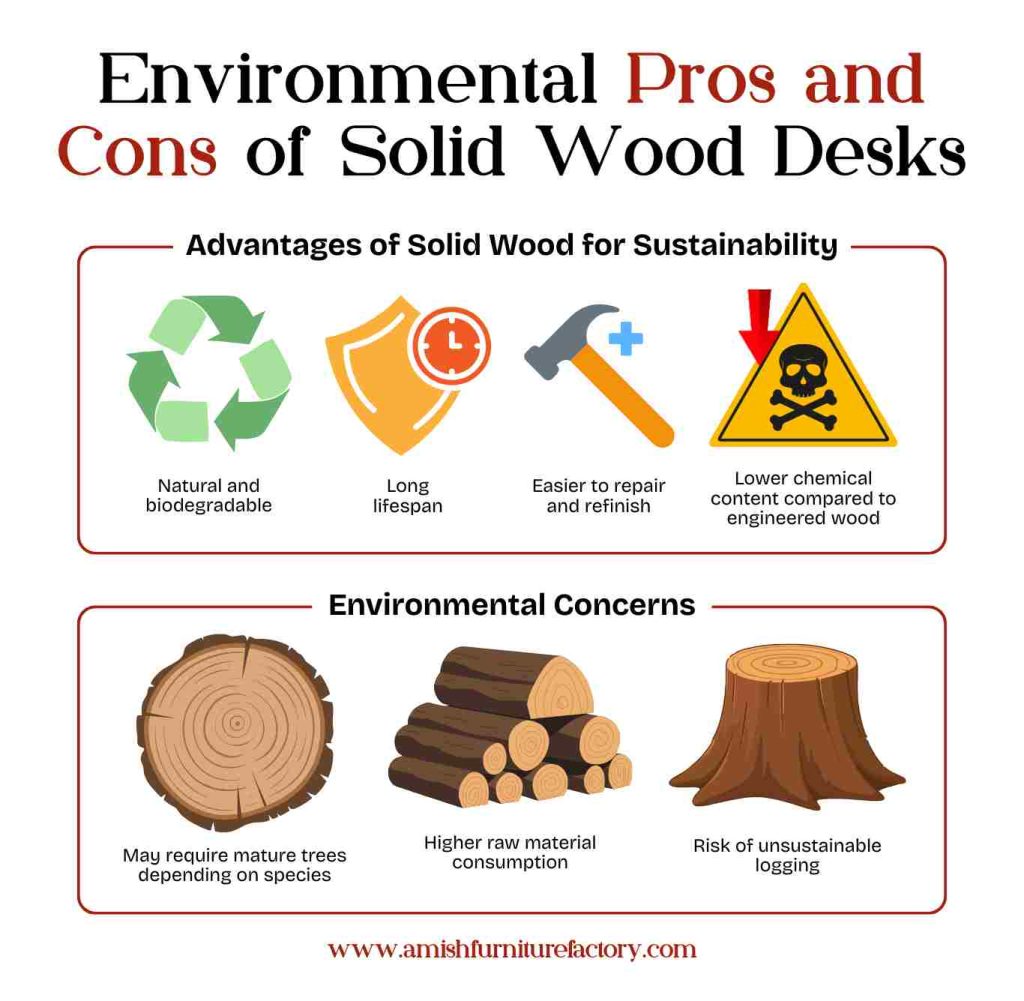
Solid wood comes directly from a tree and is used in its natural form, unlike layered or manufactured wood. In furniture, it usually means boards from a single species such as oak, maple, walnut, or pine, used for tabletops, legs, and frames. Its natural grain makes each piece unique. Trees grow by adding rings each year and, once mature, are harvested, milled, dried, and prepared for furniture.
What Is Plywood?
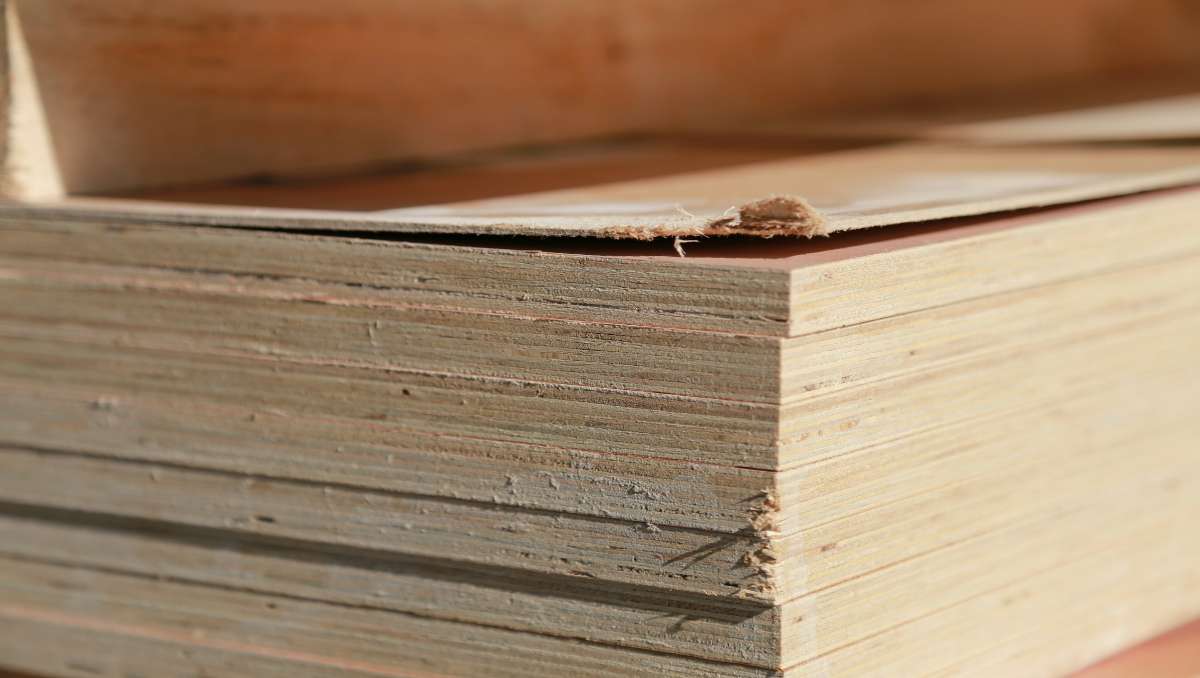
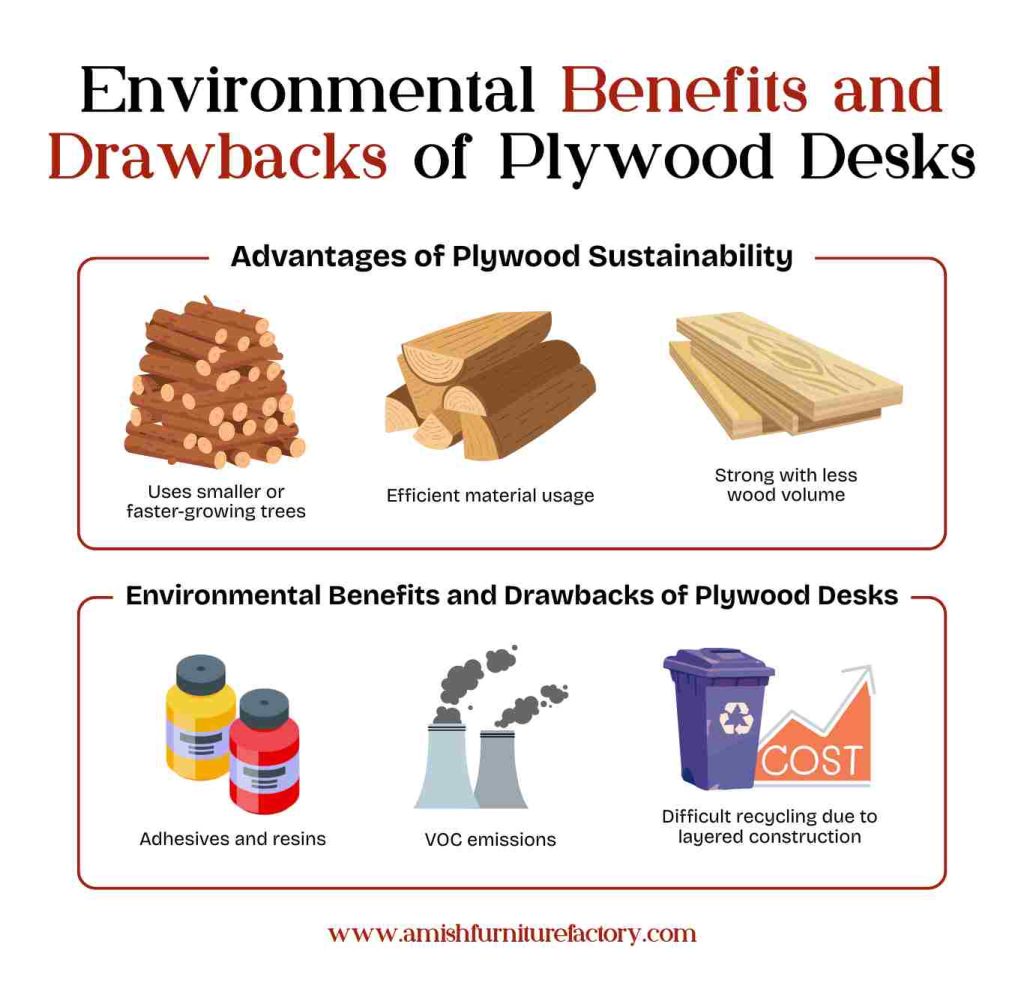
Plywood is an engineered wood made by bonding thin layers of wood veneer into a single panel. The layers, called plies, are stacked with alternating grain directions to increase strength and prevent warping, shrinking, and cracking. This makes plywood ideal for furniture, cabinetry, construction, and desks.
Plywood comes in two main types: furniture-grade, which has smooth surfaces and high-quality veneers, and construction-grade, which focuses on strength for subfloors, walls, and roofing. Several innovations are helping reduce the environmental impact of plywood production:
- Low-VOC adhesives: Some manufacturers now use adhesives that release fewer volatile organic compounds (VOCs).
- Soy-based glues: Soy-based adhesives replace petroleum-based chemicals with plant-based alternatives derived from soybeans.
- Formaldehyde-free plywood: Formaldehyde-free wood panels are often marketed as safer for indoor environments and are increasingly used in eco-conscious furniture.
Plywood vs Solid Wood: What’s Better for the Planet?
When comparing plywood vs solid wood, the environmental impact goes beyond simply looking at the material itself. Factors such as carbon storage, manufacturing energy, chemical use, lifespan, and how efficiently trees are used all play a role.
Carbon Footprint
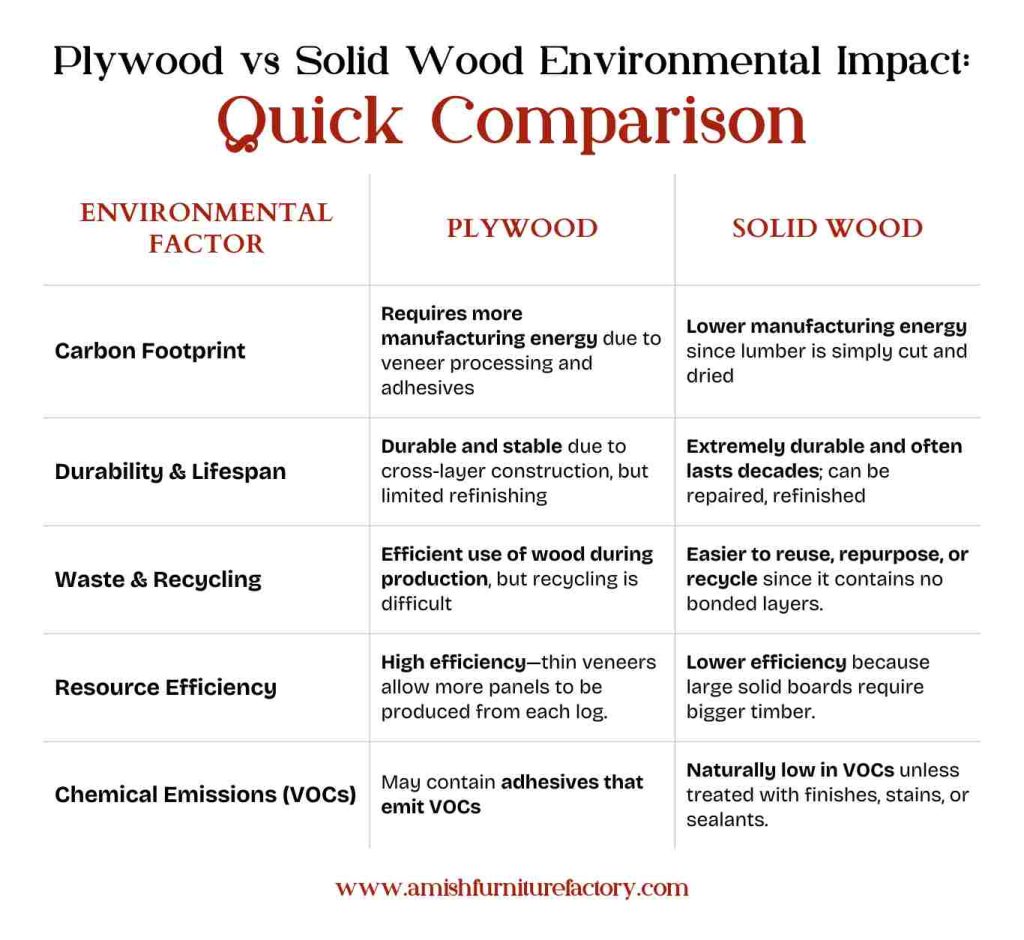
Wood products generally have a lower carbon footprint than materials like steel, plastic, or aluminum because trees absorb carbon dioxide while they grow. In the plywood vs solid wood comparison, the difference often comes down to furniture manufacturing. Solid wood requires less industrial processing since boards are simply cut, dried, and shaped. Plywood, on the other hand, requires additional energy for peeling veneers, drying layers, and pressing them together with adhesives.
Durability and Lifespan
Durability is an important environmental factor because longer-lasting furniture reduces the need for replacement. Solid hardwood desks typically last around 30 to 100+ years and are widely known for their longevity, often enduring for decades or even generations. They also offer high repairability since they can be sanded, refinished, and structurally repaired multiple times.
Plywood desks, on the other hand, generally have a lifespan of about 15 to 30 years. They can still be durable, especially when made with high-quality hardwood veneers and strong adhesives, but their repairability is moderate, with limited refinishing possible depending on veneer thickness.
Waste, Recycling, and Biodegradability
Both plywood and solid wood are biodegradable materials, but their end-of-life impact differs slightly. Solid wood contains no synthetic bonding agents, which means it can be composted, reused, or recycled more easily. Plywood is more difficult to recycle because the layers are bonded with adhesives that cannot easily be separated. As a result, plywood furniture is more likely to end up in landfills compared to solid wood.
Resource Efficiency
Resource efficiency refers to how effectively raw materials are used during manufacturing. This is one area where plywood often has an advantage. Since plywood is made from thin veneers peeled from logs, manufacturers can use smaller trees and lower-grade timber that might not be suitable for large lumber boards. Solid wood desks typically require thicker boards from mature trees, which means more timber is needed to produce the same surface area.
Chemical Emissions (VOCs)
One of the main environmental concerns associated with plywood is the use of adhesives. Traditional plywood manufacturing often relies on resins containing formaldehyde, which can release VOCs over time. Solid wood desks generally contain fewer chemical additives, although finishes, stains, or sealants applied to the wood can still emit VOCs.
Certifications and Eco-Labels to Look For

Certifications can help buyers confirm responsible wood sourcing and lower chemical emissions.
FSC Certification
The Forest Stewardship Council (FSC) certification verifies that wood comes from responsibly managed forests. Choosing FSC-certified desks helps ensure the timber used was sourced with environmental and social responsibility in mind.
CARB and Formaldehyde Regulations
The California Air Resources Board (CARB) regulates formaldehyde emissions from composite wood products like plywood, MDF, and particleboard. CARB Phase 2 standards limit how much formaldehyde these materials can release, helping protect indoor air quality.
GREENGUARD and Other Environmental Labels
GREENGUARD Certification focuses on low chemical emissions from furniture and building materials. Products with this label are tested to ensure minimal VOC emissions, which helps maintain healthier indoor air quality.
Tips for Choosing an Environmentally Friendly Desk
By paying attention to a few key details, buyers can make choices that reduce environmental footprint while still getting a durable and functional desk.

1. Choose Certified Wood Products
Look for desks made from certified wood, such as those carrying FSC (Forest Stewardship Council) certification. These products come from responsibly managed forests that protect ecosystems, wildlife, and long-term forest regeneration.
2. Look for Low-VOC Finishes and Adhesives
Many furniture finishes, paints, and adhesives can release volatile organic compounds (VOCs) into indoor air. Choosing desks made with low-VOC finishes or formaldehyde-free adhesives can help reduce chemical exposure and improve indoor air quality.
3. Consider Longevity Over Price
A desk that lasts for decades often has a smaller environmental footprint than cheaper furniture that needs frequent replacement. Investing in durable wood materials and solid construction can reduce waste and lower long-term resource consumption.
4. Buy Used or Reclaimed Furniture When Possible
Purchasing secondhand or reclaimed desks extends the life of existing furniture and prevents usable materials from ending up in landfills. Reclaimed wood desks also reduce the need for new timber harvesting, making them one of the most environmentally friendly options.
Upgrade your workspace with a solid wood Amish adjustable desk that pairs timeless craftsmanship with modern ergonomics.
Conclusion: Making a Sustainable Choice for Your Desk
Choosing between plywood vs solid wood ultimately comes down to how the materials are sourced, manufactured, and used over time. Plywood often stands out for its resource efficiency. Solid wood offers exceptional longevity, repairability, and recyclability.
Neither material is automatically more sustainable in every situation. A responsibly sourced solid wood desk can last for decades, while eco-friendly plywood made with low-VOC adhesives can minimize material waste and reduce pressure on forests. Consider certifications and product lifespan when selecting a desk.
Frequently Asked Questions
Is plywood more sustainable than solid wood?
Plywood can be more resource-efficient because manufacturers can produce more panels from a single log using thin wood veneers. Solid wood can still be highly sustainable if it is sourced from certified forests and used for long-lasting furniture.
Does plywood negatively affect the environment?
Plywood itself is made from natural wood, but its environmental impact largely depends on how it is produced. Traditional plywood manufacturing may involve adhesives that release formaldehyde or other volatile organic compounds (VOCs).
Does plywood use fewer trees than solid wood?
Yes. Plywood typically uses fewer trees because thin veneers allow manufacturers to produce more usable panels from each log. This makes plywood a more resource-efficient material, especially for large furniture panels like desks and cabinets.
Is plywood good for desks?
Yes, plywood can be a good material for desks because it is stable, relatively lightweight, and resistant to cracking or warping. Many modern desks use plywood panels combined with solid wood frames for added durability.
Why is plywood cheaper than solid wood?
Plywood is generally cheaper wood for furniture because it uses thin veneers that maximize the amount of usable material from each log. This manufacturing process reduces raw material costs compared to large solid wood boards.