
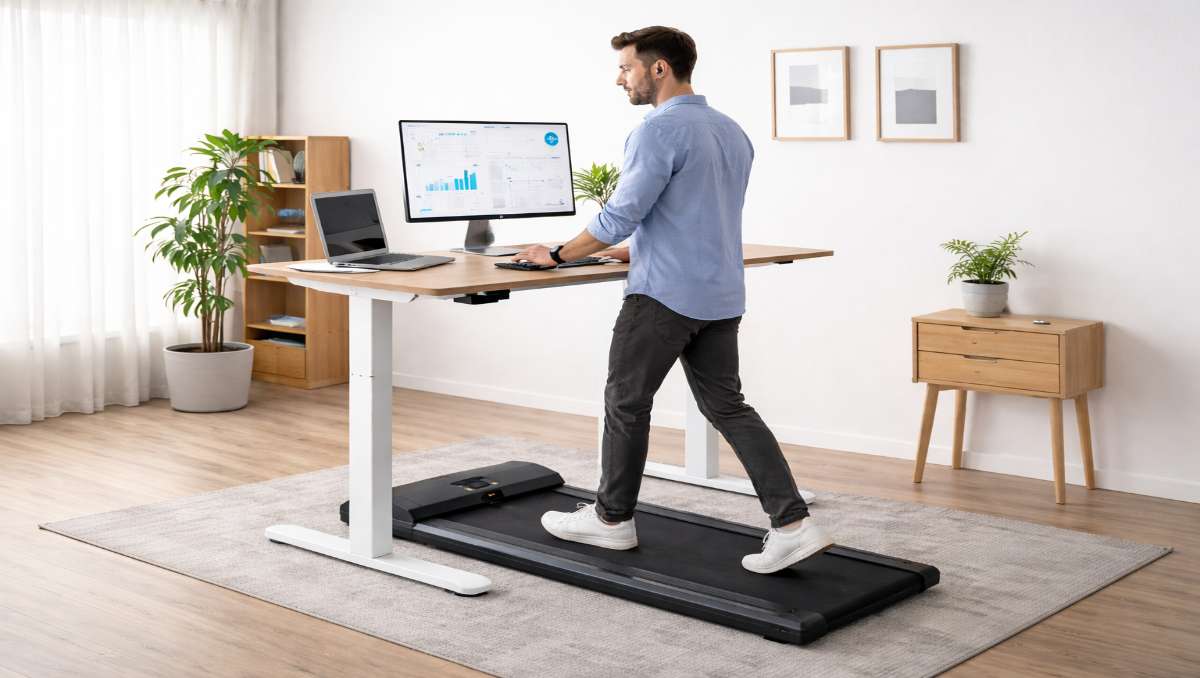
We’ve all heard the “sitting is the new smoking” trope by now, and for many of us, the solution is to buy a standing desk and call it a day. Standing is a great start, but real benefits actually come when you add gentle, consistent motion throughout the day. That’s where standing desk exercise equipment comes in. These tools are designed to fit seamlessly into your workspace, helping you stay active without breaking your focus or workflow.
Key Takeaways:
- Standing desk exercise equipment includes an under-desk treadmill, balance boards, resistance bands, and compact strength gear, all designed to keep you moving.
- Even small, consistent movements throughout the day improve circulation, posture, core engagement, and mental focus without disrupting workflow.
- Choosing the right equipment depends on your work style, space, and fitness goals.
In this guide, we’ll explore the best options available, who they’re best for, and how they can help you feel more energized, focused, and comfortable while you work.
What Counts as Standing Desk Exercise Equipment?
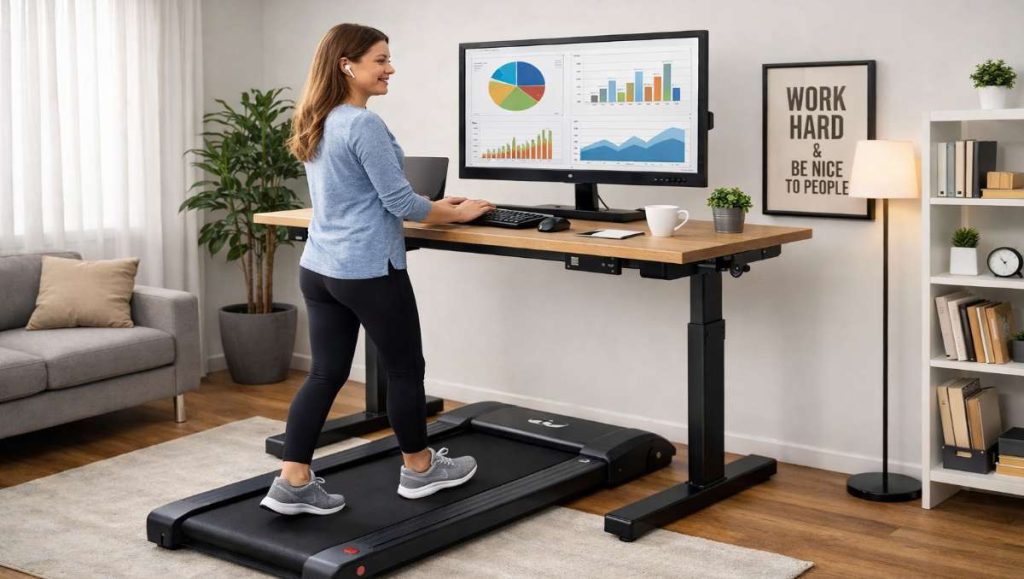
Standing desk exercise equipment refers to any tool designed to help you move more, engage your muscles, or improve circulation while you work at a standing (or sit-stand) desk. The key idea is a consistent, low-effort movement that supports your body throughout the day. These tools are typically compact, workspace-friendly, and easy to use.
What qualifies as “exercise equipment” can range from subtle posture-support tools to devices that actively encourage motion. The common thread is that all standing desk exercise equipment is meant to reduce long periods of stillness and help you stay engaged while working.
Best Standing Desk Exercise Equipment (By Category)
Choosing the right standing desk exercise equipment depends on how much movement you want, how much space you have, and how often you plan to use it. Below are the best options by category, based on movement quality, ease of use during work, noise level, and overall value.
Best Overall Standing Desk Exercise Equipment
Under-Desk Walking Pads
Under-desk walking pads are the best overall standing desk exercise equipment for most users because they offer consistent movement with minimal distraction.
At low speeds, walking pads are quiet enough for home offices and allow you to stay lightly active throughout the day without disrupting focus. They help improve circulation, reduce stiffness, and increase daily step count while working. Most models are slim, desk-compatible, and easy to store vertically when not in use.
Why it ranks best overall:
- Continuous, natural movement
- Low noise at working speeds
- Suitable for multi-hour daily use
- Easy storage and desk compatibility
Best for: Users who want steady movement, calorie burn, and all-day standing desk activity.
Best Budget-Friendly Standing Desk Exercise Equipment
Balance Boards & Dynamic Anti-Fatigue Mats
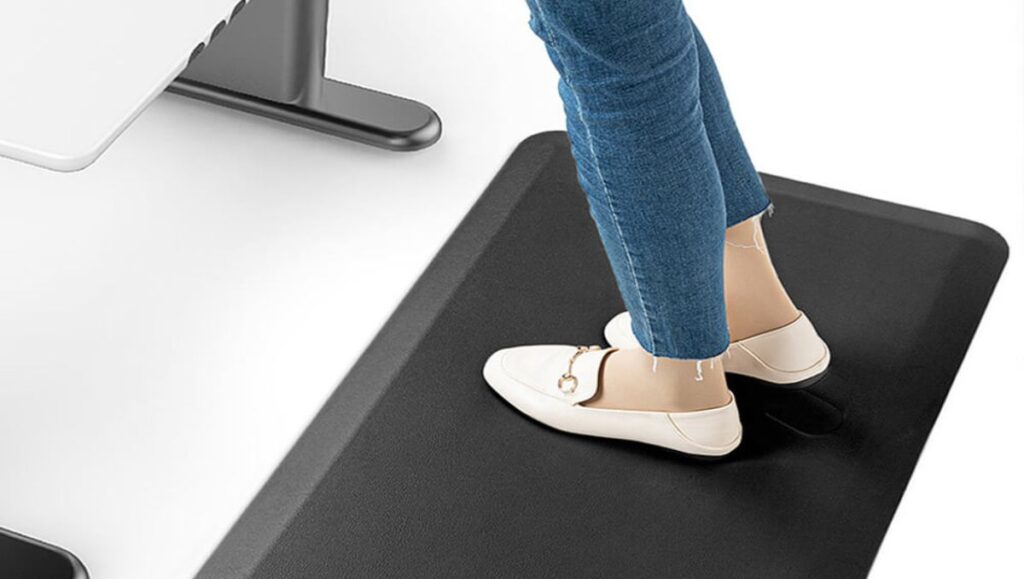
Balance boards and dynamic anti-fatigue mats are the best budget-friendly standing desk exercise equipment for most users because they introduce light, natural movement without a significant investment.
Balance boards engage the feet, ankles, and core, helping improve balance and posture while standing. Dynamic anti-fatigue mats provide cushioned support with subtle rocking or textured zones that encourage movement throughout the workday without feeling disruptive. Both options are affordable, require no power, and fit seamlessly into nearly any standing desk setup.
Why it ranks best overall:
- Low-cost entry into active standing
- Encourages continuous, low-impact movement
- No electricity or complex setup required
- Minimal storage needs and high desk compatibility
Best for: Beginners, budget-conscious users, or anyone new to active standing desk setups.
Best Low-Impact Standing Desk Exercise Equipment
Under-Desk Ellipticals & Desk Bikes
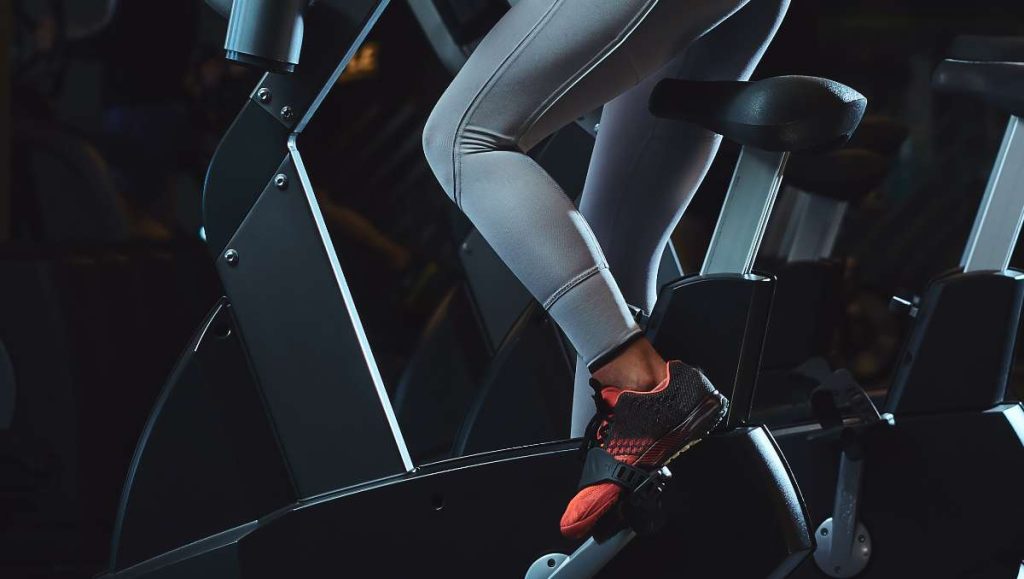
Under-desk ellipticals and desk bikes are the best low-impact standing desk exercise equipment for users who want consistent movement without putting stress on their joints.
These devices use smooth, circular motion to keep the legs active while minimizing impact on the knees and ankles. Adjustable resistance levels allow you to control intensity, making them suitable for light activity during focused work. Compared to walking pads, they deliver steady movement without repetitive foot impact, making them ideal for joint-sensitive users.
Why it ranks best overall:
- Smooth, low-impact motion
- Reduced strain on knees and ankles
- Adjustable resistance for controlled intensity
- Suitable for extended work sessions
Best for: Users seeking gentle, joint-friendly movement during long work sessions.
Best Standing Desk Exercise Equipment for Small Home Offices
Foldable Walking Pads, Mini Ellipticals & Resistance Bands
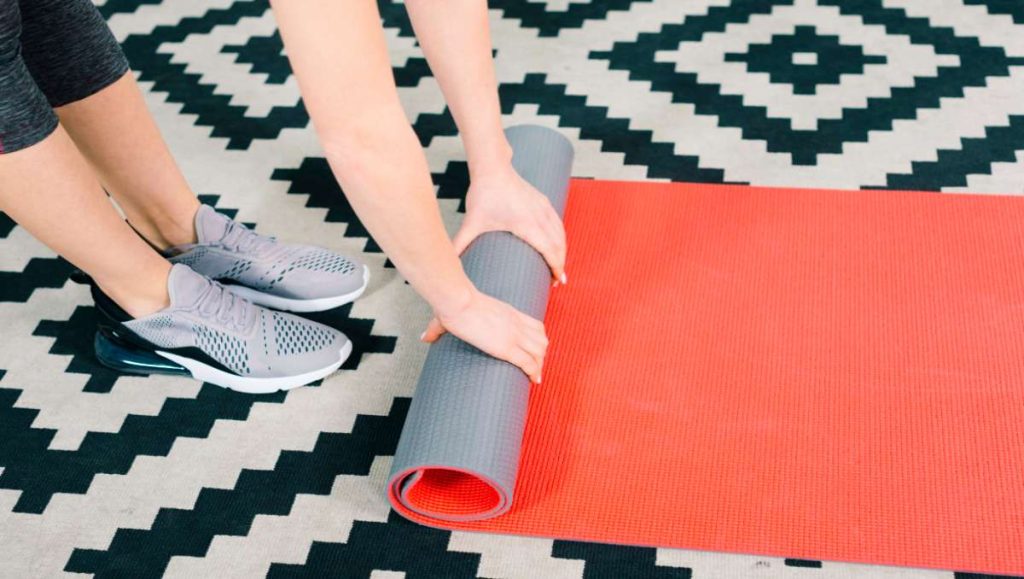
Foldable walking pads, mini ellipticals, and resistance bands are the best standing desk exercise equipment for small home offices because they deliver movement without taking up valuable floor space.
Slim walking pads can be folded or rolled away when not in use, while mini ellipticals fit neatly under most desks for discreet, low-impact motion. Resistance bands provide a zero-footprint option and store easily in a drawer, making them ideal for quick activity breaks in compact work areas.
Why it ranks best overall:
- Space-saving and easy to store
- Compatible with compact standing desk setups
- Offers multiple movement options in small areas
- Minimal disruption to work routines
Best for: Apartments, shared offices, or minimalist home work setups.
Best Standing Desk Exercise Equipment for All-Day Standing Desk Users
Dynamic Anti-Fatigue Mats & Low-Intensity Movement Tools
Dynamic anti-fatigue mats and low-intensity movement tools are the best standing desk exercise equipment for users who stand for most of the workday because they support comfort while encouraging continuous, gentle movement.
Rocker-style mats, soft balance boards, and slow walking pads promote constant micro-movements that reduce foot fatigue and lower-back strain. These tools are built for extended use and help prevent soreness or burnout.
Why it ranks best overall:
- Designed for multi-hour daily use
- Reduces foot, leg, and lower-back fatigue
- Encourages subtle, sustainable movement
- Low physical strain compared to high-intensity options
Best for: Professionals who stand 6–8 hours per day and want sustainable, fatigue-free movement.
Maximize your movement by pairing your setup with the best walking pads and treadmills designed to fit seamlessly under any standing desk. Shop our top-rated selection today!
Benefits of Using Exercise Equipment While Working
Here’s how adding standing desk exercise equipment into your workday brings real, measurable benefits to your body, mind, and long-term health and fitness.

Physical Benefits
Using exercise tools while working helps counteract the risks of prolonged sitting and low activity levels. Light movement boosts circulation, engages muscles that otherwise go unused for long stretches, and contributes to better posture and core strength, all without disrupting your workflow.
Mental & Performance Benefits
It’s not just your body that benefits, your brain does too. Light exercise and movement during work are associated with improved cognitive performance, alertness, and overall mood. Research suggests that regular low-intensity activity can help reduce stress, fatigue, and negative moods while supporting sharper focus and better engagement with tasks.
How to Choose the Right Equipment for Your Work Style
Here’s how to pick standing desk exercise equipment that actually fits how you work.
Type of Work
Your job tasks should guide what kind of movement you add. If your work demands intense focus, low-effort tools like balance mats or under-desk ellipticals can keep you moving without breaking concentration. Jobs with more natural movement breaks might allow you to use more active tools like under-desk steppers or resistance bands between tasks.
Available Space and Desk Compatibility
Before investing in exercise gear, measure your space and check your desk’s height range and clearances. Compact tools that fit snugly under desks while larger devices like under-desk treadmills need enough room to slide in and out comfortably.
Budget and Fitness Level
Your budget and current fitness level will shape what makes sense long-term. Entry-level tools like resistance bands, wobble boards, or foot rollers are affordable and beginner-friendly, while higher-end equipment like adjustable kettlebells or dedicated under-desk cardio devices may require a bigger investment.
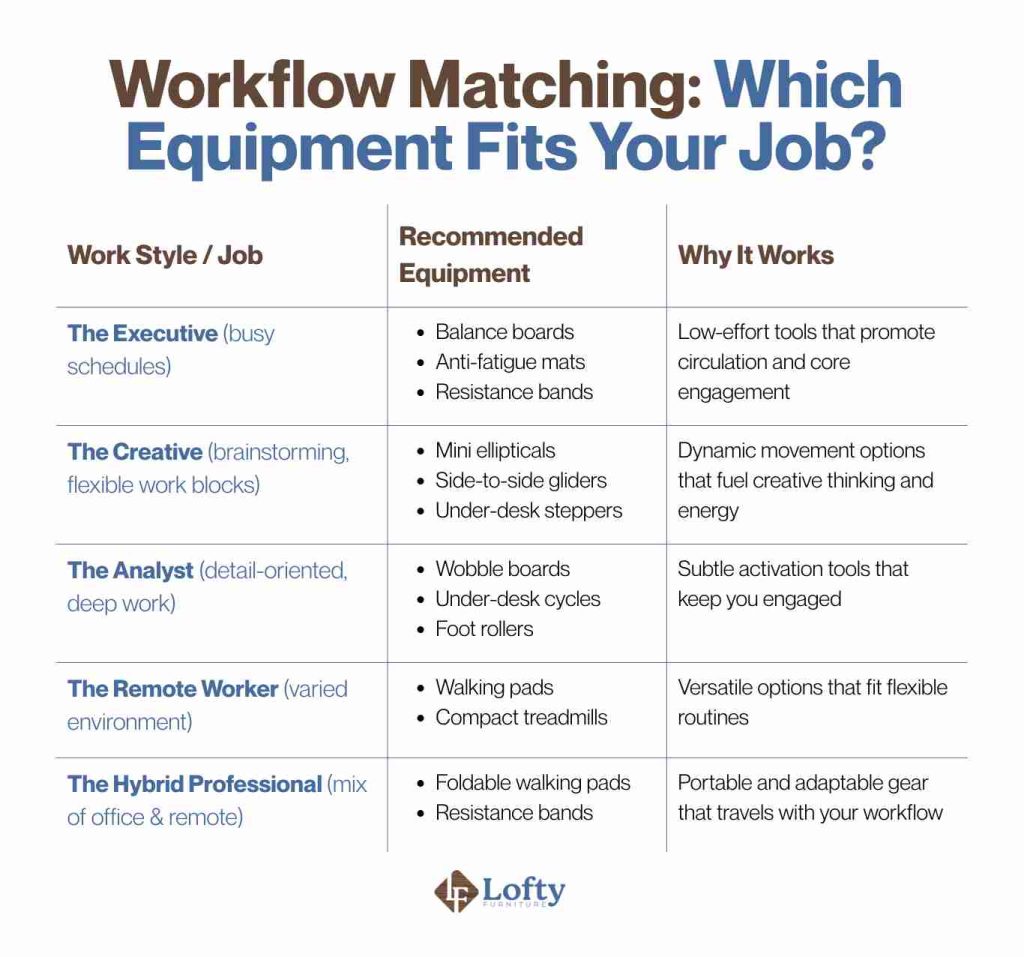
The table below helps with workflow matching, showing which equipment is best suited for different tasks and job requirements to optimize efficiency and performance.
How Much Movement Do You Actually Need Each Day?
Most people know they should move more, but the real challenge is figuring out what that actually looks like in a workday spent at a desk. The good news is that meaningful movement doesn’t require long workouts or a major schedule. According to the World Health Organization (WHO), reducing sedentary behaviour and replacing sitting time with physical activity of any intensity provides health benefits and can help mitigate the risks associated with prolonged inactivity.
Standing desk exercise equipment makes this easier by naturally interrupting long periods of stillness. What matters most is consistency. A few minutes of movement every hour is far more realistic and more sustainable than chasing perfection for busy professionals.
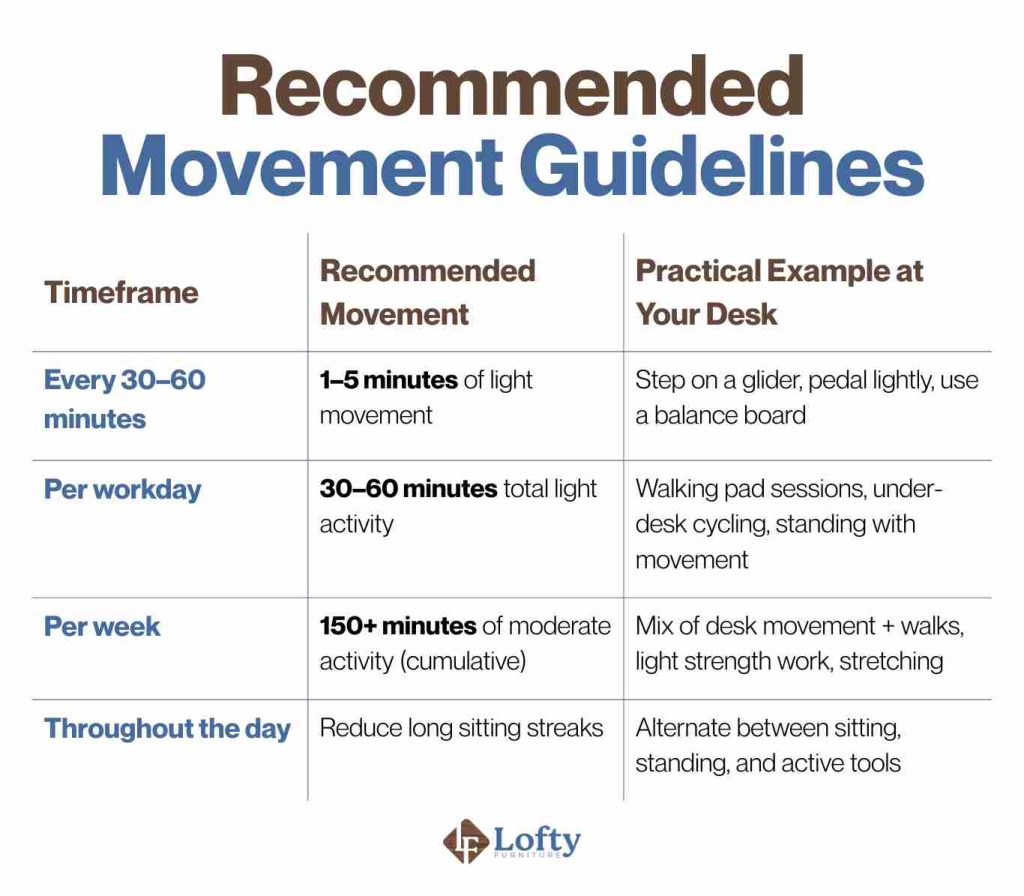
Here’s a table of recommended movement guidelines:
Safety Tips and Common Mistakes to Avoid
Here are a few safety tips and common mistakes to avoid to help you get the benefits of standing desk exercise equipment without discomfort or injury.
- Start slower than you think you need to. Begin with short bouts of movement and gradually increase duration to avoid soreness and burnout.
- Don’t sacrifice posture for movement. Poor form on balance boards, steppers, or resistance tools can lead to unnecessary strain.
- Avoid multitasking with high-intensity tools. Fast walking, heavy kettlebell work, or aggressive stepping can reduce focus and increase injury risk.
- Wear the right footwear (or go barefoot intentionally). Cushioned shoes work well for walking pads and under-desk treadmills. Barefoot or minimalist footwear can improve balance awareness on mats and wobble tools.
- Pay attention to pain, not just discomfort. Mild muscle activation is normal, sharp pain, joint discomfort, or numbness is not. Treat these signals as cues to adjust or stop.
Conclusion: Are Standing Desk Exercise Tools Worth It?
Integrating standing desk exercise equipment into your workday is more than a trendy office upgrade. It’s a practical way to move more, strengthen key muscle groups, and protect your body from the effects of prolonged sitting. While these tools won’t replace a full workout routine, they make movement effortless, consistent, and sustainable during long work hours.
For anyone looking to boost energy, maintain posture, and incorporate healthy habits without leaving the desk, these tools are absolutely worth considering. The key is choosing equipment that fits your workflow, space, and comfort level, and using it consistently in small, manageable bursts.
Frequently Asked Questions
Does using a standing desk count as exercise?
Standing alone is not considered vigorous exercise, but it reduces sedentary time and improves posture. Combining standing with movement tools provides more meaningful activity that benefits blood flow, core engagement, and energy levels.
Are under-desk treadmills safe to use while typing?
Yes, if you maintain a slow, controlled walking pace and ensure your desk and treadmill are properly adjusted. Start gradually, keep your focus split between walking and typing, and prioritize comfort and posture to avoid strain.
Can standing desk exercise equipment help with weight loss?
While it’s not a replacement for dedicated workouts, consistent low-level movement throughout the day can contribute to calorie burn and overall energy expenditure. Paired with healthy nutrition and other activities, it can support weight management and improve metabolic health.