
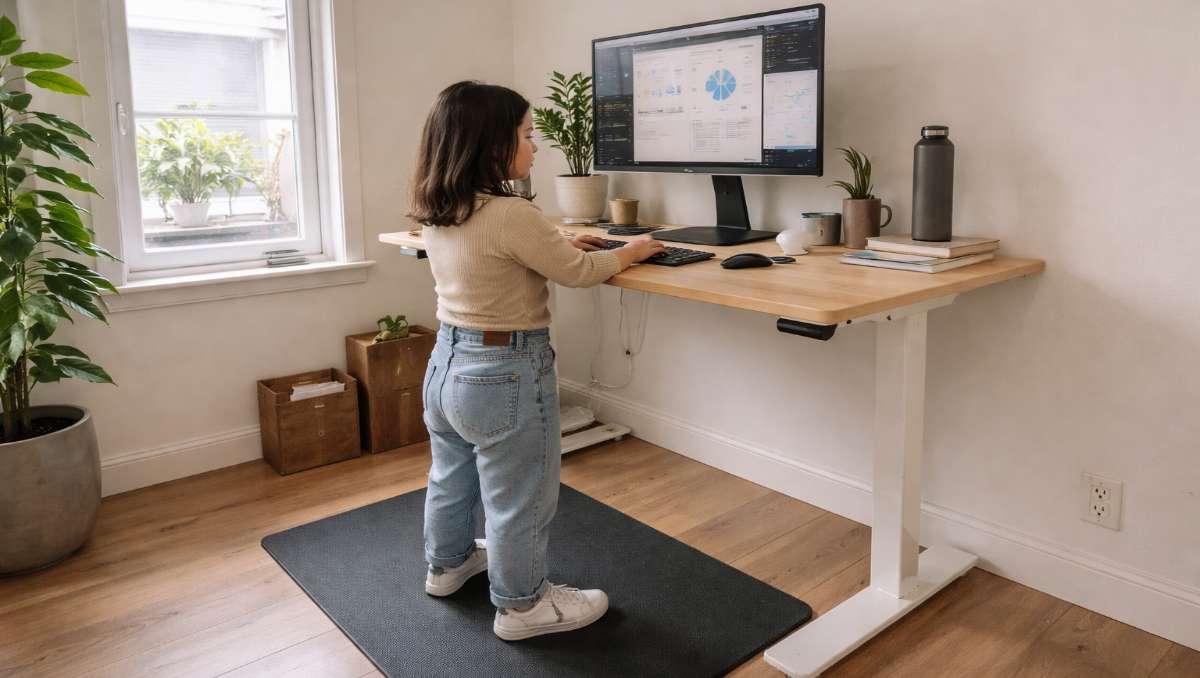
Finding a standing desk that fits your height can feel like a challenge, especially if you are on the shorter side. Many desks are built for average or taller users, which can lead to awkward posture, discomfort, and wasted workspace. The right standing desk for short people is not just about reaching the right height, it is about comfort, ergonomics, and craftsmanship that make your workspace feel intentional and enjoyable all day long.
Key Takeaways:
- For short people, the best standing desks offer ultra-low height ranges, stable frames, and ergonomic features that support proper posture and reduce strain.
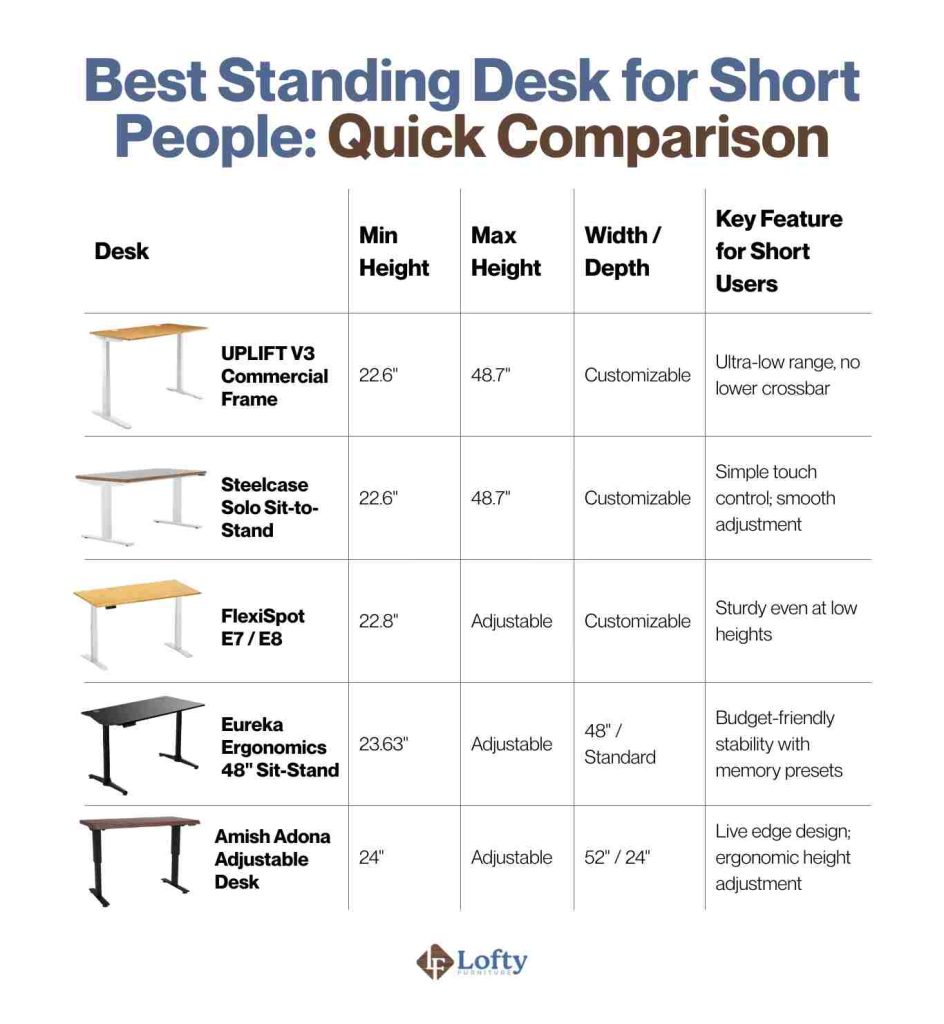
- Reliable options like the UPLIFT V3, Steelcase Solo, and FlexiSpot E7 combine low minimum heights with smooth adjustment and sturdy construction.
- Even with the right desk, proper setup plus alternating between sitting, standing, and light movement, is key to maximizing comfort and productivity.
In this guide, we will explore top options that combine thoughtful design with quality materials so you can stay productive, healthy, and comfortable without compromise.
Why Choosing the Right Desk Height Matters
If your desk is too tall or too short, it can quickly turn a productive day into a sore one. For shorter users, a desk that does not fit your height can lead to slouched shoulders, wrist strain, and back pain even if you are standing and trying to stay active. The right desk height lets you maintain good posture, keep your arms and wrists in a natural position, and stay comfortable whether you are typing, writing, or taking calls. It is not just about avoiding discomfort; it is about creating a workspace that supports your energy, focus, and long-term health. Choosing a desk that fits you properly makes all the difference in feeling comfortable, confident, and ready to work.
Best Standing Desk for Short People for Optimal Comfort
Each standing desk is evaluated for low minimum height, stability, build quality, and how thoughtfully it supports comfort over long hours.
1. UPLIFT V3 Standing Desk
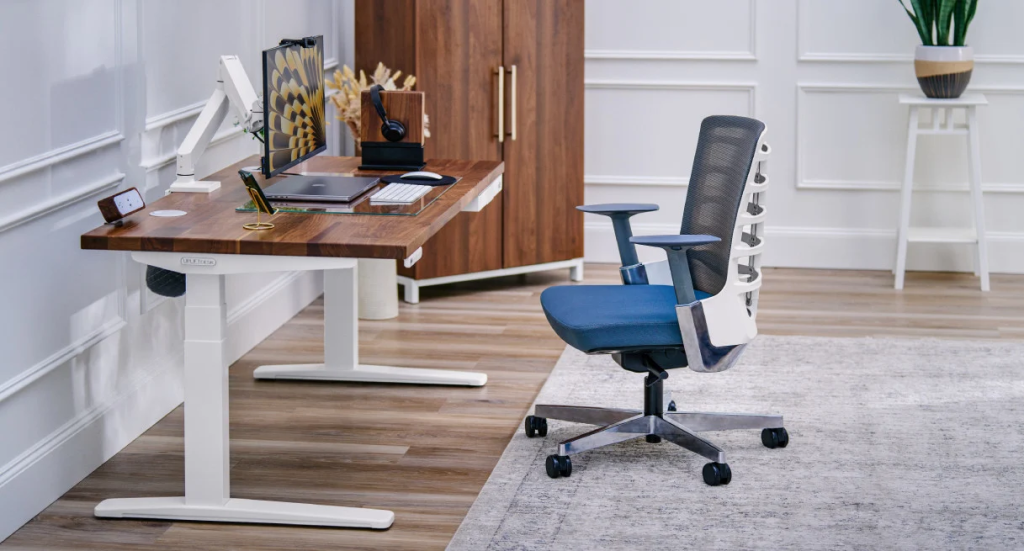
What immediately sets the UPLIFT V3 apart is its ultra-low minimum height of 22.6 inches, which is a game-changer for shorter users. Unlike many frames that rely on a lower crossbar for stability, this one stays solid without it, giving you more legroom and flexibility in how you sit and stand. The desk feels deliberately engineered rather than mass-produced, from its smooth height transitions to its commercial-grade frame. For anyone searching for a standing desk for short people that balances comfort with craftsmanship, this model sets a high bar.
Pros:
- Very low minimum height ideal for shorter users
- Excellent stability without a bulky crossbar
Cons:
- Many accessories cost extra beyond the essentials
2. Steelcase Solo Sit-to-Stand Desk
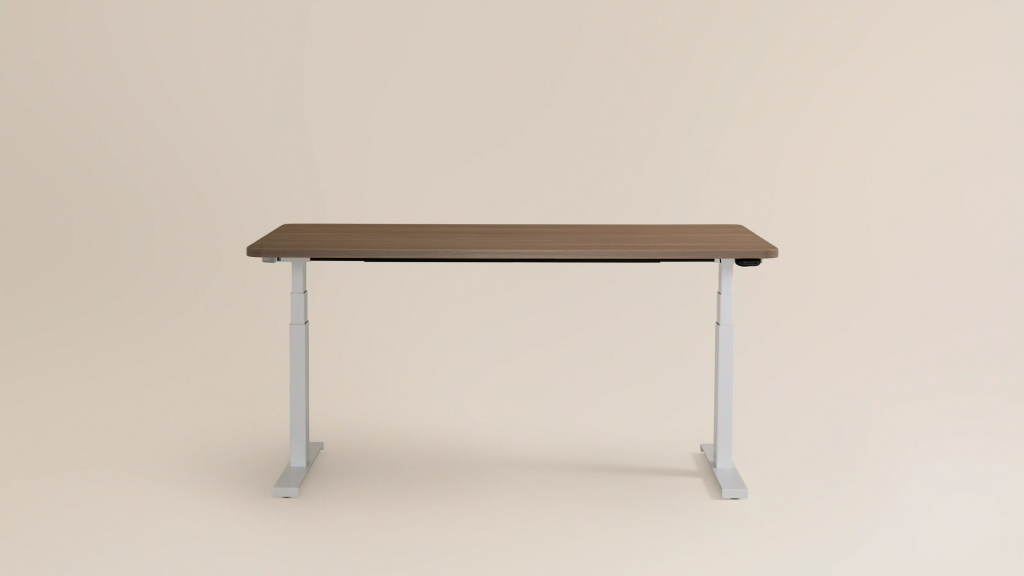
The Steelcase Solo Sit-to-Stand is a strong option for shorter users because it starts at the same ultra-low 22.6 inches, making it genuinely accessible rather than “almost ergonomic.” Its height range feels purposeful, supporting comfortable seated and standing positions without forcing posture compromises. The simple touch controller keeps the experience intuitive. For anyone who wants a sit-stand desk for short people that focuses on reliability and function over flashy extras, this one delivers.
Pros:
- Ultra-low minimum height works well for short users
- Durable surface and reliable motor performance
Cons:
- Fewer customization options than some competitors
3. FlexiSpot E7 Standing Desk
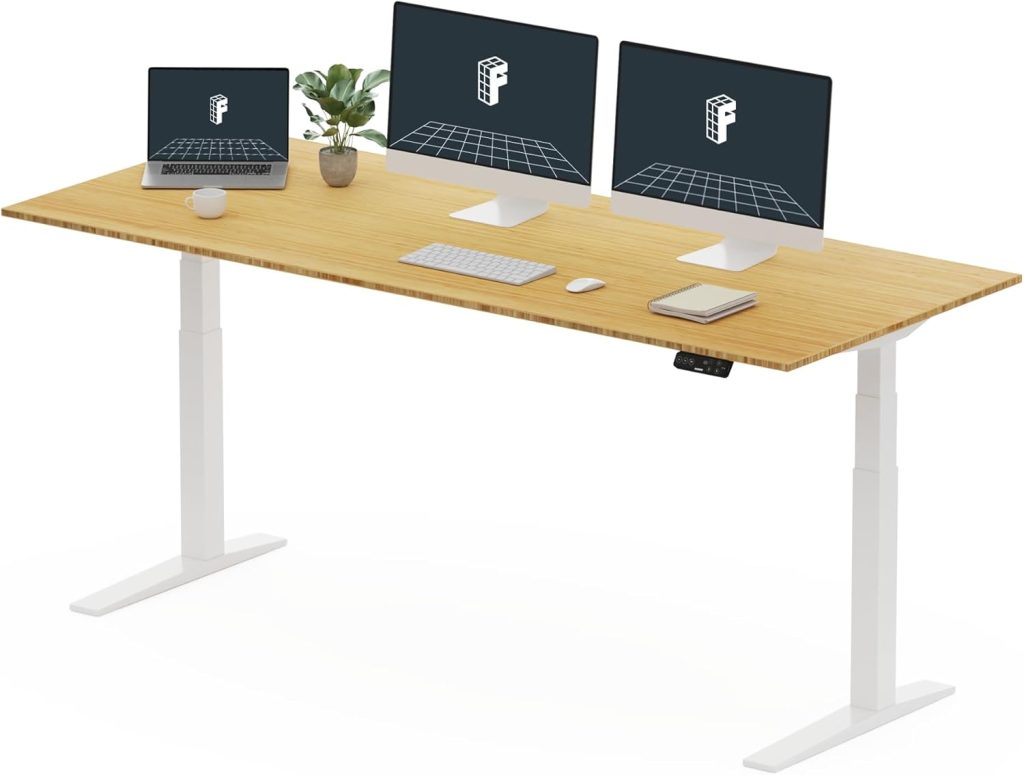
FlexiSpot’s E7 model strikes a rare balance between affordability and serious performance. With a minimum height around 22.8 inches, they sit low enough to support proper ergonomics instead of forcing you to adapt your posture. What’s impressive is how sturdy these desks feel despite their price point. The solid carbon steel base adds to that sense of durability, making the desk feel dependable rather than disposable. Adjustment is quiet and consistent, which matters if you’re moving between sitting and standing several times a day.
Pros:
- Excellent value for the features offered
- Stable frame even at lower heights
Cons:
- Desktop quality varies by bundle
4. Eureka Ergonomics 48″ Sit-Stand Desk
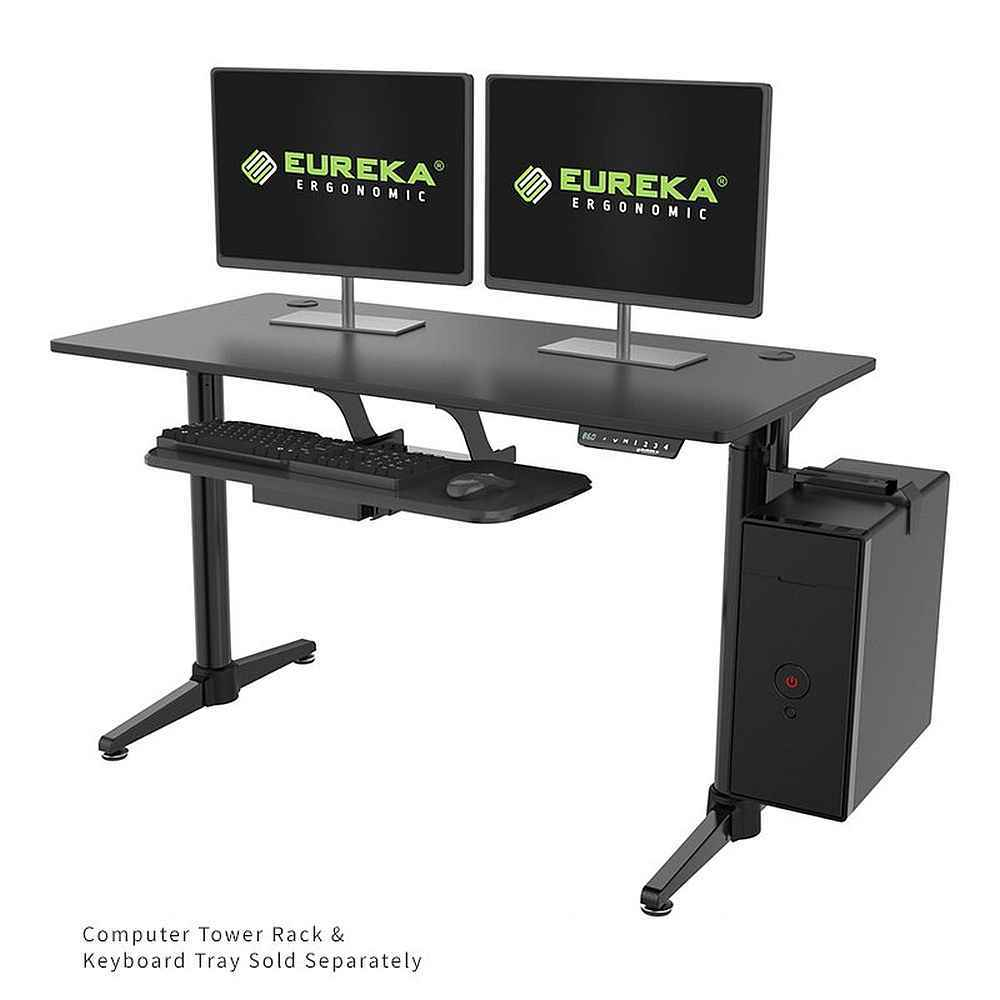
The Eureka Ergonomics 48″ desk is a budget-friendly option that doesn’t skimp on stability or features, making it a solid choice for shorter users. Its minimum height of 23.63 inches sits low enough to support proper posture, while the durable gold-plated electrical connections help extend the lifespan of the desk by several years. The four programmable memory settings make returning to your ideal seated or standing height effortless. For anyone seeking a standing desk for short people that’s affordable yet reliable, this model strikes the right balance.
Pros:
- Budget-friendly without sacrificing stability
- Programmable presets for convenience
Cons:
- Desktop material quality is basic compared to premium desks
5. Amish Adona Adjustable Height Desk with Live Edge
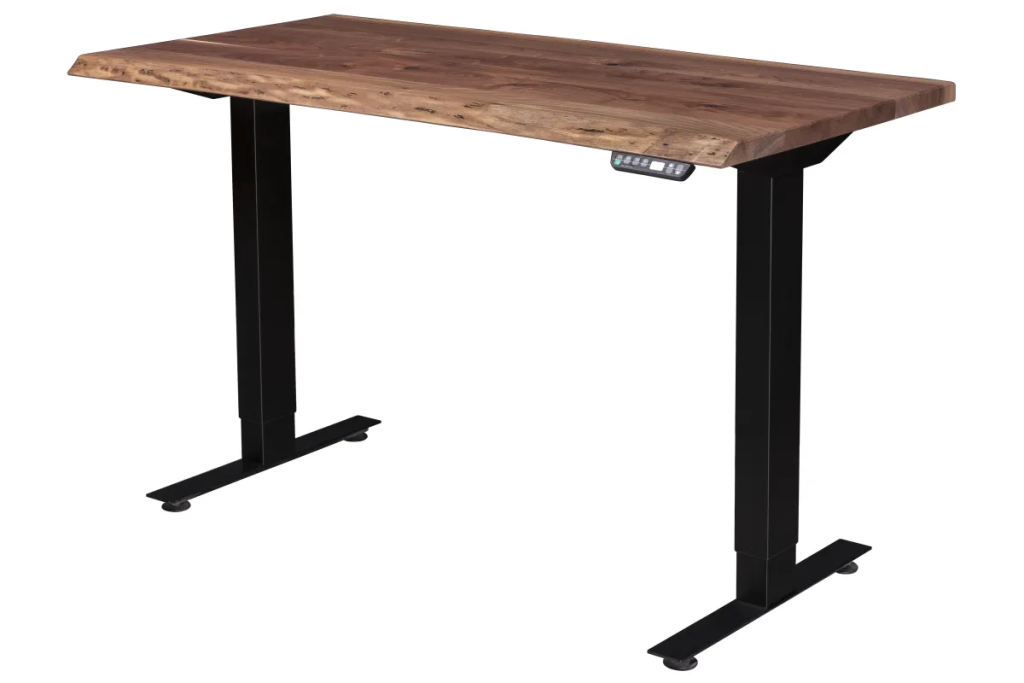
The Amish Adona Adjustable Desk combines craftsmanship with functionality, making it a standout choice for shorter users who also care about aesthetics. With a minimum height of 24 inches, it accommodates shorter frames while supporting proper posture whether sitting or standing. The 52″ wide and 24″ deep workspace provides ample room for monitors, laptops, and accessories without feeling cramped. Each desk features a unique live edge, giving it a natural, one-of-a-kind look that blends beautifully into both home and office environments.
Pros:
- Beautiful live edge desk design makes each desk unique
- Adjustable height supports proper ergonomics for shorter users
Cons:
- Higher starting price due to craftsmanship
For shorter users, finding the perfect ergonomic height can be a challenge, but L-shaped lift desks offer the stability and low-height range needed to create an expansive workspace. Browse our collection today!
Best Standing Desk Features That Benefit Short People Most
When shopping for a standing desk as a shorter user, it’s not just about hitting a “low enough” height. Certain features make a real difference in comfort, ergonomics, and everyday usability.
Extra-Low Height Range
A desk that can drop low enough is the foundation of ergonomic comfort for short users. Even a few inches desk too high can force shoulders up and strain wrists over time. Desks with ultra-low ranges let you keep elbows at a natural 90-degree angle and maintain relaxed shoulders.
Stability at Lower Heights
Being able to lower a desk is useless if it wobbles once it’s there. Solid frame construction and smart crossbar or column designs ensure that the desk remains steady, even at its lowest height. Stability allows you to work confidently without feeling like your keyboard might shift mid-task.
High-Quality Desktop Materials
The material of the desktop matters for both comfort and durability. A strong, smooth surface supports heavy monitors, laptops, and accessories without warping or denting. High-quality desktops also feel better to the touch and can make daily work feel more satisfying.
Smooth and Quiet Motor Performance
Even the best ergonomic features fall flat if the desk’s height adjustment range is jerky or loud. Reliable motors with slow start/stop and smooth transitions allow you to switch between sitting and standing effortlessly.
Learn more about standing desk error codes and solutions in this detailed guide.
The Ergonomic Measurements That Matter Most for Short People
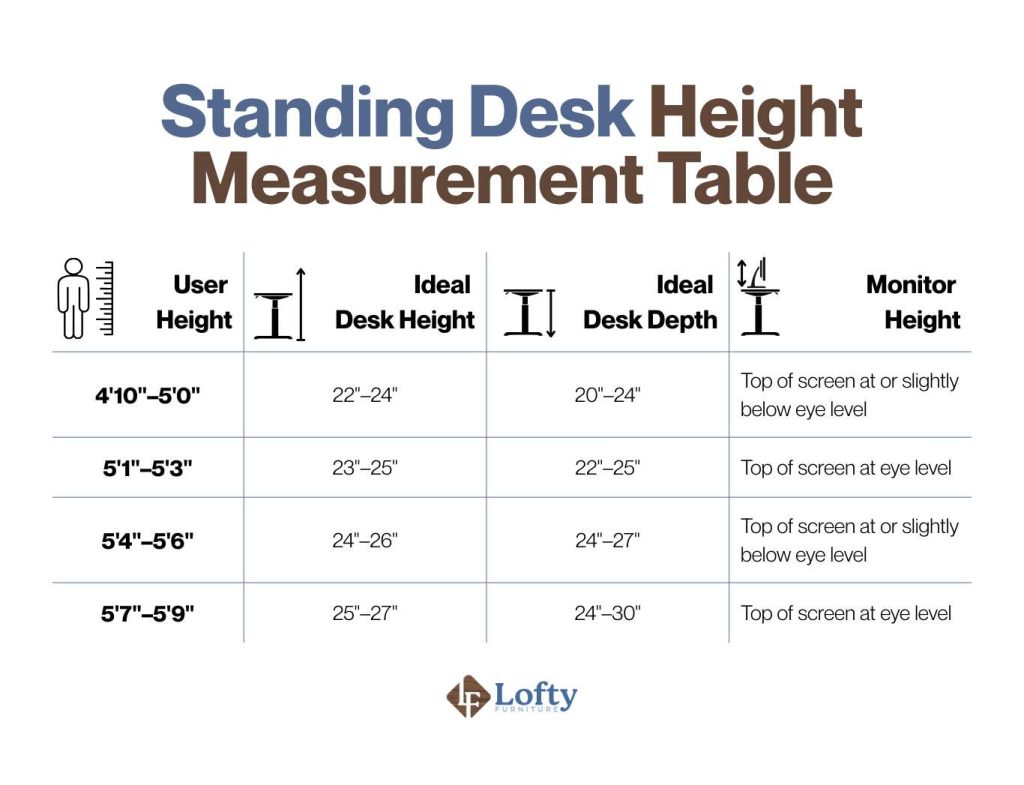
For shorter users, ergonomics is about proportions that actually fit your body. The most important factor is desk height, because even a difference of one or two inches can affect shoulder position, wrist angle, and overall comfort. A desk that goes low enough allows your elbows to rest at roughly 90 degrees. Depth also matters more than people realize: if the desk is too deep, shorter arms have to reach forward constantly, which strains the upper back.
Getting these measurements right turns a standing desk from “usable” into genuinely supportive. The best height-adjustable standing desk for short people typically pairs a lower minimum height with thoughtful spacing for monitors and accessories. Refer below for the desk dimensions by user height:
Tips for Measuring and Setting Up Your Desk
Setting up your desk correctly starts with knowing the right measurements for your body. From desk height to monitor placement, small adjustments can make a big difference in comfort, posture, and productivity.
1. Measure the correct standing height
Start by standing with your elbows bent at roughly 90 degrees. Measure from the floor up to your elbows—this is the height your desk surface should be at for comfortable standing. Getting this right helps you maintain good posture, keeps your shoulders relaxed, and prevents unnecessary strain on your back and wrists.
2. Measure the correct sitting height
Sit in your chair with your feet flat on the floor and knees bent at about 90 degrees. Measure from the floor to your elbows to find a comfortable desk height while sitting. This ensures that switching between sitting and standing won’t throw off your posture and helps you work comfortably for long stretches.
3. Adjust your monitor and keyboard
Once your desk height is set, focus on your monitor and keyboard placement. Your monitor should be at eye level so you don’t crane your neck, and your keyboard should let your wrists stay straight and relaxed while typing. Proper placement prevents strain and helps you stay focused without discomfort.
4. Fit the desk to your room
Finally, make sure your desk fits the space and your workflow. Leave enough room to move around, accommodate your chair, and include storage or décor elements if you like. A well-planned, minimal desk setup keeps your workspace functional, comfortable, and visually appealing.
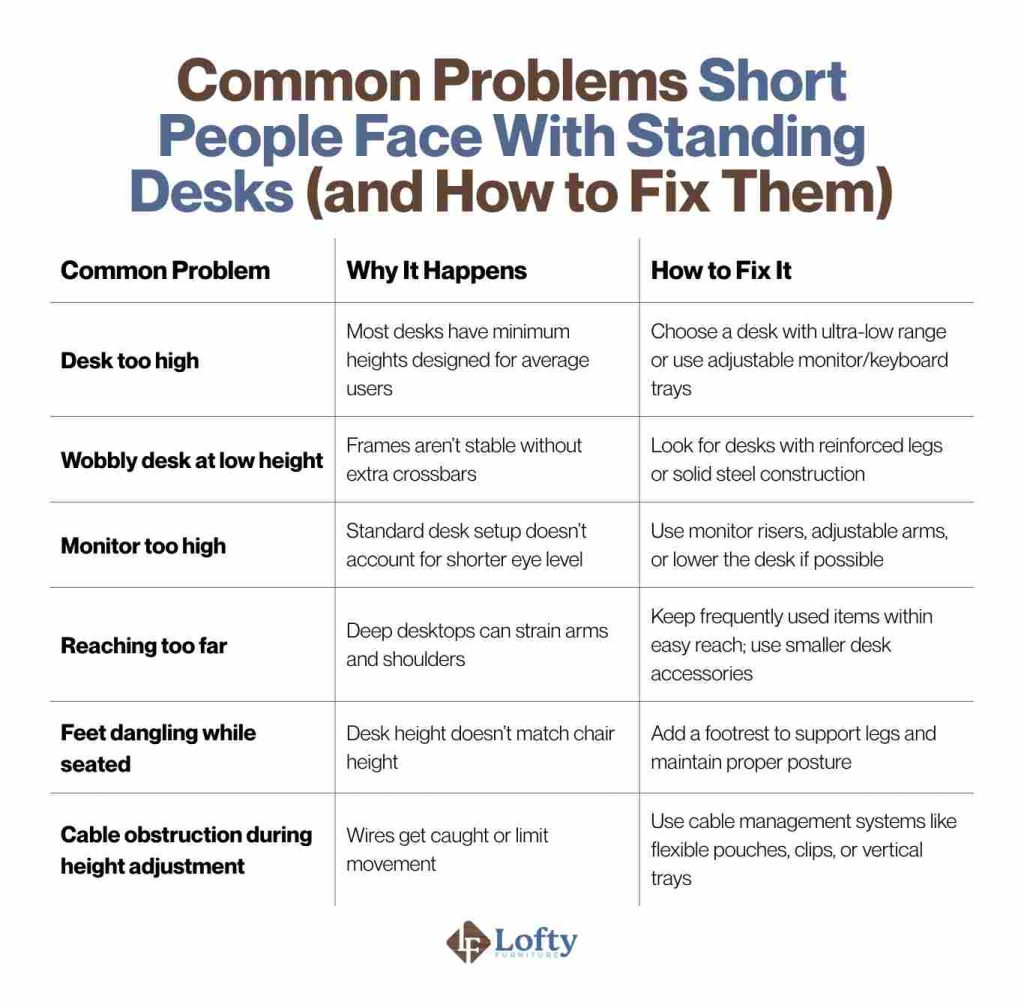
Now, to ensure a seamless installation, here’s a concise table summarizing common issues short people face with standing desks and practical fixes:
Conclusion: Are Standing Desks Worth It for Short People?
Standing desks can absolutely be worth it for short people, but only when you choose one that truly fits your body. Ultra-low height ranges, stable frames, and thoughtful ergonomics make all the difference between a desk that’s “just okay” and one that supports comfort, posture, and productivity. When paired with proper setup such as a monitor at eye level, elbows at 90 degrees, and foot support if needed, a standing desk can reduce strain, encourage movement, and even boost focus throughout the day. For shorter users, investing in a desk that adapts to your body is about long-term health and daily comfort.
Frequently Asked Questions
How tall should my desk be if I am 5’2″?
For someone around 5’2″, the ideal standing desk height is typically between 22–25 inches at the lowest setting for sitting and around 38–40 inches for standing, depending on your arm length and posture preferences. Adjustable desks are best to fine-tune for comfort.
What is the ideal standing desk height for someone under 5 feet tall?
For users under 5 feet, an ideal desk should have a minimum height of 22–23 inches. Pairing this with a proper ergonomic chair, footrest, keyboard tray, or monitor riser ensures correct posture and prevents shoulder or wrist strain.
What is the difference between a 2-stage and a 3-stage lifting column for shorter users?
A 2-stage column has two segments and generally offers a lower minimum height, which is great for short users, but may have a slightly smaller maximum range. A 3-stage column has three segments, giving a higher overall range but sometimes a higher minimum height, which might not reach low enough for very short users. Choosing the right type depends on whether your priority is ultra-low sitting height or maximum standing height flexibility.