

A custom desk top is something you’ll use every single day, often for years, so the wood you choose matters more than most people expect. It affects how the surface holds up to coffee spills, keyboard wear, and it also sets the tone for your entire workspace. When people start comparing hardwood options, the discussion almost always comes down to oak vs maple. At a glance, oak and maple can look similar, but they behave very differently once they’re part of a working desk.
Key Takeaways
- Oak and maple are both excellent hardwoods for custom desktops, with oak offering bold grain and rich appearance, while maple provides a smooth, neutral tone.
- Oak is ideal for workspaces that embrace traditional, rustic, or statement designs, whereas maple works best in modern or minimalist professional settings.
- Your choice should reflect usage, space, and personal style.
In this article, we’ll take a practical look at oak vs maple for custom desk tops, covering how each wood performs in real-world use and which one makes more sense depending on how you actually use your desk.
Oak: A Time-Tested Hardwood with Bold Character
Oak has been used in furniture and work surfaces for centuries, and for good reason. It’s a dense, durable hardwood that handles daily wear well, making it a dependable choice for a desk top that sees long hours of use. Visually, oak stands out for its pronounced grain pattern and natural variation, which gives each piece a distinct, lived-in look. That bold character is often what draws people to oak. It tends to anchor a workspace with a more traditional or industrial feel.
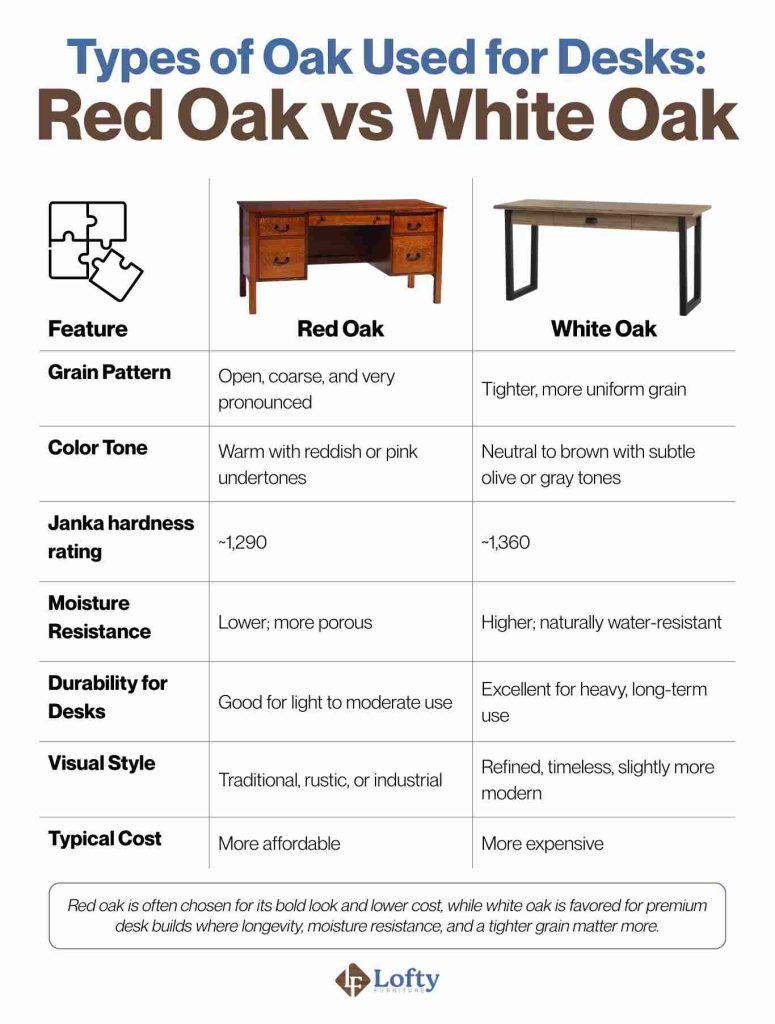
Here’s a side-by-side look at red oak vs white oak and how their structural and visual traits compare.
Maple: A Precision Hardwood Known for Consistency
Maple, whether hard maple (also called sugar maple) or soft maple, takes a very different approach compared to oak. It’s prized for its smooth, tight grain and clean, uniform appearance, which makes it a popular choice for modern, minimalist, or professional workspaces. Maple desk tops tend to look more refined and consistent, with fewer dramatic grain lines and less natural contrast. That subtle look also makes maple an excellent surface for lighter stains or clear wood finishes, especially if you want the desk to blend seamlessly into the room rather than stand out.
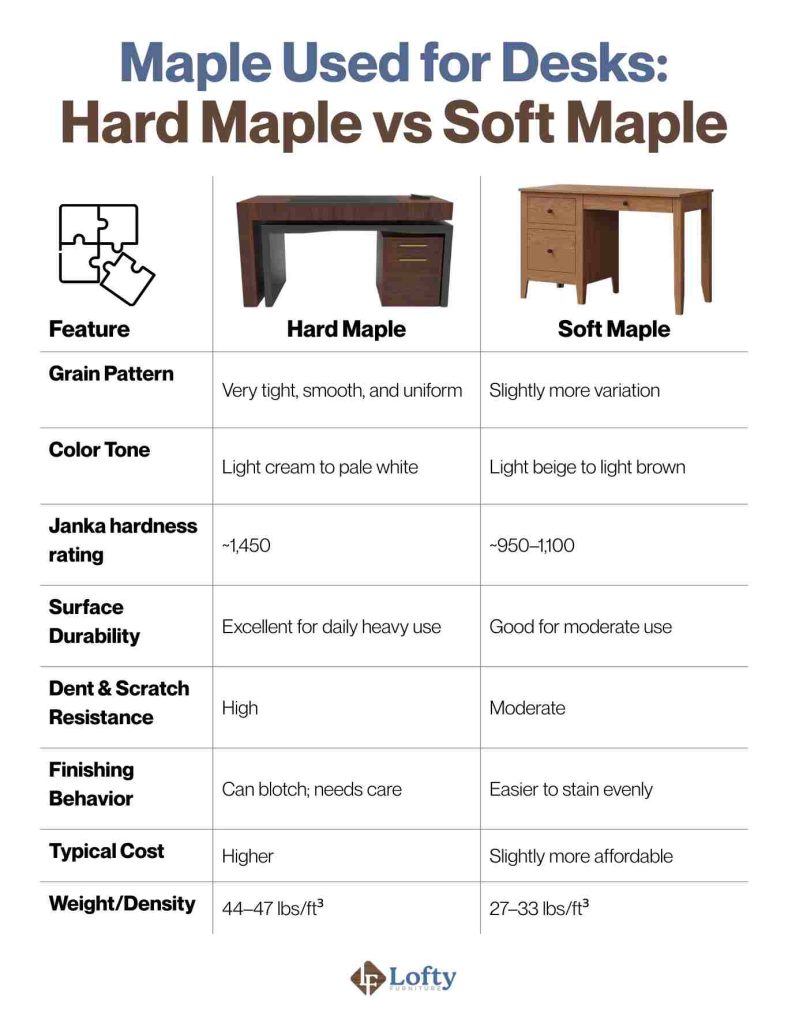
That said, maple can mean different things depending on the species. Hard maple and soft maple vary in hardness, durability, and price, which can influence how well the desk holds up under heavy daily use.
Let’s compare hard vs soft maple side by side:
Oak vs Maple: Side-by-Side Desktop Performance Comparison
When it comes to daily use, the real difference between oak and maple shows up once the desk is actually in service. Here’s a side-by-side performance comparison:
Durability Under Heavy Office Equipment
Maple generally has the edge when a desk needs to support heavy office equipment like multiple monitors, desktop towers, or mounted arms. Its dense, tight grain structure helps distribute weight evenly, reducing the chance of surface compression over time. Oak, particularly white oak, is still very durable for most setups, but its more open grain can make any pressure marks that do occur more noticeable, especially when equipment remains in the same spot for years.
Scratch and Dent Resistance
In the oak vs maple comparison, maple tends to resist everyday scratches and minor dents better, especially hard maple. Pens, keyboards, and chair arm contact are less likely to leave visible marks on a maple surface. Oak, while tough, is more likely to show surface texture changes because its grain is more pronounced.
Visual Impact in Small vs Large Rooms
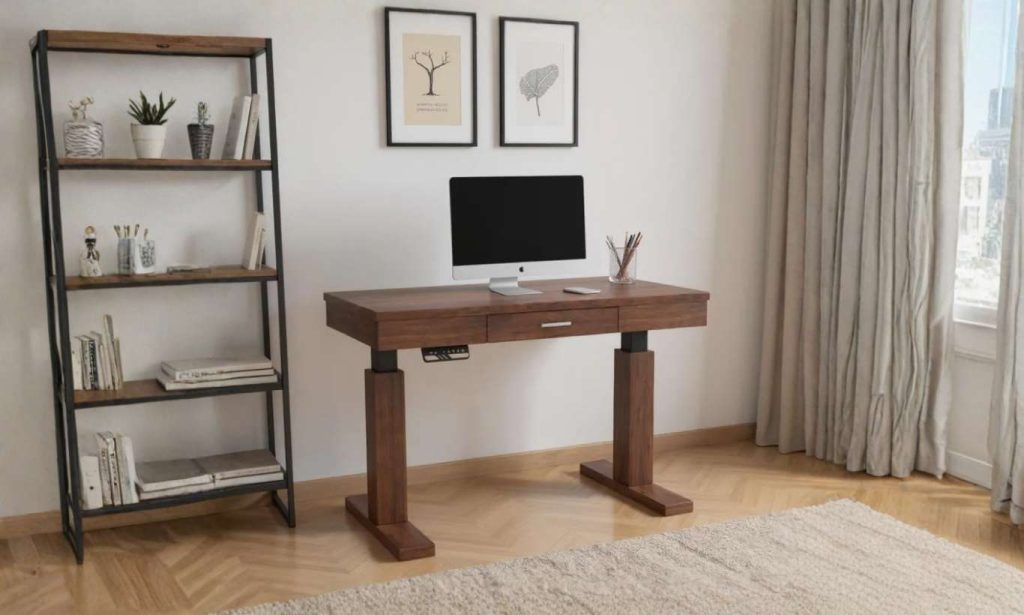
Oak’s bold grain and color variation make a stronger visual statement, which works well in larger rooms where the desk can act as a focal point. In smaller spaces, that same character can feel visually heavy. Maple’s lighter color and smoother grain help a desk blend into compact rooms, making the space feel cleaner and more open.
Cost Considerations and Value Over Time
Oak usually comes with a lower upfront cost, particularly red oak, making it attractive for budget-conscious custom builds. Maple, especially hard maple, tends to cost more initially but often holds up better under long-term daily use, which can reduce refinishing or replacement costs over time. From a value perspective, oak vs maple comes down to whether you prioritize lower entry cost or longer-lasting surface performance.
Maintenance and Refinishing
Maple and oak both maintain well over time, but they age differently. Maple’s tight, smooth grain makes it easy to clean and great for light or clear finishes. Oak, with its deeper, open grain, hides daily wear more effectively and is generally easier to refresh with light sanding or refinishing because the grain masks minor imperfections. When it comes to full refinishing, both woods respond well, but oak is often more forgiving, while maple rewards careful sanding and controlled staining to avoid blotching.
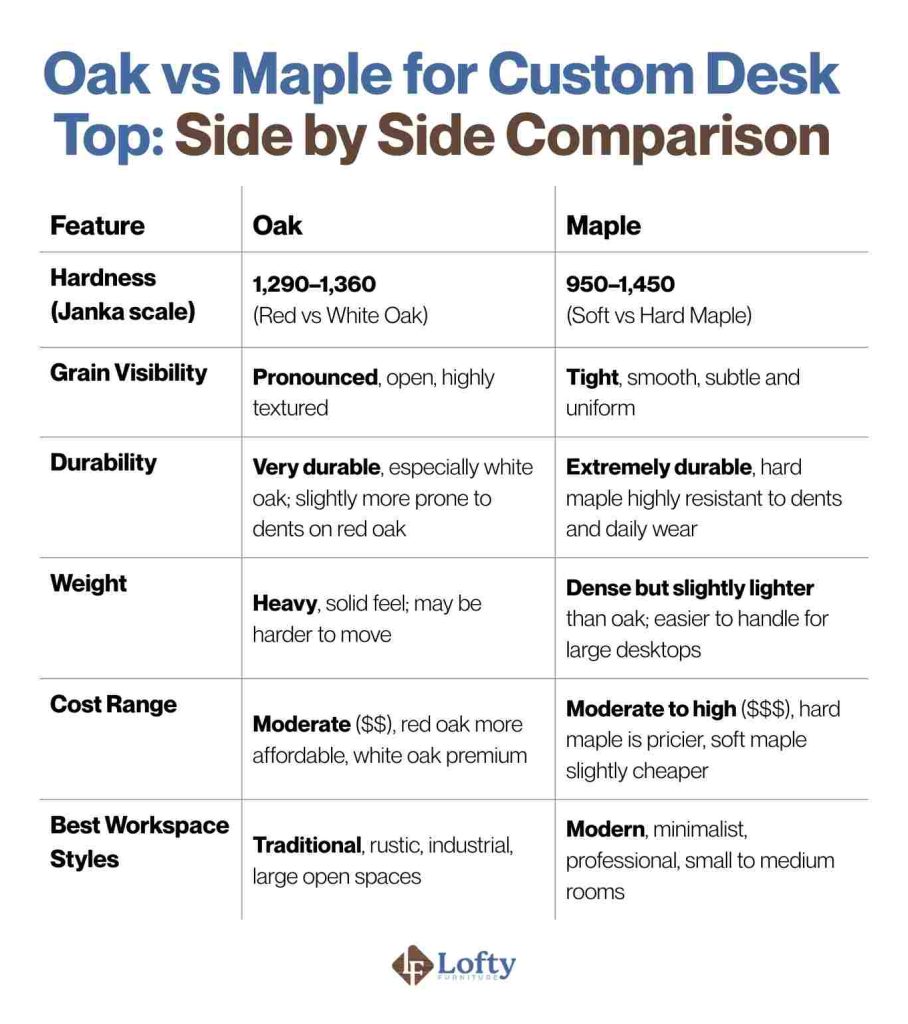
Here’s a comprehensive oak vs. maple comparison for quick glance:
How Workspace Style Should Influence Your Choice
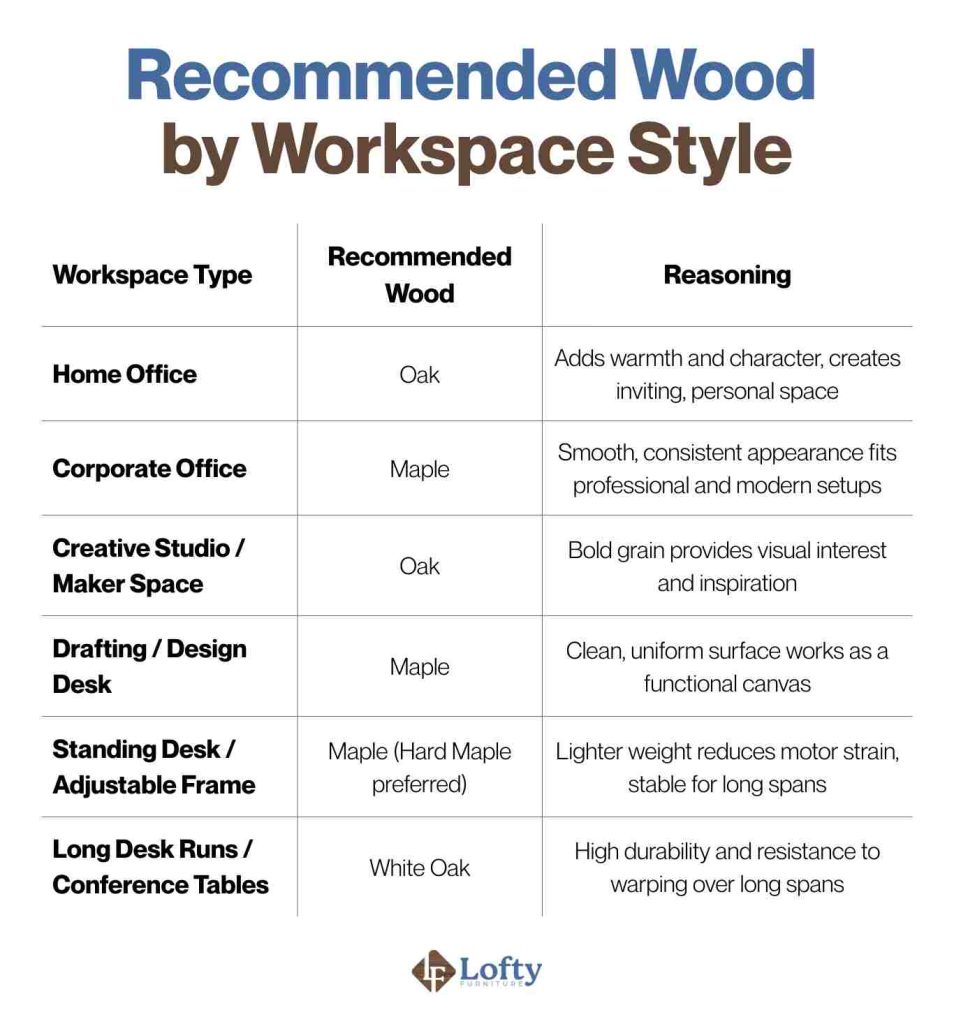
The type of workspace you’re designing plays a big role in deciding between oak and maple. In home offices, the warmth and character of oak can create a welcoming, personal feel, while maple’s clean, uniform surface offers a more neutral backdrop that fits professional corporate environments. For corporate offices where consistency and a polished look matter, maple often aligns better with standardized decor and lighter finishes.
Creative studios, maker spaces, and workshops prioritize both function and inspiration. Oak’s bold grain can bring a sense of visual texture and rustic charm, while maple acts as a smooth, unobtrusive canvas for layouts, drafting, and creative work. When it comes to standing desks or adjustable frames, both species need to account for weight and stability. Both woods require proper support to prevent long-span sagging or warping over time.
This matrix helps match workspace style and functional needs with the best wood choice, simplifying the oak vs maple decision for any type of office or creative setup.
Oak vs Maple: Which Wood Is Right for Your Workspace?
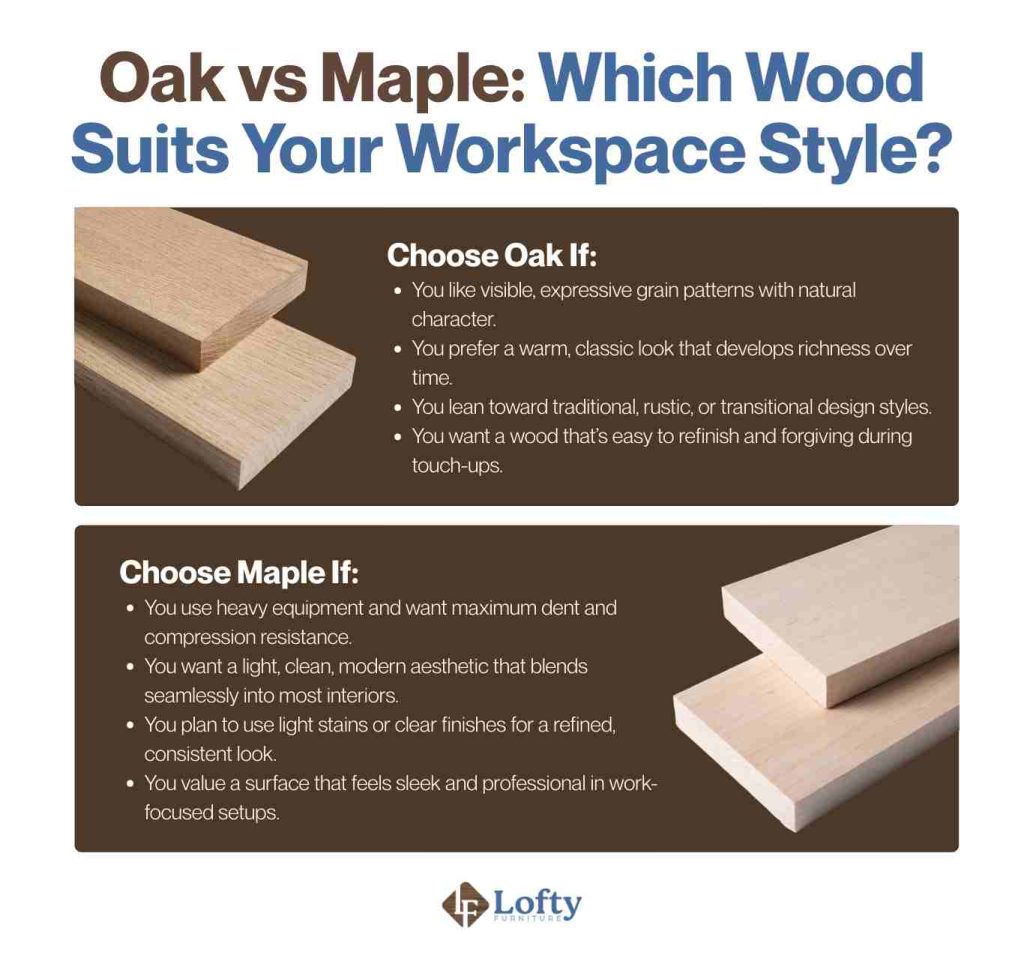
Choosing between oak and maple ultimately comes down to your workspace priorities, design preferences, and how you plan to use your desk. Oak brings bold character with its pronounced grain and warm tones. Maple, by contrast, offers a smooth, uniform surface with subtle grain and lighter tones, ideal for modern, professional, or minimalist settings. Consider the factors below to ensure your custom desk is both functional and aesthetically satisfying for years to come.
Desk Size
Desk size plays a major role in determining which wood will look and perform best. On larger desktops, oak’s heavier weight and pronounced grain create a strong visual presence that feels grounded. Maple, on the other hand, excels in large surfaces when you want the workspace to feel lighter, brighter, and more open. Its even tone and fine grain prevent a big desk from dominating the room, making it a great choice for expansive home offices.
Furniture Style
Matching your desk wood to the overall style of your workspace helps maintain a cohesive design. Oak naturally complements traditional, rustic, farmhouse, and industrial interiors thanks to its warm hues and visible grain patterns. Maple fits seamlessly into modern, Scandinavian, minimalist, and corporate-inspired setups. Choosing the wood that aligns with your furniture and décor ensures your desk feels integrated from the rest of the room.
Desired Visual Texture
Think about how much natural texture and grain you want in your workspace. If you prefer a desk surface with visual movement, personality, and depth, oak delivers exactly that with its distinctive and dramatic grain. If you favor a cleaner, more understated look that won’t compete with technology or detailed décor, maple’s soft grain and uniform appearance make it the better choice.
Whether you prefer the bold grain of oak or the subtle elegance of maple, our Amish adjustable desk combines timeless craftsmanship with modern ergonomics to create your perfect workspace.
The Final Verdict
Both oak vs maple are excellent choices for a custom desk top, but the best option depends on your priorities and workspace environment. Choose oak if you value bold character, visible grain, and a warm, traditional aesthetic that evolves beautifully over time. Maple is the smarter pick for those who prefer a clean, uniform look with smooth texture, high scratch resistance, and a neutral tone that works in modern or minimalist spaces.
Ultimately, think about your room’s lighting, desk size, furniture style, and desired level of visual texture. Matching the wood species to your personal style and workspace ensures that your custom desk is not only functional but also visually satisfying for years to come.
Frequently Asked Questions
Is oak or maple better for a standing desk desktop?
Oak is heavier and may require sturdier frame support, making it ideal for large, fixed desktops. Maple’s lighter weight makes it easier to pair with adjustable standing desk frames while still maintaining durability.
Can oak and maple desktops be stained to look similar?
Yes, both can be stained, but oak’s open grain absorbs stain differently than maple’s tight, uniform grain. Achieving a perfect match may require professional finishing and careful testing on sample pieces.
How thick should an oak or maple desk top be for stability?
A thickness of 1¼ to 1½ inches is generally sufficient for both woods on standard desktops. For longer spans or heavy equipment, 1¾ to 2 inches adds extra rigidity and prevents sagging.
Which wood is more likely to warp if my home office is in a humid basement or dry attic?
Oak, with its open grain, is slightly more prone to absorbing moisture and expanding or contracting. Maple’s tighter grain and uniform structure make it more stable in fluctuating humidity, though proper finishing and acclimation are important for both woods.