

Choosing the right wood for a custom furniture desk plays a major role in how the piece looks, performs, and ages over time. For homeowners who value durability, craftsmanship, and long-term investment, walnut and cherry stand out as two of the most respected hardwood options. Each wood brings its own character, strength, and visual appeal, making the decision an important one for both function and design.
Key Takeaways:
- Walnut is darker and harder, making it well-suited for modern desks and heavier daily use.
- Cherry is warmer with a finer grain, and it darkens naturally over time.
- The right choice depends on desk use, room style, and aging preference.
In this guide, we compare walnut vs cherry wood for custom furniture desks to help you make a confident, informed decision.
Understanding Walnut and Cherry Wood
Walnut wood is valued for its deep brown color and bold grain patterns. It is a strong, stable hardwood that performs well for everyday desk use and finishes smoothly, making it a popular choice for modern and executive-style custom desks.
Meanwhile, cherry wood features a fine, smooth grain and warm reddish tones that darken naturally over time. Slightly softer than walnut but still durable, cherry is well-suited for custom desks in traditional or home office settings, developing a rich, elegant patina as it ages.

Walnut vs. Cherry Wood for Desks
Both walnut and cherry are premium hardwoods commonly used for high-quality desks. While they share durability and craftsmanship appeal, they differ in color, character, and the design styles they complement best.
Appearance and Grain Patterns
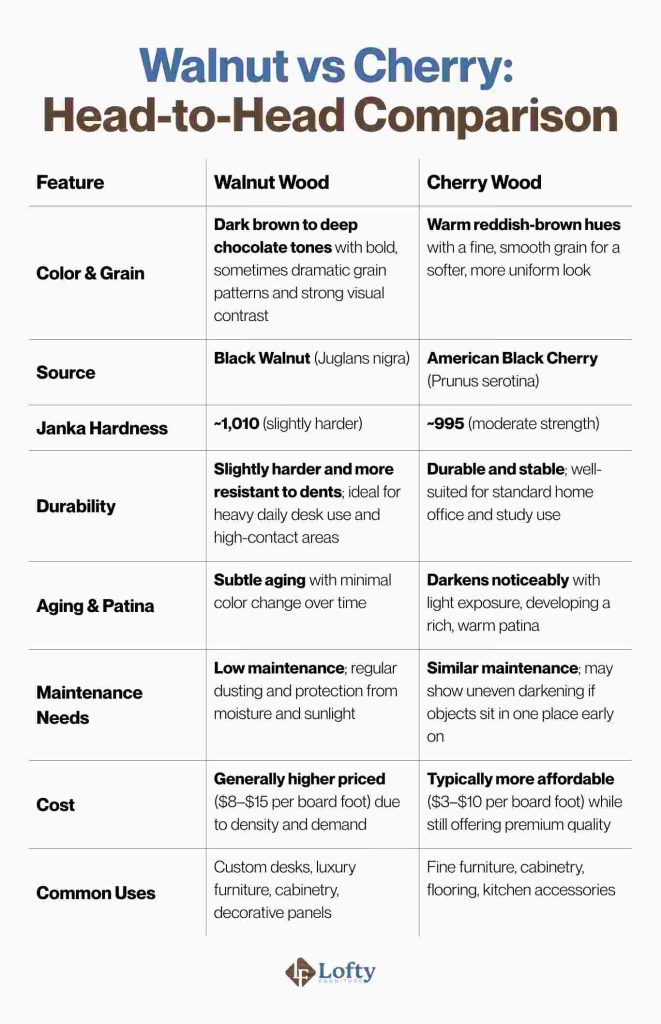
Walnut is known for its deep chocolate to dark brown tones, sometimes with subtle purple or gray undertones. Its grain can range from straight and uniform to more dramatic figuring, giving walnut desks a bold, sophisticated look that stands out in a room.
Cherry wood, in contrast, features a smooth, fine grain with warm reddish-brown tones. Over time, cherry darkens naturally, developing a richer patina. Its grain is generally subtle, giving cherry desks a refined and timeless appearance rather than a dramatic one.
Durability and Strength
Both woods are durable hardwoods suitable for everyday desk use. Walnut is slightly harder and offers excellent strength and dimensional stability, making it especially well suited for desks that support heavy equipment or frequent use.
Cherry is also strong and stable, but slightly softer than walnut. It still performs well in home offices and study spaces, where durability is important but extreme wear is less common.
Workability and Finishing
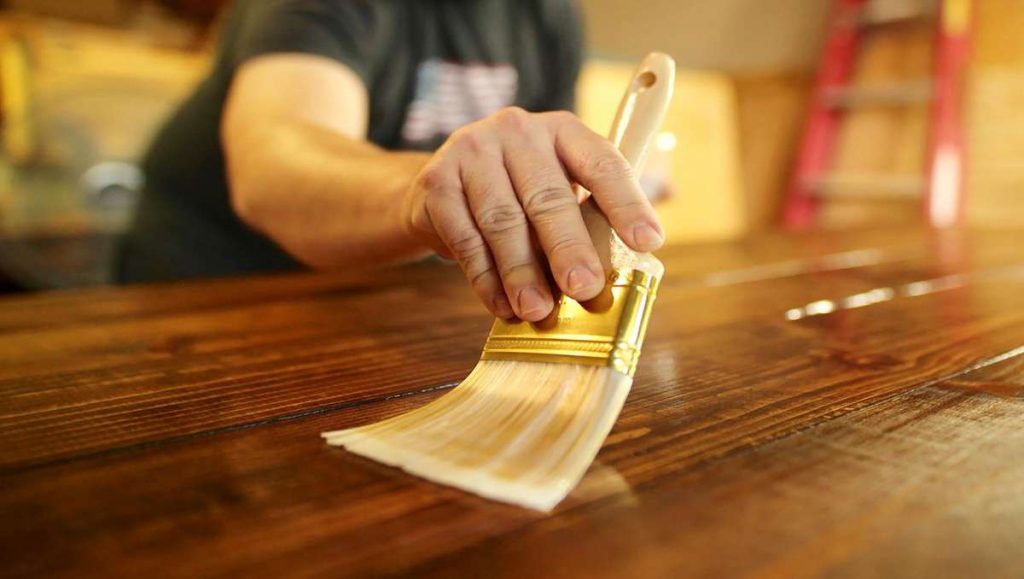
Walnut is highly workable for furniture makers, allowing for clean cuts, crisp joinery, and detailed craftsmanship. It sands smoothly and accepts oils, sealers, and satin finishes that enhance its depth and natural richness.
Cherry is equally valued for its workability. Craftsmen appreciate how easily it can be shaped and joined, and it finishes beautifully with oils or clear coats that highlight its warm color and allow the wood’s natural aging process to develop over time.
Best Design Styles
Walnut desks often complement modern, mid-century, and executive office designs. Their darker tone and striking grain make them ideal for statement pieces or minimalist workspaces where the desk acts as a focal point.
Cherry desks fit especially well in traditional, transitional, or classic interiors. Their warm tones pair naturally with vintage, handcrafted, and heirloom-style furniture, creating a softer and more classic office atmosphere.
Explore how walnut craftsmanship comes together in a real build with the Arts & Crafts Adjustable Height Amish Executive Desk.
Which Wood Is Right for You?
Choosing between walnut and cherry depends on your room style and how you plan to use the desk. Walnut suits modern, minimalist, or executive spaces and is ideal for heavier daily use, multi-monitor setups, and long work hours due to its added durability. Cherry fits traditional or transitional interiors and works well for writing desks or home offices where lighter use and craftsmanship take priority.
Aging is another key difference. Walnut maintains a relatively consistent color over time, while cherry naturally darkens and develops a rich patina with light exposure. Both woods can last for decades, so the right choice comes down to your aesthetic preference and how your desk will function day to day.
Tips for Ordering Custom Desks in Walnut or Cherry

When planning a custom desk, it helps to think through the process step by step to avoid surprises and ensure long-term satisfaction.
Ask the right build questions.
When working with a maker like Lofty Furnitures, confirm where the wood is sourced, the grade and moisture content used, and how the desk is engineered for stability and weight support.
Pay attention to board selection.
Grain flow, color consistency, and natural markings shape the final look. With cherry, ask how boards will age together since darkening can vary with light exposure.
Choose the right finish for your lifestyle.
Oil finishes highlight natural warmth and grain, while protective topcoats offer better resistance to spills and scratches. Make sure the finish matches how heavily the desk will be used.
Plan for long-term performance.
Consider your equipment setup, daily wear, and room lighting before finalizing your order. Custom options from Lofty Furnitures allow you to tailor wood type, finish, and design details to fit both your space and work habits.
Conclusion
Walnut and cherry are both exceptional choices for custom furniture desks, offering long-term durability, timeless appeal, and craftsmanship value. Walnut stands out for its strength, darker tones, and modern presence, while cherry offers warmth, elegance, and a patina that deepens beautifully with age. There’s no universal “better” option. The right wood depends on your space, how you use your desk, and the character you want it to develop over time. With quality materials, thoughtful design, and skilled construction, either walnut or cherry can become a desk that performs well and looks refined for decades.
Frequently Asked Questions
Is walnut or cherry better for standing desks?
Walnut is often the better option for standing desks due to its added hardness and ability to handle more frequent movement and weight shifts, though cherry can also work well with proper construction.
Is cherry wood an expensive wood?
Cherry is considered a premium hardwood but is typically more affordable than walnut. While not inexpensive, it offers strong value for its durability, smooth grain, and rich aging characteristics.
Will cherry wood darken unevenly if items sit on the desk?
Yes, cherry can darken unevenly if objects remain in the same spot for long periods, especially during the early stages of aging. Occasionally moving items helps promote more even color development.
Is walnut or cherry better for humid or air-conditioned rooms?
Both woods perform well in climate-controlled environments. Properly dried wood and quality construction matter more than the species itself, making either walnut or cherry suitable for humid or air-conditioned rooms when built correctly.