

Buying office furniture often comes down to design, price, or brand. But how well it supports your body during long hours of work matters just as much. That’s where ergonomic certification becomes important. Instead of relying on marketing labels like “ergonomic,” certified furniture has been evaluated against recognized standards for comfort and safety. Understanding these certifications can help you look beyond product claims and choose office furniture that genuinely supports healthier and more productive work.
Key Takeaways
- Ergonomic certification matters when buying office furniture because it verifies that a product has been tested for safety, durability, and ergonomic support.
- Ergonomic certification refers to the process of evaluating office furniture against recognized safety standards.
- Choosing certified ergonomic furniture helps reduce injury risks and improves comfort and productivity.
In this post, we’ll break down what ergonomic certification means and why it matters when buying office furniture.
What Is Ergonomics Certification?
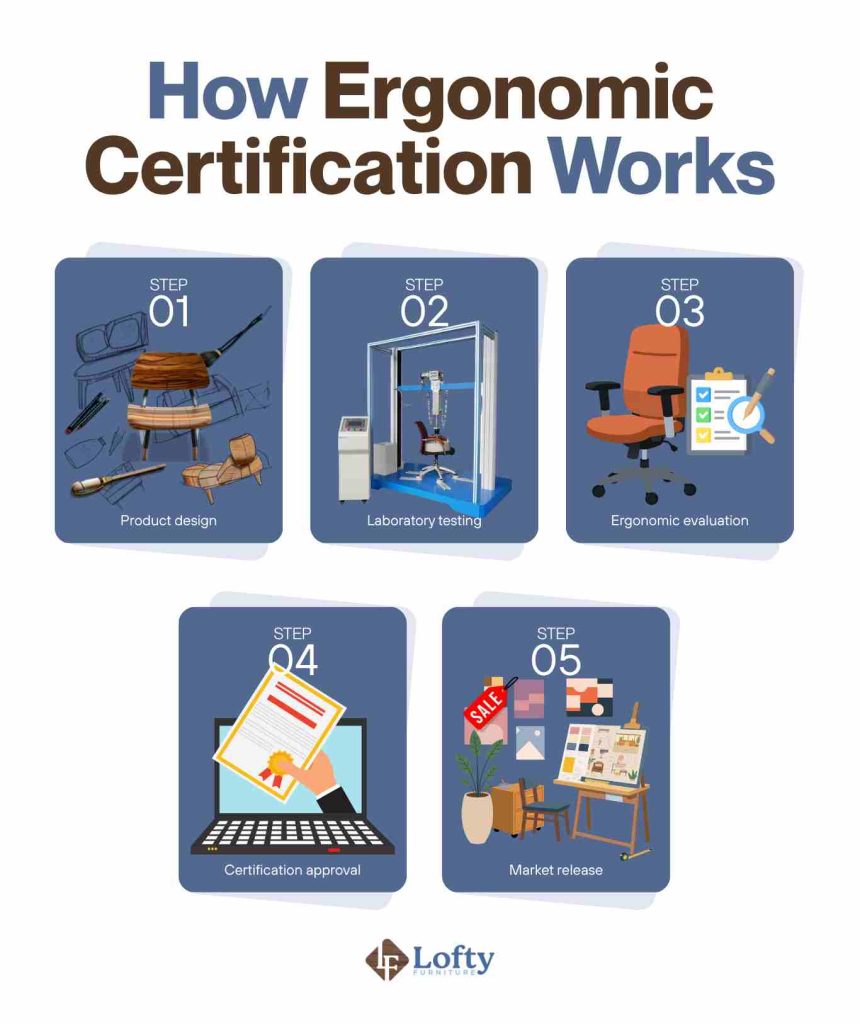
Ergonomics certification refers to the process of evaluating office furniture against recognized standards that measure safety, durability, and adjustability. Instead of relying solely on manufacturer claims, certified products are tested using established guidelines developed by industry organizations and standards bodies. During certification, workplace furniture undergoes controlled laboratory tests that measure factors such as structural strength, repeated stress, and ergonomic design elements. Products that meet these standards demonstrate that they can support proper posture and provide a safer and more reliable workspace solution for users.
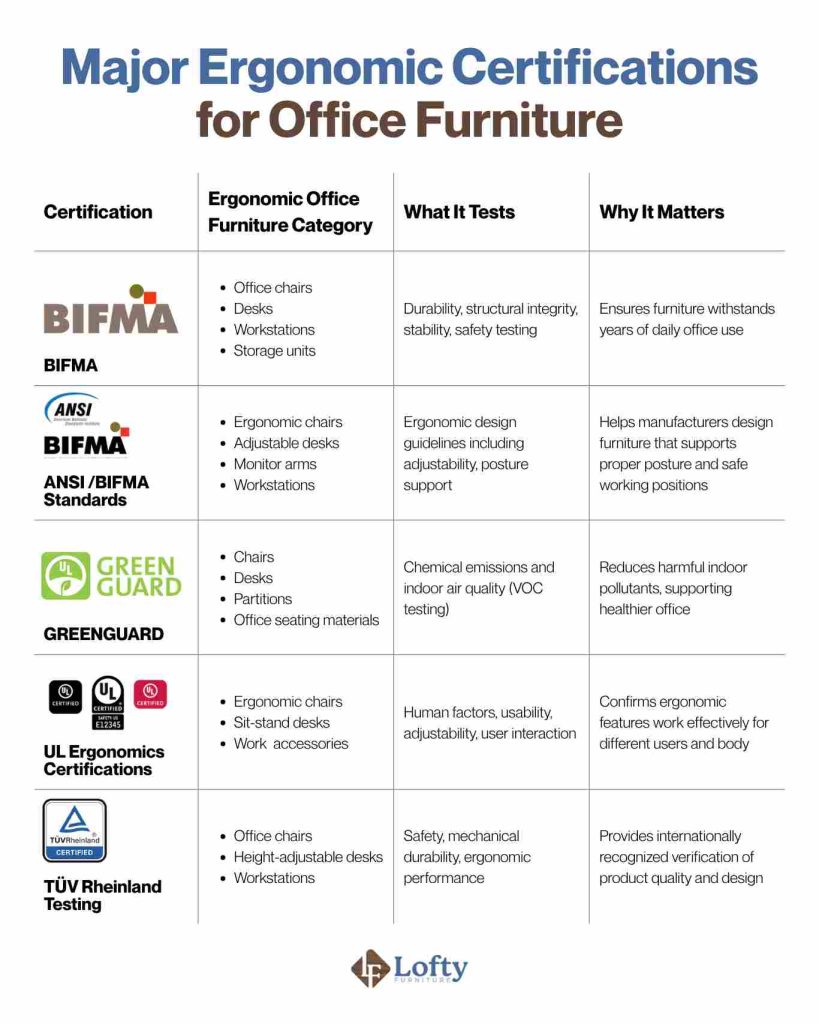
Below are the major ergonomic certifications for office furniture:
Key Reasons Why Ergonomic Certification Matters
From preventing ergonomic injuries to improving employee performance, the ergonomic benefits of certified office furniture extend well beyond aesthetics or price.
1. Injury Prevention and Workplace Health
One of the most important benefits of ergonomic certification is its role in reducing the risk factors of workplace injuries. Certified ergonomic furniture is designed to support proper body alignment. According to OSHA, musculoskeletal disorders account for a large portion of work-related injuries and often result from repetitive motion and poor workstations. Ergonomic furniture helps minimize these risks by supporting natural body positioning and reducing strain.
2. Verified Safety and Durability
Certified office furniture undergoes extensive performance testing before receiving certification. These tests simulate years of workplace use by applying repeated weight loads, movement cycles, and stability checks to ensure the furniture remains safe and functional over time. These evaluations ensure that certified furniture meets strict safety requirements and can handle the demands of daily office use.

3. ROI and Risk Mitigation
For organizations, ergonomic certification plays a direct role in financial risk management. Workplace injuries can lead to medical expenses, compensation claims, and lost productivity. Investing in certified ergonomic furniture helps reduce these risks by improving safety and supporting proper posture. Ergonomic interventions have been shown to reduce musculoskeletal disorder (MSD) incidents by up to 59%, along with significant reductions in lost workdays and claims costs.
4. Increased Productivity and Efficiency
Comfort and productivity are closely connected. When employees work in poorly designed workspaces, discomfort and fatigue can reduce focus and efficiency. Certified ergonomic furniture supports better workplace, targeting employee posture, adjustability, and comfort throughout the day.
Research suggests ergonomic improvements can increase productivity by up to 15%, while sit-stand workstations have been shown to boost performance by about 6–7%. Ergonomic design also reduces discomfort and absenteeism, supporting more consistent output over time.
5. Quality Assurance and Consumer Confidence
Ergonomic certification also serves as a form of quality assurance. When furniture carries recognized certifications, buyers know that the product has been independently tested and evaluated against established standards.
The Risks of Buying Non-Certified Office Furniture

Non-certified office furniture may look similar to certified options, but the lack of proper testing can lead to hidden issues affecting comfort, durability, and long-term health. The term “ergonomic” is often used loosely in marketing, meaning products may claim ergonomic benefits without meeting verified standards for features like lumbar support, adjustability, or armrest positioning.
In many cases, non-certified furniture also lacks sufficient adjustability to suit different body types and working positions. This can force users into awkward postures, increasing the risk of discomfort, back injuries, carpal tunnel syndrome, and poor posture over time. While these products may seem more affordable initially, their lower durability and performance often lead to more frequent replacements, resulting in higher long-term costs.
Tips When Buying Ergonomically Certified Office Furniture
The following practical tips can help buyers identify certified ergonomic furniture and choose products that truly support a functional and comfortable work environment.
1. Identify Genuine Ergonomic Certifications
Start by verifying whether the furniture carries certifications from recognized organizations. Look for clear references to recognized standards rather than vague marketing terms like “ergonomic design.” Genuine certifications often include a standard code (such as ANSI/BIFMA standards) or a certification mark that can be verified through the certifying organization’s website.
2. Prioritize Adjustability Over Aesthetics

While modern office furniture often emphasizes style and minimal design, ergonomics should remain the top priority. Furniture that looks sleek may not provide sufficient adjustability for different users. Choose office chairs and desks that allow adjustments for seat height, armrests, lumbar support, and desk height.
3. Consider User Height and Workspace Setup
An ergonomic setup depends heavily on the user’s body dimensions and how the workspace is arranged. A desk or chair that works well for one person may not provide the same comfort for someone with a different height or arm reach.
4. Balance Budget With Long-Term Value
Ergonomically certified furniture may sometimes cost more upfront, but it often delivers better long-term value. Higher-quality materials, tested durability, and better ergonomic design can reduce the need for frequent replacements.
5. Test Office Furniture Whenever Possible

Whenever possible, try the furniture before purchasing it. Sitting in a chair or adjusting a desk can quickly reveal whether the product offers adequate comfort and flexibility. If in-person testing isn’t possible, look for retailers that provide detailed product specifications, adjustment ranges, and customer reviews that describe real-world usability.
Don’t settle for a label alone. Invest in your health by choosing from our selection of ergonomic office chairs that meet industry standards for comfort and support.
Conclusion: Why Ergonomic Certification Matters
Ergonomic certification plays an important role in helping buyers choose office furniture that supports health, safety, and long-term usability. While many products are marketed as ergonomic, certifications provide independent verification that a chair, desk, or workstation has been tested against recognized standards. This helps ensure that the furniture supports proper posture, meets durability requirements, and performs reliably during daily use.
For both individuals and organizations, choosing ergonomically certified office furniture can reduce the risk factors of discomfort, workplace injuries, and premature product failure. It also provides greater confidence that the ergonomic features are backed by real testing rather than marketing claims.
Frequently Asked Questions
What factors should you consider when buying office furniture?
When buying office furniture, consider ergonomic adjustability, certification standards, durability, workspace compatibility, and user comfort. Features such as adjustable seat height, lumbar support, desk height range, and weight capacity can significantly affect long-term comfort.
Why are office ergonomics important?
Office ergonomics help reduce physical strain caused by prolonged sitting, repetitive movements, and poor posture. Proper ergonomic setups can improve comfort, reduce fatigue, and lower the risk of musculoskeletal disorders associated with desk work.
What is the AEP certification for ergonomics?
The AEP or Associate Ergonomics Professional certification is offered by the Board of Certification in Professional Ergonomics. It recognizes individuals who have foundational knowledge in ergonomics and human factors, demonstrating competency in applying ergonomic principles to workplace design and safety.
What is the OSHA standard for ergonomics?
The Occupational Safety and Health Administration does not currently enforce a single comprehensive ergonomics standard. However, OSHA provides ergonomic guidelines and workplace recommendations to help employers reduce the risk of musculoskeletal disorders caused by poor workstation design and repetitive tasks.
What is the most important ergonomic certification for office chairs?
One of the most recognized certifications for office chairs is the ANSI/BIFMA standard. These standards test chairs for durability, safety, stability, and performance to ensure they meet the demands of everyday office use.