

Long hours at a desk can lead to back pain, poor posture, and reduced energy throughout the day. Over time, these issues can affect productivity, focus, and long-term health if left unaddressed. In fact, OSHA notes that work-related musculoskeletal disorders (MSDs) account for nearly one-third of all worker injury and illness cases. As a result, more employees are requesting a doctors note for standing desk to support a healthier setup.
Key Takeaways:
- A doctor’s note for a standing desk is a medical document supporting ergonomic needs based on a specific health condition.
- Doctor’s note approval requires a clear diagnosis, limitations, and provider recommendation.
- Standing desks usually aren’t covered unless there’s strong medical documentation.
In this article, we’ll break down what a doctor’s note for standing desk should include, who qualifies for one, and how eligibility and coverage typically work.
What Is a Doctor’s Note for a Standing Desk?

A doctor’s note for a standing desk is simply a recommendation from a licensed healthcare provider saying you’d benefit from a sit-stand workstation. It’s usually requested when someone is dealing with back pain and other discomfort tied to long hours of sitting. The note helps support a formal accommodation request at work by explaining the medical reason behind the need for a more ergonomic setup. In some cases, doctors may provide a more detailed document called a Letter of Medical Necessity (LMN), which outlines the condition and clearly explains why a standing desk is recommended.
More people are asking for these notes because of how much time we spend sitting on the job. Research shows that employees spend around 81.8% of their workday seated, which has been linked to higher risks of musculoskeletal discomfort and other health concerns. Because of this, a doctor’s note or LMN is often a practical step toward reducing health risks and creating a better day-to-day work environment.
What You Need for a Letter of Medical Necessity (LMN) for a Standing Desk
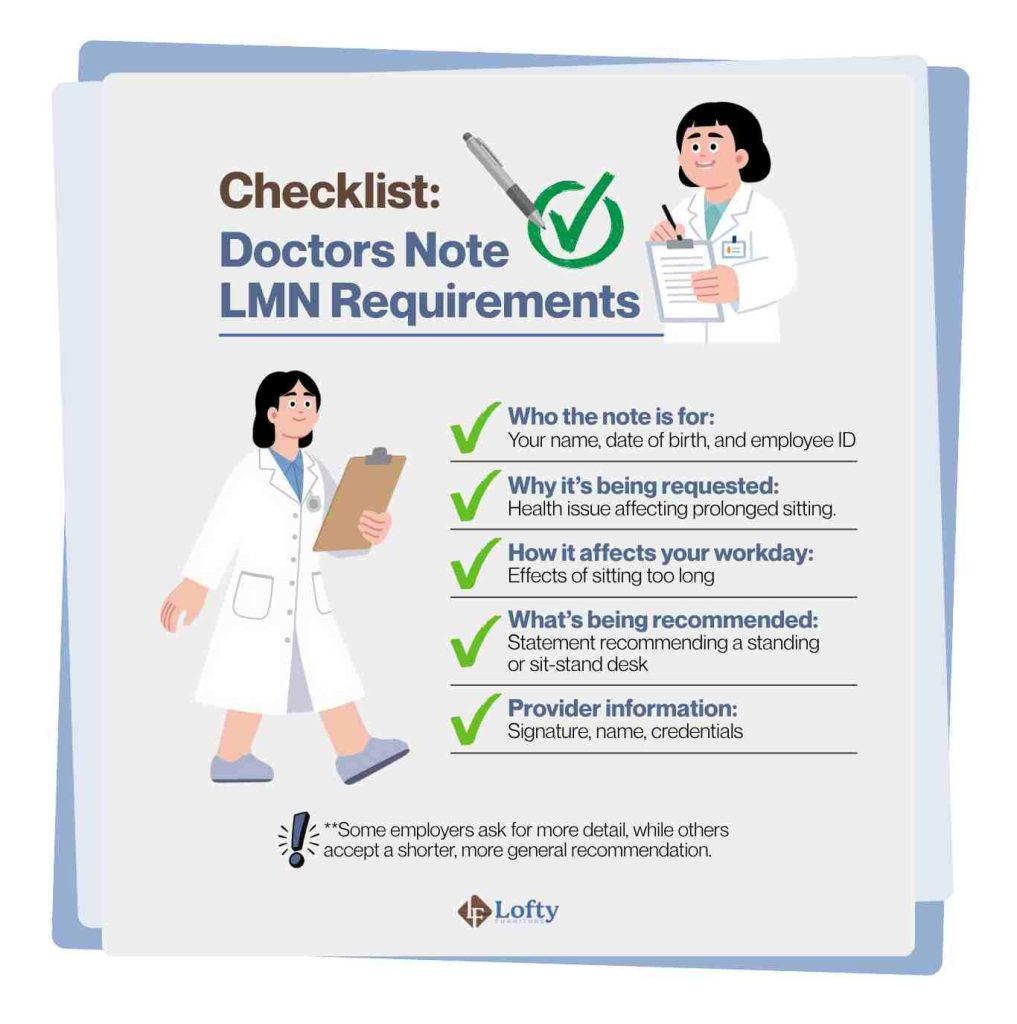
A Letter of Medical Necessity (LMN) is usually more detailed than a basic doctor’s note, but there’s no single “universal” format. That said, most LMNs tend to cover a few common elements:
Basic Identification Details
The letter will typically include your name and sometimes an additional identifier (like date of birth or employee ID). This just helps ensure the document is clearly tied to you during the review process.
Relevant Health Context
The healthcare provider must state the relevant medical condition or diagnosis that justifies the need for a standing desk and/or standing table. This could include issues like chronic back pain, spinal disorders, or other musculoskeletal conditions that are aggravated by prolonged sitting.
Clear Recommendation for a Standing Desk
The key part is a clear statement that a standing desk (or sit-stand workstation) could help address those issues. Some providers may also briefly explain why, such as allowing you to change positions throughout the day to reduce strain.
Getting a Standing Desk Approved: What Qualifies and How to Do It
Getting a standing desk approved usually comes down to having clear medical documentation and meeting your employer’s policies. For workplace accommodations, you can submit a doctor’s note or Letter of Medical Necessity through HR, and the Americans with Disabilities Act may require reasonable accommodations when properly supported, depending on the situation. For HSA or FSA accounts rules are stricter and typically require an LMN linking the desk to a specific medical condition.
Understanding how to get a doctor’s note for a standing desk at work starts with a clear and structured approach. Here’s how the process typically works from start to finish.
Step 1: Assess Your Symptoms

Start by identifying any discomfort or limitations you experience during the workday. This may include sore back, stiffness, poor posture, or difficulty sitting for long periods.
Step 2: Consult a Healthcare Provider
Schedule an appointment with a qualified provider such as a general physician, orthopedist, or physical therapist. Be clear about your symptoms and work setup.
Step 3: Request Documentation
If your provider determines that a standing desk is appropriate, ask for a formal doctor’s note or a Letter of Medical Necessity. Make sure it includes your condition, functional limitations, and a clear recommendation for a standing desk.
Step 4: Submit to Employer or HR
Provide the documentation to your HR department or manager according to your company’s process. Be prepared to answer follow-up questions or provide additional details if needed.
What If Your Request Doesn’t Get Approved?
If your standing desk or LMN request is denied, it usually means something needs clarification or stronger documentation. Employers may reject requests due to missing details, unclear wording, or policy limits so it helps to ask for specific feedback and, if needed, submit revised documentation. On the healthcare side, providers may choose not to issue an LMN based on their judgment. If that happens, you can ask for clarification, request a simpler doctor’s note, or seek a second opinion from another qualified provider.
Costs, Insurance, and Reimbursement
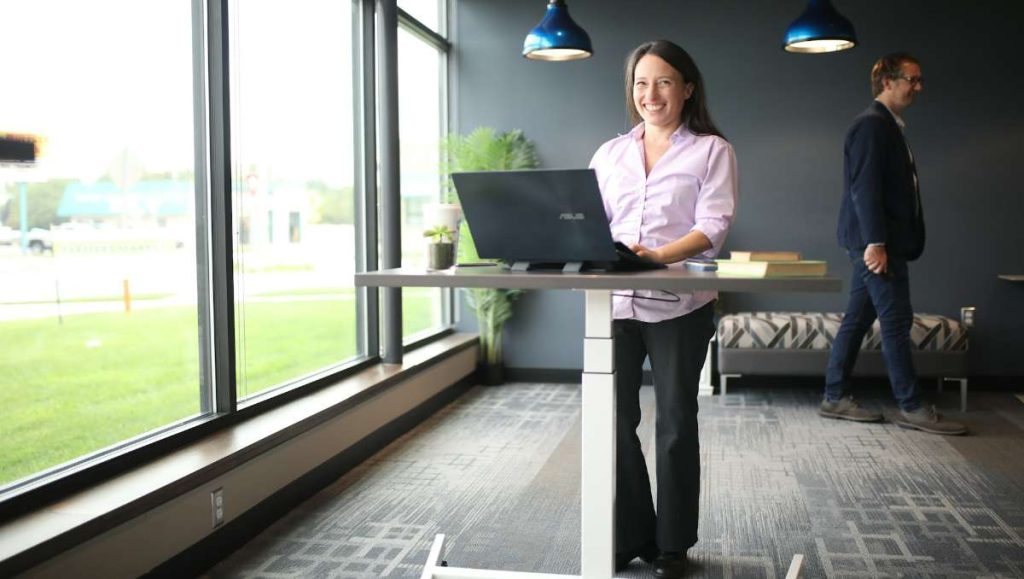
The cost of a standing desk can vary widely depending on features, materials, and adjustability. On average, most standing desks fall between $300 and $800, with budget options starting around $200 and premium models exceeding $1,000. This price range often becomes a key factor in whether employees seek employer support or reimbursement.
When it comes to insurance or reimbursement, coverage is not guaranteed. Most traditional health insurance plans do not cover standing desks since they are considered workplace equipment rather than medical devices. However, reimbursement may be possible through employer wellness programs or tax-advantaged accounts like HSA or FSA, but only if supported by a valid Letter of Medical Necessity.
If your doctor has recommended an ergonomic upgrade, invest in a handcrafted Amish lift desk that combines therapeutic standing benefits with timeless durability.
Conclusion: Take Control of Your Occupational Health
A doctors note for standing desk is a practical step toward improving your daily comfort, reducing strain, and supporting long-term health at work. By understanding the requirements, knowing what qualifies, and following the proper process, you can make a stronger case for an ergonomic desk setup that fits your needs. If you qualify, a standing desk can be a valuable investment in both productivity and well-being. Taking action, whether through formal requests or simple ergonomic improvements, puts you in control of your occupational health.
Frequently Asked Questions
Can I get a prescription for a standing desk?
Yes, you can. A healthcare provider can issue a doctor’s note or a Letter of Medical Necessity if you have a condition that justifies it. While it’s not a “prescription” in the traditional sense like medication, it serves a similar purpose in supporting medical need for workplace accommodation or reimbursement.
Will a standing desk help with sciatica?
It can help in many cases. A standing desk allows you to change positions throughout the day, which may reduce pressure on the lower spine and sciatic nerve. However, it is not a cure, and proper posture, movement, and medical guidance are still important for managing symptoms.
How to get approved for a standing desk?
Start by documenting your symptoms and consulting a qualified healthcare provider. If they determine it’s necessary, request a doctor’s note or LMN that clearly outlines your condition and limitations. Submit this to your employer or HR department and follow their accommodation process.
Can an employer deny a standing desk request even with a doctor’s note?
Yes, it is possible. Employers are generally required to consider reasonable accommodations, but they can deny requests if they can show it causes undue hardship or if alternative accommodations are available.