
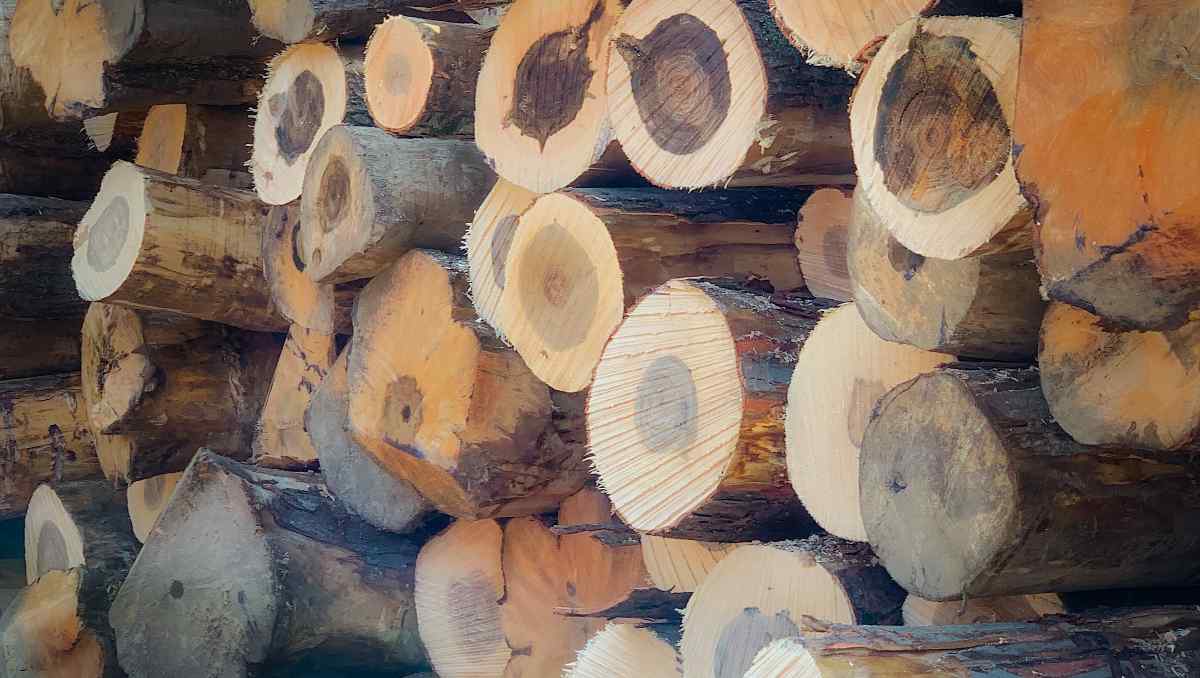
Materials play a quiet but powerful role in a workspace design. Among them, exotic wood species stand apart because they bring depth, texture, and character that manufactured finishes simply can’t replicate. From richly patterned grain to natural color variations, exotic woods introduce a sense of intention into a workspace. Beyond aesthetics, these woods often carry unique properties that influence how a desk feels to the touch and how a space evolves over time.
Key Takeaways:
- Exotic woods are prized for their unique grain patterns, natural color variation, and ability to elevate workspace design beyond standard materials.
- Key properties of exotic wood species include superior hardness and durability and high oil content, making them well-suited for long-term use in desks and cabinetry.
- Examples of exotic wood species include African walnut, mahogany, teak, rosewood, and ebony.
In this article, we’ll explore the properties of these remarkable woods and show how incorporating them into your office design can elevate both style and functionality, creating a workspace that’s as inspiring as it is enduring.
What Makes a Wood Species “Exotic”?
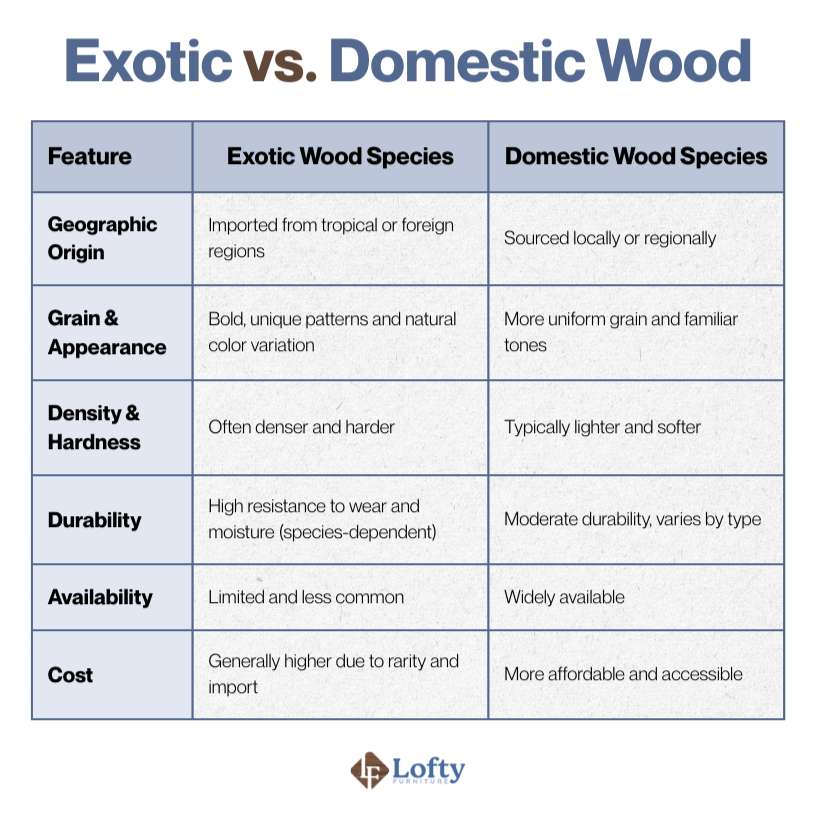
A wood species is typically considered “exotic” when it originates outside the region where it is being used, often coming from tropical or subtropical areas in Africa, South America, or Southeast Asia. These woods developed in demanding climates, which often results in tighter grain structures, higher density, and distinctive coloration. Unlike many domestic species, exotic wood species frequently display dramatic grain patterns, natural striping, or deep, saturated hues that are difficult to replicate with stains. Rarity also plays a role. Some exotic hardwoods are less commonly harvested or grow more slowly, adding to their perceived value.
Exotic Wood Properties That Elevate Workspace Design
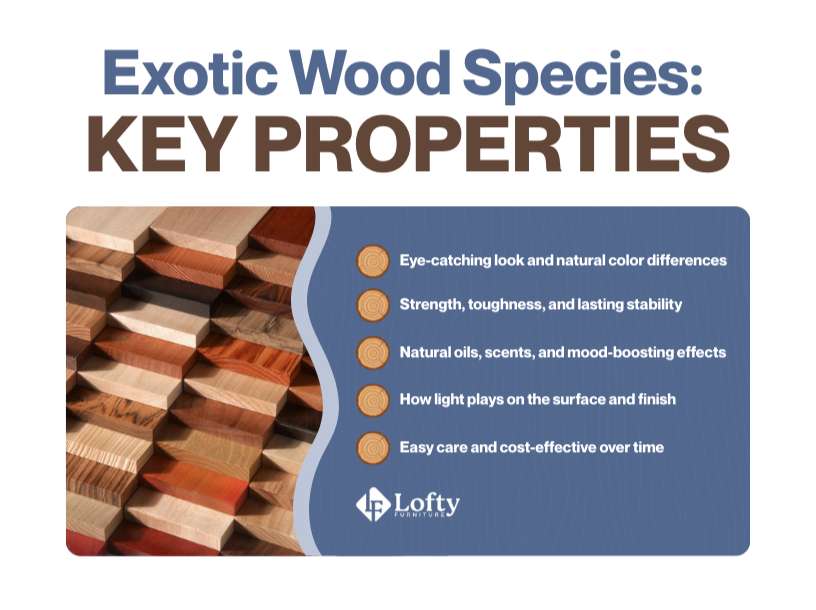
Below are key characteristics that make exotic woods particularly impactful in design, from visual presence to long-term performance and even psychological effect.
1. Aesthetic Appeal and Natural Color Variation
One of the most compelling reasons designers select exotic wood species is their inherent visual richness. Many exotics feature bold grain patterns, vibrant hues, and natural variations that can’t be duplicated by stains or laminates. This natural variation also means no two slabs or veneers are exactly alike. As Per Obiora, cofounder of Kashew.com, explains:
“Exotic woods really stand out (and are best sellers in resale). They’re not just pretty to look at—but the grain, the natural color shifts, they give space a real personality.”
2. Durability, Hardness, and Stability
Beyond aesthetics, exotic woods often outperform many domestic species in durability metrics. Their higher density and hardness allow desks, tables, and cabinetry to resist dents, scratches, and daily wear. Equally important is dimensional stability. Many exotic species are less prone to warping or cracking through seasonal humidity changes. Obiora notes the practical payoff:
“These woods aren’t just about looks. They’re tough. Desks, tables, storage—they get a lot of use. Instead of looking beat up, they pick up a bit of character as they age. You get that nice, lived-in feel instead of worn-out surfaces.”
3. Natural Oils, Aromas, and Psychological Effects

Certain exotic woods contain natural oils that enhance moisture resistance and longevity, but they also contribute subtle sensory benefits. These oils can influence how a surface feels to the touch and how it ages over time. There is also growing evidence that wood surfaces affect psychological responses. Grain variation, warmth, and texture have been linked to improved visual comfort. Alyssa Martin, a seasoned designer, observes:
“There is tactile and thermal comfort. Real wood moderates temperature and offers a warmer, more human touch than synthetic materials. In our experience, workspaces that use thoughtfully selected wood tend to feel calmer, more grounded, and more intentional.”
4. Texture, Light Reflection, and Surface Finish Behavior
Exotic woods interact with light in nuanced ways shaped by grain orientation, density, and finishing technique. Interlocked or tight grain patterns tend to diffuse light softly, adding visual depth while minimizing glare. Finish choice further amplifies these characteristics. According to Ali Aydin, owner of MDC Design Center:
“Texture is another overlooked factor. Subtle grain movement and a refined finish create a tactile quality that adds warmth without visual clutter. When chosen thoughtfully, exotic wood communicates craftsmanship, longevity, and quiet confidence.”
5. Low Maintenance and Long-Term Cost Efficiency
Although exotic woods often come with a higher upfront cost, their physical resilience and aging traits can make them cost-effective over the long term. Many species maintain integrity with minimal intervention due to their hardness and natural resistance to wear, reducing the frequency and intensity of maintenance.
Popular Exotic Wood Species Used in Workspace Design
Certain exotic wood species appear again and again in well-designed workspaces because they strike a balance between visual presence and everyday usability.
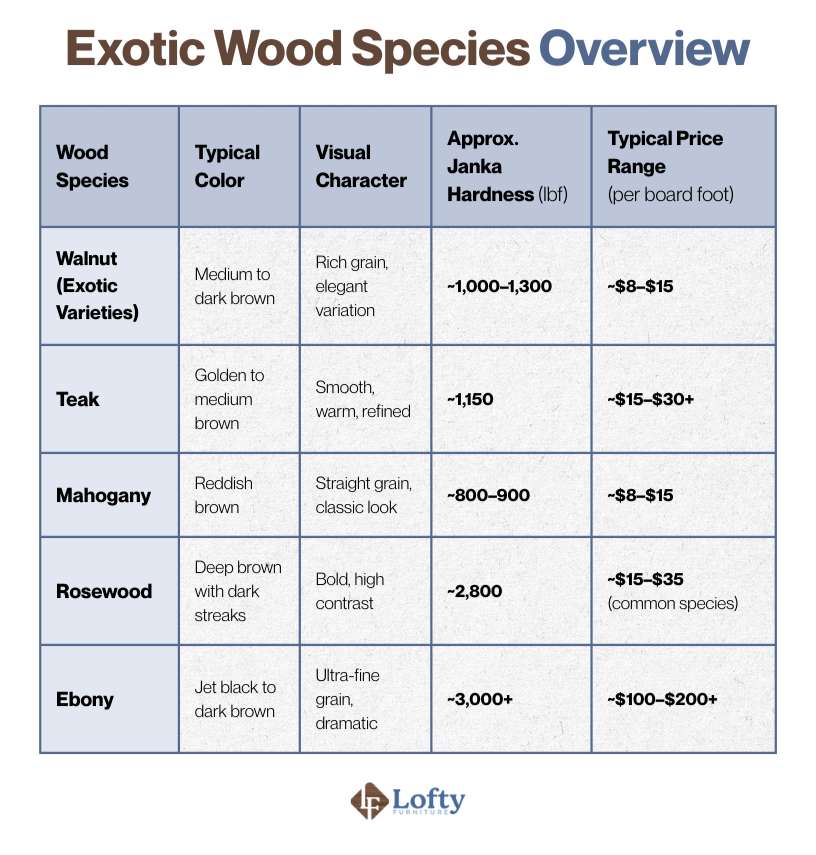
Walnut (Claro, African, and South American Varieties)
Exotic walnut varieties are especially prized for their deep brown tones, fluid grain patterns, and timeless sophistication. Claro walnuts often display dramatic figuring and color variation, while African and South American walnuts lean toward warmer, more uniform hues. Because of its strength and visual depth, walnut is commonly used for executive office table, conference tables, and shelving systems where the wood grain becomes a focal point. It also pairs well with metal or leather accents. Obiora notes:
“We’ve noticed at Kashew that walnut wood furniture doesn’t just look good when it’s new but gains character as it ages. It lasts, holds its value (some pieces are resold at quasi retail value), and never really goes out of style.”
Teak
Teak is known for its warm golden-brown color and naturally smooth texture that feels refined but approachable. Its high oil content makes it resistant to moisture and everyday wear, which is why it performs well in long-term workspace or outdoor furniture. In office environments, teak is often used for worktables, storage cabinets, and collaborative furniture that sees frequent use. Its durability and relaxed elegance make it a strong choice for creative studios and home offices.
Mahogany
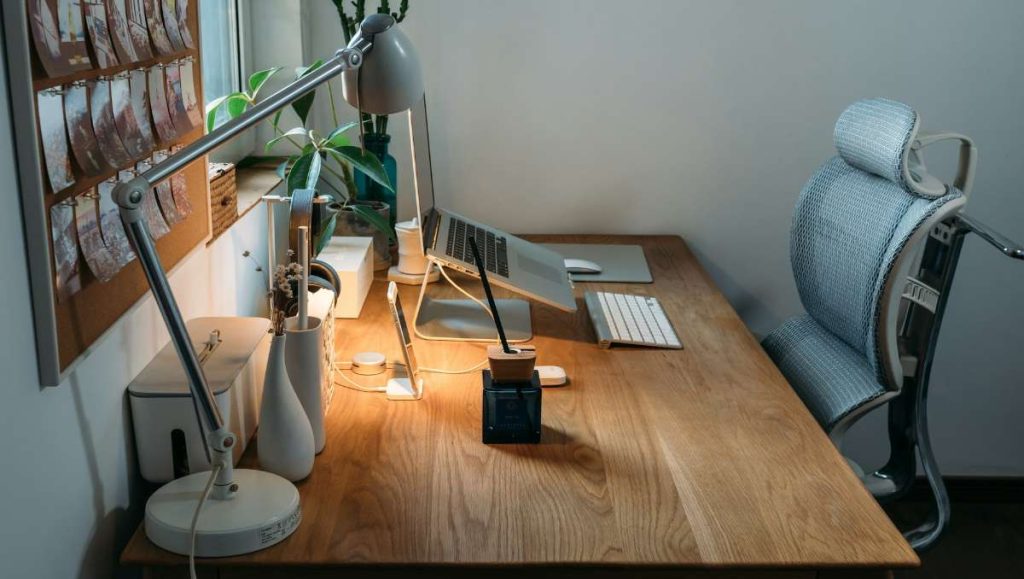
Mahogany (specifically African mahogany) offers a classic, timeless look with its reddish-brown tones and relatively straight grain. It machines and finishes beautifully, resulting in clean lines and smooth surfaces suited for traditional or heritage-inspired workspaces. This durable wood is frequently used for formal desks, bookcases, and credenzas where craftsmanship and symmetry matter.
Rosewood
Rosewood stands out for its dramatic contrast, often featuring dark streaks against a richly colored base. Its density gives it a solid, premium feel that instantly elevates a workspace. Because of its bold appearance, rosewood is often used sparingly. This dark wood type is commonly applied to statement desk tops, drawer fronts, or accent panels where visual impact is desired without overwhelming the space.
Ebony
Ebony is one of the most visually striking exotic woods, known for its deep black coloration and extremely fine grain. It conveys luxury and precision, making it popular for accents, inlays, and high-end detailing rather than large surfaces. In workspace design, ebony is often used for desk edges, hardware accents, or decorative trim to create contrast against lighter woods. Its sleek appearance makes it ideal for contemporary, high-end offices.
Explore our Amish desk collection to find a centerpiece that marries world-class wood quality with legendary American craftsmanship.
Potential Drawbacks of Exotic Wood Species
While exotic wood species offer undeniable visual and performance advantages, they are not without trade-offs.
Higher Cost and Limited Availability
Exotic woods typically command higher prices than domestic species due to import logistics, slower growth cycles, and regulated harvesting. Limited supply can also make future matching or expansions more difficult. As Alyssa Martin explains:
“Because this denser exotic wood comes from far away—and the similar ones locally take longer to grow—it creates demand pressure on both ends.”
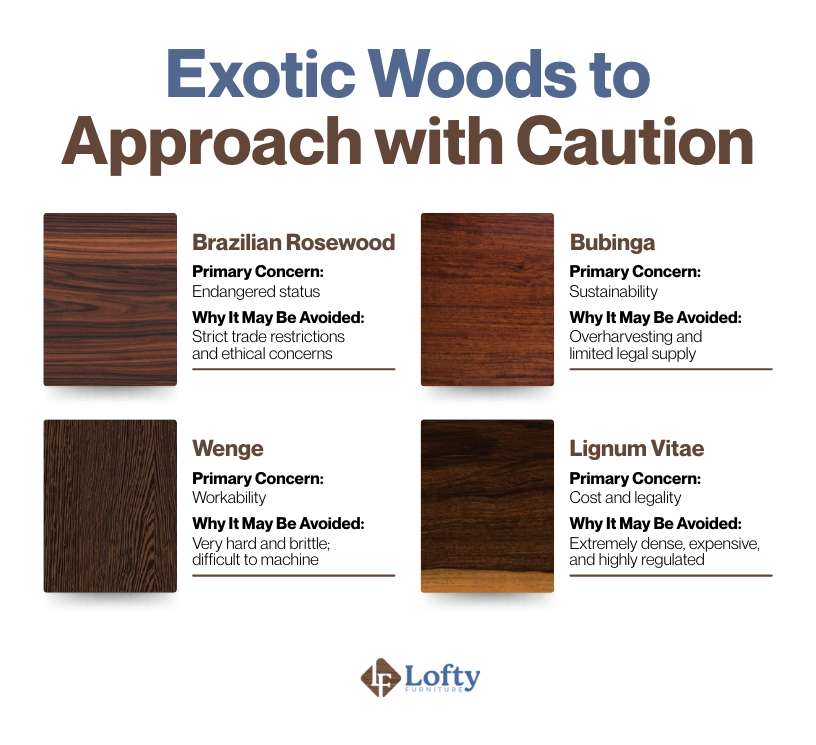
Sustainability and Ethical Sourcing Concerns
Some exotic species are harvested from regions with weak forestry regulations, raising concerns about deforestation and habitat loss. Without proper certification, it can be difficult to verify whether the wood was sourced responsibly.
Workability and Maintenance Challenges
Many exotic woods are extremely dense or oily, which can make them harder to machine, glue, or finish. This often increases labor costs and may require specialized tools or finishes to maintain their appearance over time.
Practical Tips for Maintaining Exotic Woods in Your Workspace
Exotic woods tend to age beautifully, but they benefit from consistent, low-impact care rather than aggressive maintenance. Regular dusting with a soft, dry or slightly damp cloth helps prevent fine particles from scratching dense surfaces over time. Avoid harsh chemical cleaners, as many exotic wood species contain natural oils that can react poorly with solvents or alcohol-based products.
Environmental control is just as important as surface care. Try to keep your workspace within a stable humidity range to minimize expansion or contraction, especially for solid wood desks or cabinetry. Using coasters, desk pads, and felt protectors can prevent heat marks and surface dents without detracting from the design. With these simple habits, exotic woods can maintain their richness and structural integrity for decades.
Conclusion: Why Exotic Wood Properties Go Beyond Aesthetics
Exotic wood species bring more to a workspace than visual impact alone. Their density, durability, and natural stability influence how furniture performs under daily use, while their tactile and sensory qualities shape how a space feels over time. When chosen thoughtfully, these woods support both form and function, offering surfaces that age well, resist wear, and develop character rather than looking dated. More importantly, they introduce a sense of intention and craftsmanship into workspaces that often rely too heavily on synthetic materials.
Frequently Asked Questions
What is the most exotic wood?
The term “most exotic” can vary depending on rarity, visual appeal, and origin, but woods like Ebony, Brazilian Rosewood, and Lignum Vitae are often considered among the most exotic. They are prized for their deep, dramatic colors, fine grain, and scarcity.
Are exotic wood desks suitable for everyday office use?
Yes, many exotic wood species are highly suitable for daily office use, especially those with high hardness and durability like Teak, Rosewood, or Ipe. Their density and natural stability help resist scratches, dents, and warping, making them practical choices.
What is the most sustainable exotic wood for workspace furniture?
Sustainably sourced Teak (FSC-certified), Bamboo, and Cumaru are among the better options for environmentally conscious woodworking projects. Choosing FSC-certified or legally harvested exotic woods ensures that they are responsibly managed, helping protect forests while still allowing designers to enjoy the unique aesthetics and performance of exotic species.