
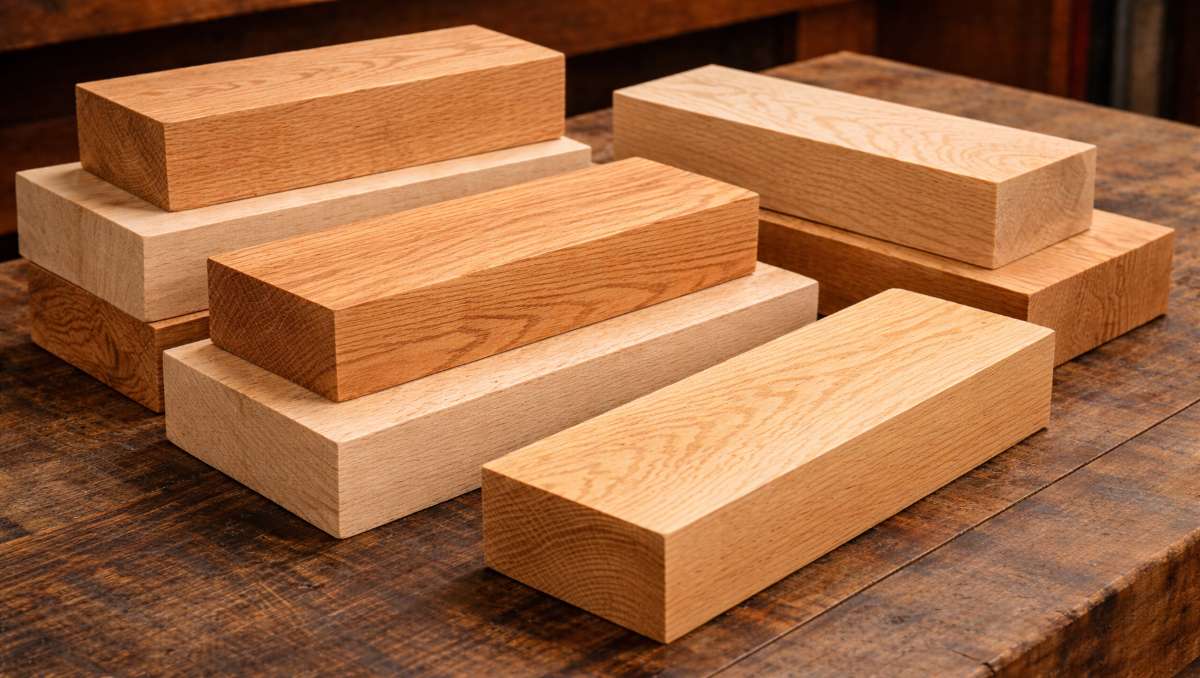
At first glance, red oak and white oak can look nearly the same, which is why they are so often confused. The real differences are not in the surface color or finish but in the grain patterns that shape how the wood looks, feels, and performs over time. Grain reveals how the tree grew and influences stain absorption, texture, durability, and overall character.
Key Takeaways
- Red oak has bold, open grain; white oak has tighter, smoother grain with longer rays.
- Red oak works well for rustic or low-wear projects; white oak is stronger, more moisture-resistant, and better for high-end furniture or flooring.
- Stains can change color, so focus on grain and pore patterns to tell the woods apart.
In this guide, you will learn how to recognize the defining grain features of red oak and white oak, understand why those differences matter, and confidently tell them apart using simple visual and practical clues.
Red Oak vs White Oak: Overview of Each Wood Type
Red oak is known for its strength, affordability, and bold character. It is slightly more porous and features an open grain structure, which gives it a more textured feel. This hardwood is widely used in flooring, cabinetry, and furniture due to its availability and ability to stain evenly. Its overall look tends to feel more casual and expressive.
On the other hand, white oak is denser and more moisture-resistant, making it especially durable for long-term use. It has a tighter cellular structure, which contributes to its added strength and improved resistance to water. Commonly used in fine furniture, cabinetry, and even barrel-making, white oak is valued for its durability and more refined, high-end appeal.
Why Grain Patterns Matter When Identifying Oak Wood
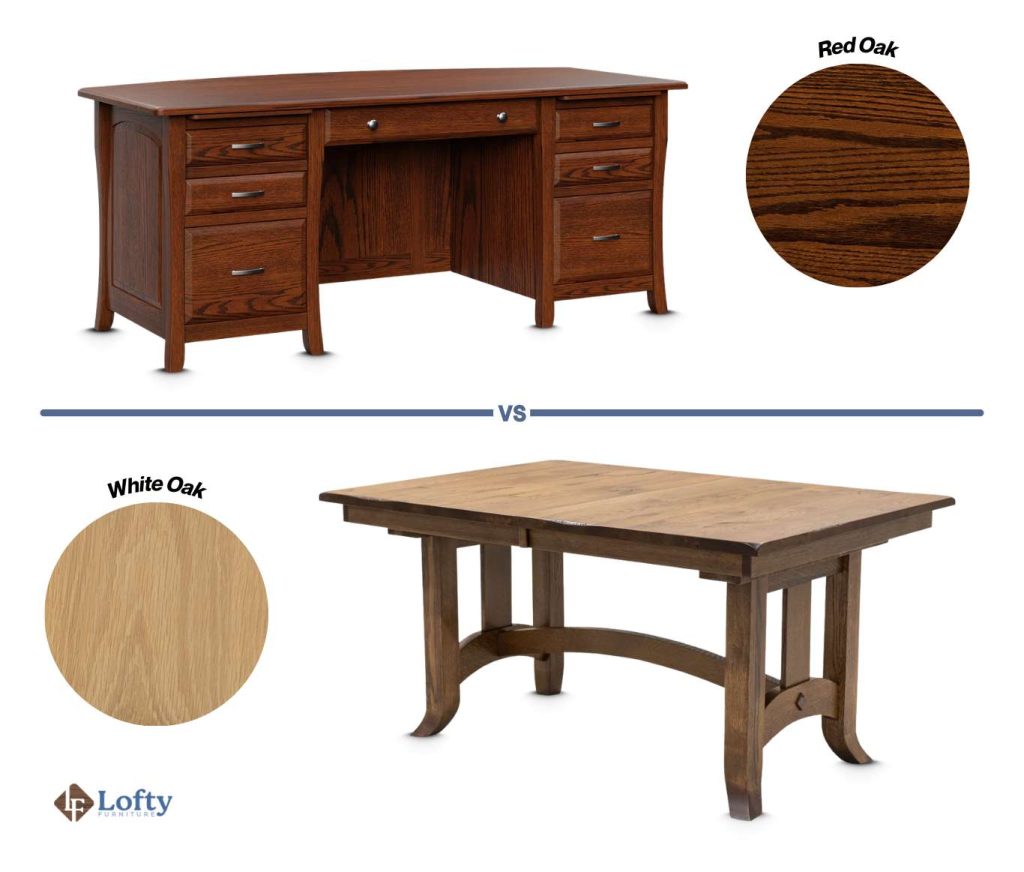
Grain patterns are the most reliable way to identify oak, since color can change with stains, finishes, or aging. Oak’s large pores and distinct growth rings make its grain bold and visible, revealing both the species and clues about strength and durability. Focusing on grain helps buyers and designers choose wood that looks good and performs well.
According to Miko Pasanen, a general contractor working across different projects in Phoenix, AZ.
“Grain structure is more reliable than color because color changes easily with stain, lighting, and age. I’ve seen red oak finished so dark it looks like walnut and white oak bleached almost gray. Grain doesn’t change like that. The pore pattern and texture stay consistent no matter the finish.”
Red Oak Grain Pattern Characteristics
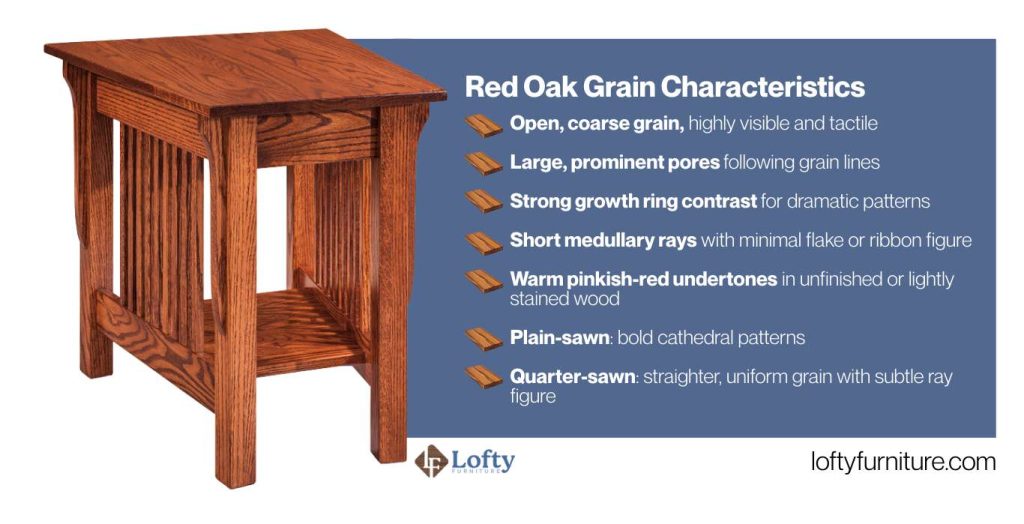
Red oak has a bold, open grain that gives it a warm, lively character. Its larger pores and strong growth ring contrast make the grain easy to see and feel, giving furniture or flooring a lot of visual energy. Plain-sawn boards show dramatic cathedral patterns, while quartersawn boards are straighter with subtle ray figures. Red oak’s natural pinkish-red tones pop beautifully, especially with light staining, and its expressive grain makes it a great choice for statement pieces that stand out.
White Oak Grain Pattern Characteristics
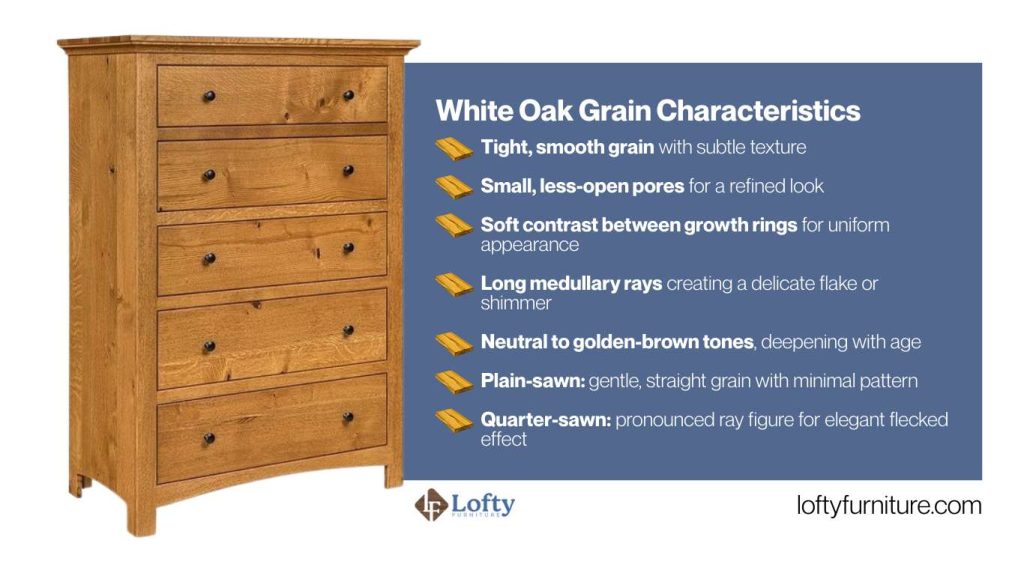
White oak has a tight, even grain that gives it a clean, timeless look. Its smaller pores make the surface smooth and easy to finish, whether natural or stained. The medullary rays, especially on quartersawn boards, add a soft, flecked shimmer that catches the eye without being flashy. The straight, consistent grain creates a calm, balanced feel that works in classic, transitional, or minimalist spaces. Because it’s dense and strong, white oak resists moisture well and finishes evenly, making it a reliable choice for furniture and flooring that lasts.
How to Tell the Difference Between Red Oak and White Oak
Red oak and white oak may look similar at first glance, but they have distinct characteristics that set them apart. Understanding their differences in appearance, grain, and durability can help you choose the right type of oak for your project.
1. Examine the grain pattern.
Red oak has a bold, open grain with large visible pores. White oak features a tighter, more uniform grain with smaller pores.
2. Look for medullary rays.
White oak shows longer, more noticeable ray patterns, especially when quarter-sawn. Red oak’s rays are shorter and more subtle.
3. Observe the color.
Red oak often has pink or reddish undertones, while white oak appears beige, brown, or slightly olive. Grain remains the more reliable indicator.
4. Perform a simple water test.
On unfinished wood, red oak absorbs water quickly. White oak resists moisture, causing water to bead on the surface.
Which Grain Pattern Suits Your Interior?

Choosing between red oak and white oak should be intentional, as each grain pattern shapes the mood and visual weight of a space. Beyond color, differences in grain openness, texture, and contrast influence how the wood interacts with lighting, finishes, fabrics, and architectural details. Selecting the right oak helps reinforce your design direction rather than compete with it.
Modern and contemporary interiors: White oak is typically the stronger fit. Its tighter, more uniform grain and subtle contrast complement clean lines, neutral palettes, Scandinavian influences, and minimalist layouts. It pairs well with matte finishes, soft textiles, stone surfaces, and streamlined cabinetry, allowing the overall composition to feel calm and cohesive.
Rustic and farmhouse designs: Red oak brings warmth and visible texture. Its more open grain and pronounced pattern add character, depth, and a sense of tradition. In spaces featuring exposed beams, vintage accents, layered textiles, and natural materials, red oak enhances the lived-in, welcoming atmosphere.
Traditional interiors: Both species can work, but they convey different tones. White oak feels refined and understated, ideal for timeless millwork, formal dining rooms, or classic architectural details. Red oak appears bolder and more decorative, suiting spaces where richness and visual presence are priorities. The right choice depends on whether the goal is quiet elegance or expressive character.
By aligning grain pattern, performance characteristics, and interior style, homeowners and designers can select the oak species that best supports both aesthetic goals and long-term value in flooring and furniture.
Read here for oak vs maple detailed comparison.
Common Mistakes When Identifying Oak Grain
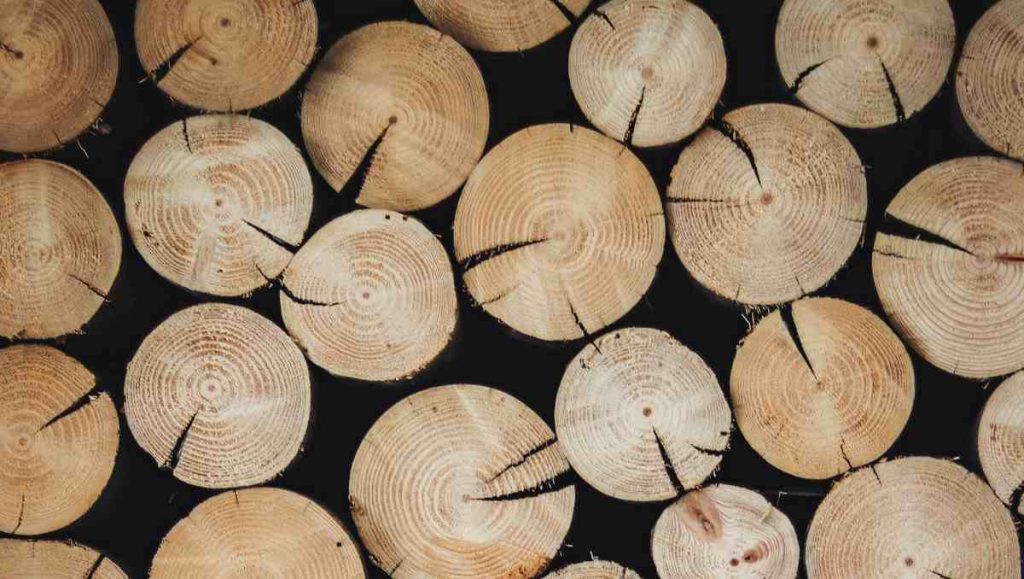
People often confuse red and white oak by judging surface appearance alone. Color can be misleading due to stains, lighting, and aging, and finished wood can hide key grain details. Many also overlook the end grain, which reveals the most reliable clues, and mistakenly assume both types perform the same, even though they differ in moisture resistance, durability, and finishing results.
According to Amelia Woods, a U.S.-based interior designer:
“A common mistake homeowners make is assuming red oak can be substituted for white oak in premium applications because it’s cheaper. In reality, red oak is better suited for painted furniture or lower-wear applications, while white oak is the stronger choice for heirloom furniture, flooring, and architectural millwork where durability and finish quality matter.
Conclusion
Although red oak and white oak may look similar, their grain patterns create clear differences in appearance, performance, and long-term value. From pore structure to medullary rays and cut, these details give red oak a bold character and white oak a more refined look. Recognizing these distinctions supports smarter choices in finishing, durability, and design, helping ensure a cohesive, lasting result.
Frequently Asked Questions
Does oak grain pattern affect furniture pricing?
Yes. Grain pattern influences price, especially in high-end furniture. White oak often costs more due to its tighter grain, smoother texture, and association with premium craftsmanship. Select cuts and consistent grain also increase material and labor costs.
Can engineered or veneer oak replicate solid oak grain patterns?
Partially. Veneers can closely match the surface look of solid oak but lack its depth, texture, and ability to be refinished over time.
Is the oak grain pattern consistent across all furniture pieces?
No. Grain varies naturally by tree, cut, and growth conditions. This variation is normal and valued in well-made furniture.
Does oak grain pattern change as furniture ages?
The grain stays the same, but its appearance can deepen as the wood darkens over time. With proper care, oak grain ages naturally and evenly.