
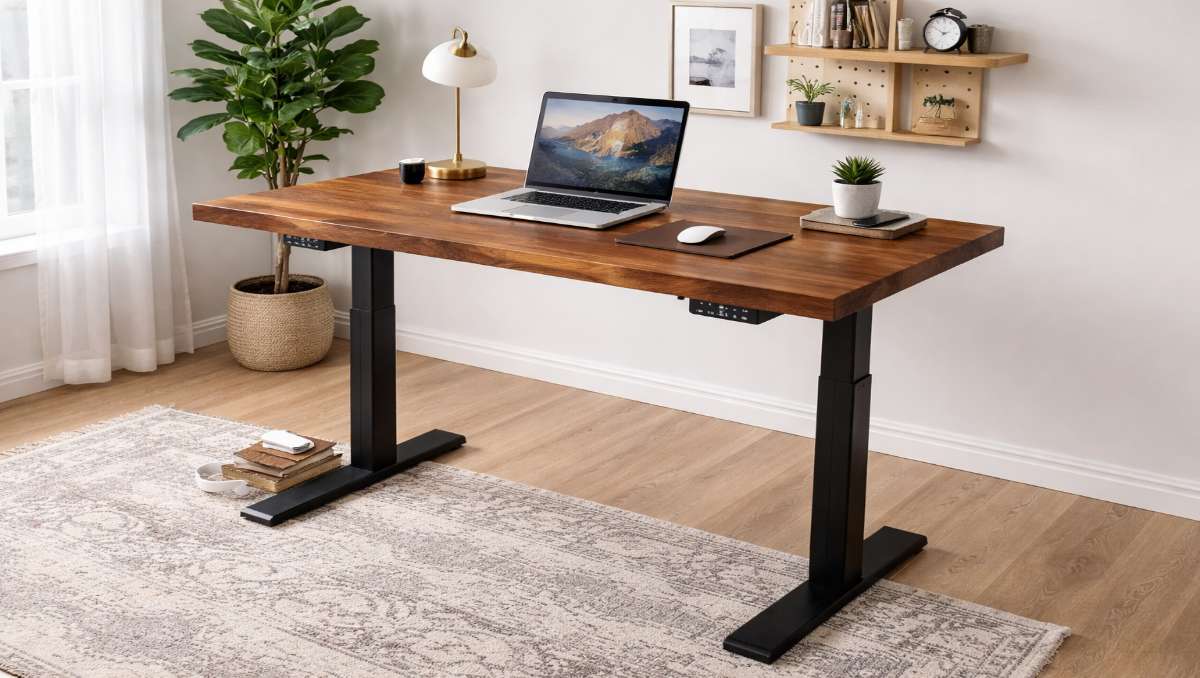
A custom wood desktop is warmer, more personal, and often built to last far longer than the average store-bought desk. So when you decide you want the flexibility to sit and stand, the goal is usually simple: add adjustability without compromising the desk you’ve already invested time and money into. That’s where choosing the right standing desk conversion kit becomes important. Not all kits are designed to work well with custom wood tops. Weight limits, mounting methods, and motor placement can affect stability, performance, and long-term durability.
Key Takeaways:
- To choose the right standing desk conversion kit, match the frame’s dimensions, weight capacity, and height range to your custom wood top.
- Accurate measurements and realistic load calculations prevent instability and premature wear.
- Custom wood tops demand extra care due to their weight, natural movement, and finish.
In this article, we’ll walk through how to choose a standing desk conversion kit that actually works with your custom wood top.
What Is a Standing Desk Conversion Kit? (And How It Works)
A standing desk conversion kit is a height-adjustable desk frame that allows you to convert an existing desktop into a motorized or manual sit-stand desk. It’s designed to bolt onto your existing surface and handle the lifting, lowering, and stabilization that make height adjustment possible.
Below are the different types of standing desk conversion kits at a glance:
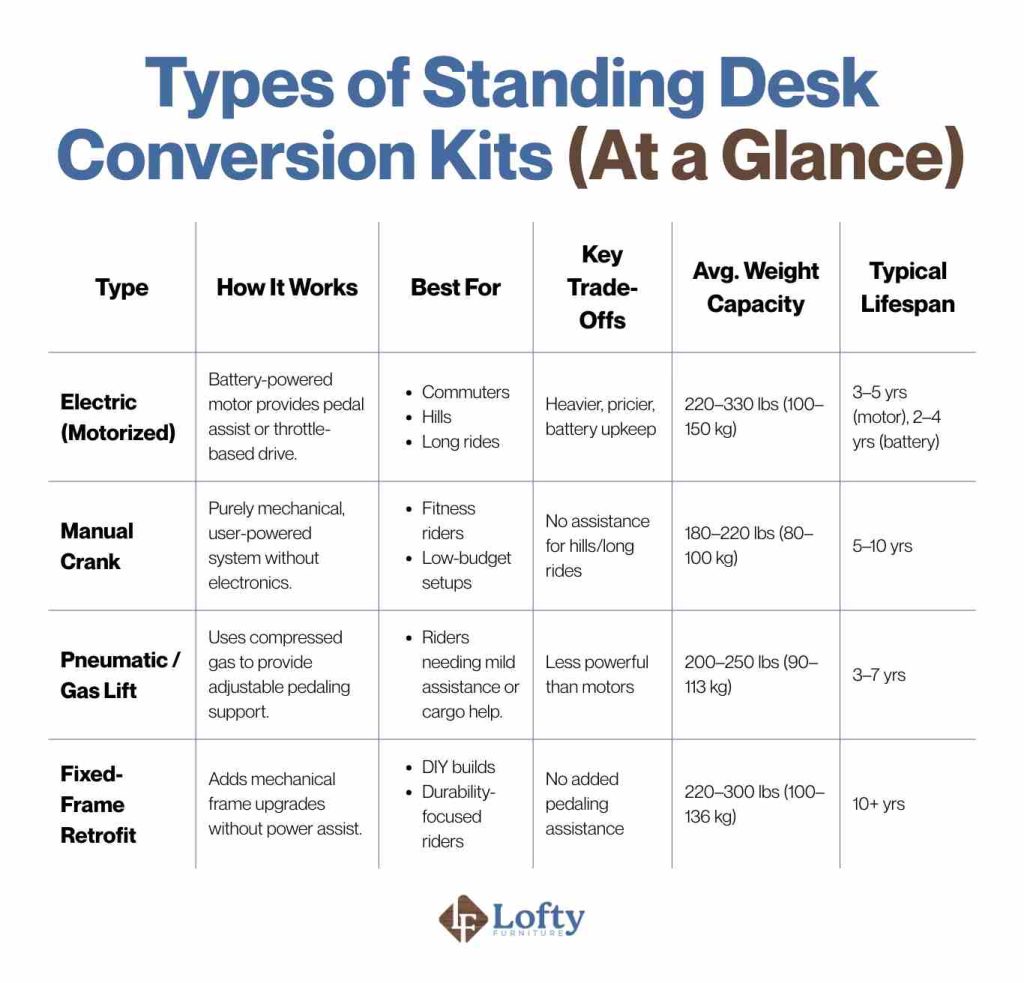
Most conversion kits, especially electric ones, include the same core components: lift columns that raise and lower the desk, a steel frame to support the top, a control box that keeps movement synchronized, and a handset or keypad for height adjustment. What sets them apart from full-standing desks is flexibility. Full desks come with preset tops and fixed design choices, while conversion kits let you keep your own surface and choose the wood species, thickness, edge profile, and finish. If you are building around a custom wood top and want dependable long-term performance, an electric kit is usually the most practical option.
Why Custom Wood Tops Require Special Consideration
Custom wood tops aren’t all created equal. MDF and plywood tend to be lighter and more dimensionally stable, while solid hardwood slabs can weigh significantly more and vary in density depending on species. That weight difference directly affects which conversion kits are suitable. Choosing a system that comfortably exceeds your top’s weight is key. Additionally, solid wood expands and contracts with changes in humidity. This means mounting points, screw placement, and frame design matter more than they would with factory-laminated tops. The right conversion kit accommodates natural wood movement while protecting the surface finish and structural integrity of the desktop.
Advantages of a Standing Desk Conversion Kit
A standing desk conversion kit is designed to transform a traditional desk into a sit-stand workstation without replacing the entire desk. Here are the key advantages:
Cost-Effective Alternative to Full Standing Desks
Instead of purchasing a completely new adjustable desk, users can upgrade their existing workspace with a converter at a much lower cost. This makes it a practical option for both home offices and businesses looking to improve ergonomics without major expenses.
Easy Installation and Setup
Standing desk converters are designed to be simple to set up. Most models arrive fully assembled and only need to be placed on top of a desk. Since they do not require drilling, mounting, or replacing furniture, users can start using them almost immediately.
Encourages Healthier Work Habits
A standing desk conversion kit allows workers to alternate between sitting and standing throughout the day. This flexibility helps reduce long periods of sitting, which is often associated with fatigue and poor posture during extended desk work.
Compatible With Existing Workstations
Because the converter sits on top of the current desk surface, it can be used in offices, home workspaces, and shared environments without redesigning the entire workstation layout.
Key Considerations When Choosing a Standing Desk Conversion Kit
Below are the areas that matter most when selecting a conversion kit for a custom wood desktop.
1. Confirm the Kit Fits Your Desktop Dimensions and Mounting Specs
Ensure the frame matches your wood top’s width, depth, and mounting hole spacing. Check overhang limits and edge clearance so the surface is evenly supported. A correct fit prevents wobble, flexing, and long-term stress on the wood.
2. Choose a Kit That Can Safely Handle Your Top’s Weight and Maintain Stability
Match the weight rating to your desktop especially important for heavy hardwood slabs. Higher capacity improves stability, lifting speed, and motor life. Frame design, leg structure, and crossbar placement all impact how solid the desk feels at full height.
3. Select a Mechanism and Height Range That Support Proper Ergonomics
Evaluate how the lifting system operates—electric for convenience and presets, manual or pneumatic for simplicity. Check the full height range to ensure both your sitting and standing positions fall well within the limits, without pushing the frame to its extremes.
4. Assess Installation Difficulty and Long-Term Ease of Use
Determine whether the kit requires simple bolting or precise drilling and alignment. Consider day-to-day functionality: control placement, cable routing, noise level, and maintenance needs. These factors affect how smooth, quiet, and reliable the workstation will feel over time.
Choosing the Right Standing Desk Conversion Kit: Step-by-Step Guide
Once you understand how conversion kits work and why custom wood surfaces need extra care, the selection process becomes much more straightforward. The steps below break that process into clear, practical decisions you can make with confidence.
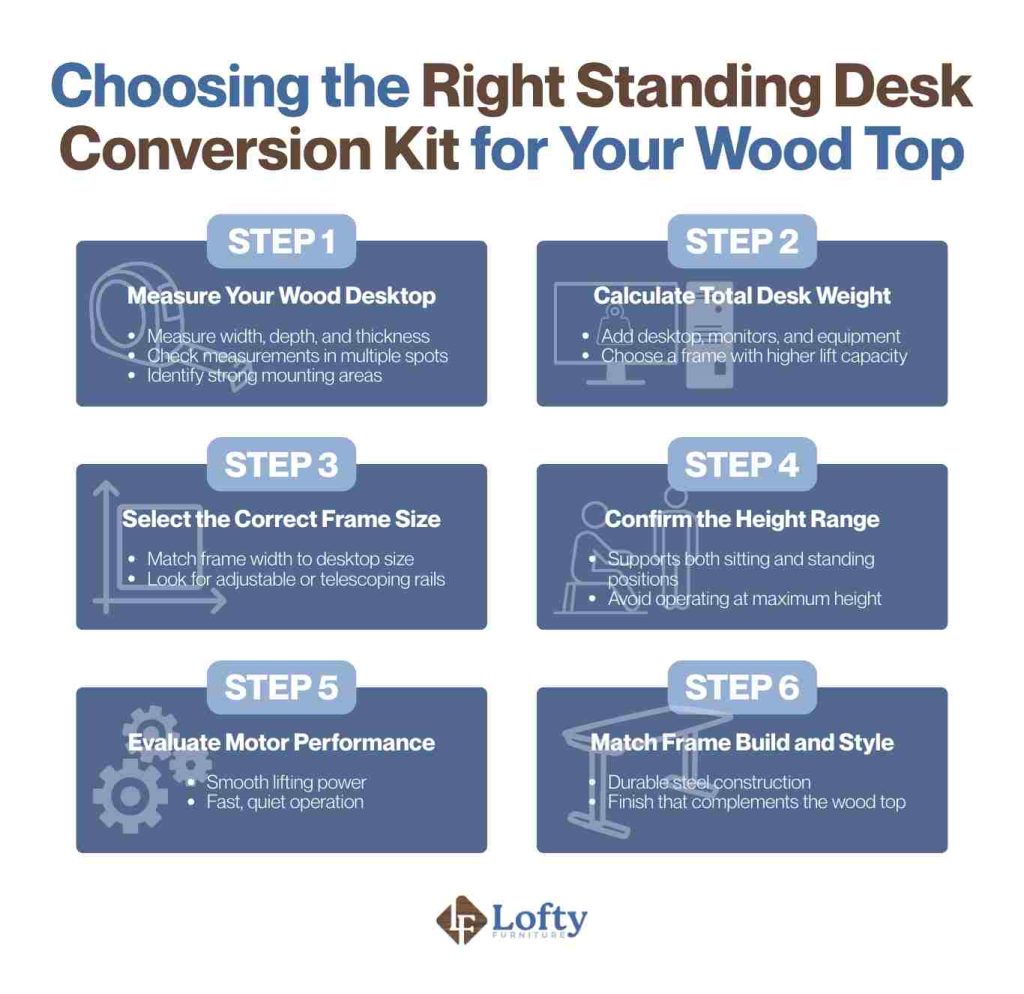
Step 1: Measure Your Custom Wood Top the Right Way
Start with accurate measurements of your desktop’s width, depth, and thickness. Measure in multiple spots, especially if the top is hand-built or live-edge, since variations are common. These dimensions determine whether the frame will support the surface evenly and whether mounting points will land in structurally sound areas of the wood.
Step 2: Match the Weight Capacity to Your Wood Top
Next, calculate the total load the kit will need to lift. This includes the weight of the wood top itself, plus monitors (single or dual monitor), hardware, and anything that lives on the desk full-time. Solid hardwood tops can easily exceed safe limits for lighter-duty frames. Choosing a kit with a product weight rating that comfortably exceeds your actual load helps protect the motors and ensures smoother movement over time.
Step 3: Choose the Right Frame Size and Adjustability
Effortless adjustability matters just as much as raw dimensions. Look for frames that offer width expansion or telescoping rails so the legs can be positioned properly under your wood top. Adjustable standing desk solutions allow better weight distribution and reduce flex, especially on wider desks.
Step 4: Match the Height Range to Your Ergonomic Needs
A conversion kit should support both your seated and standing positions without operating at its extreme limits. Check the minimum and maximum height range and compare it to your ideal ergonomic setup. If the frame has to max out to reach your standing height, it may feel less stable and wear faster.
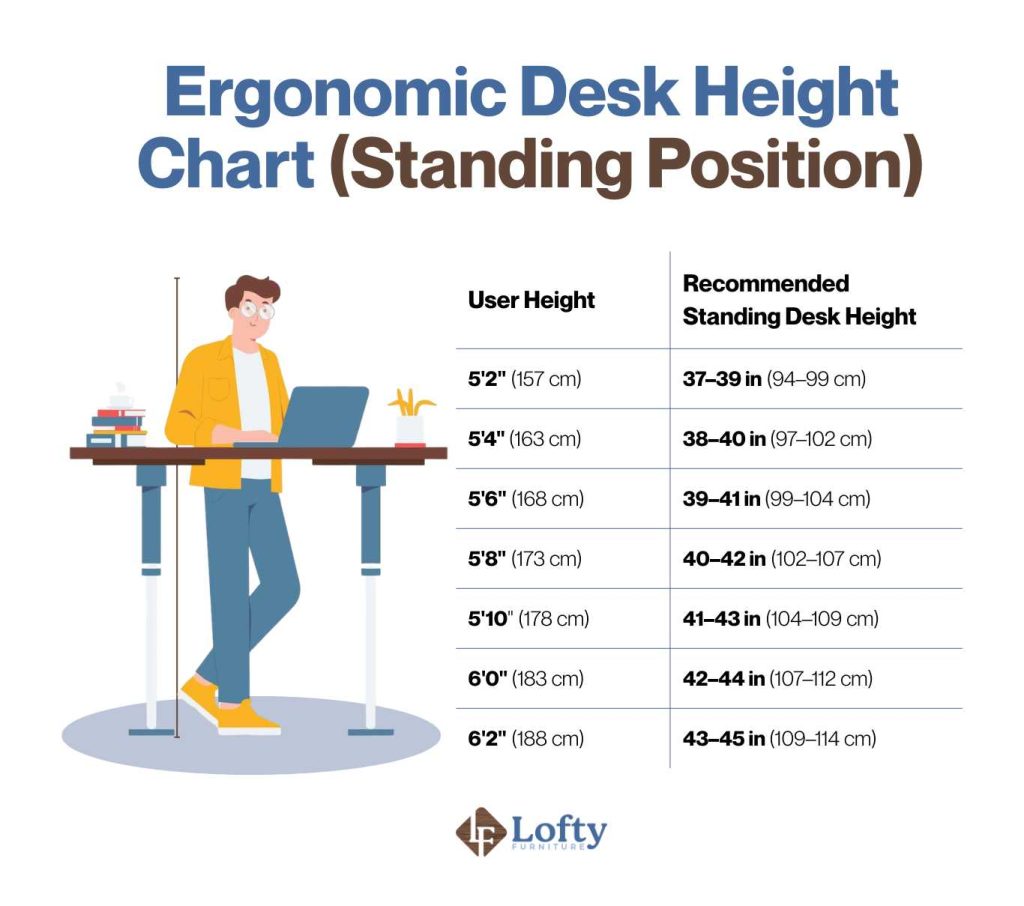
Below is a general ergonomic height chart based on user height. These numbers assume a neutral posture with elbows bent at roughly 90 degrees and forearms parallel to the floor.
Step 5: Choose Motor Quality, Speed, and Noise Levels Wisely
Motor quality impacts reliability and daily satisfaction. Higher-quality motors move heavier tops more smoothly, maintain consistent speed, and generate less vibration. Pay attention to lift speed and noise ratings, especially if you work in shared spaces. A slow or loud system can quickly become frustrating with frequent height changes.
Step 6: Match Frame Material and Finish to Your Wood Top
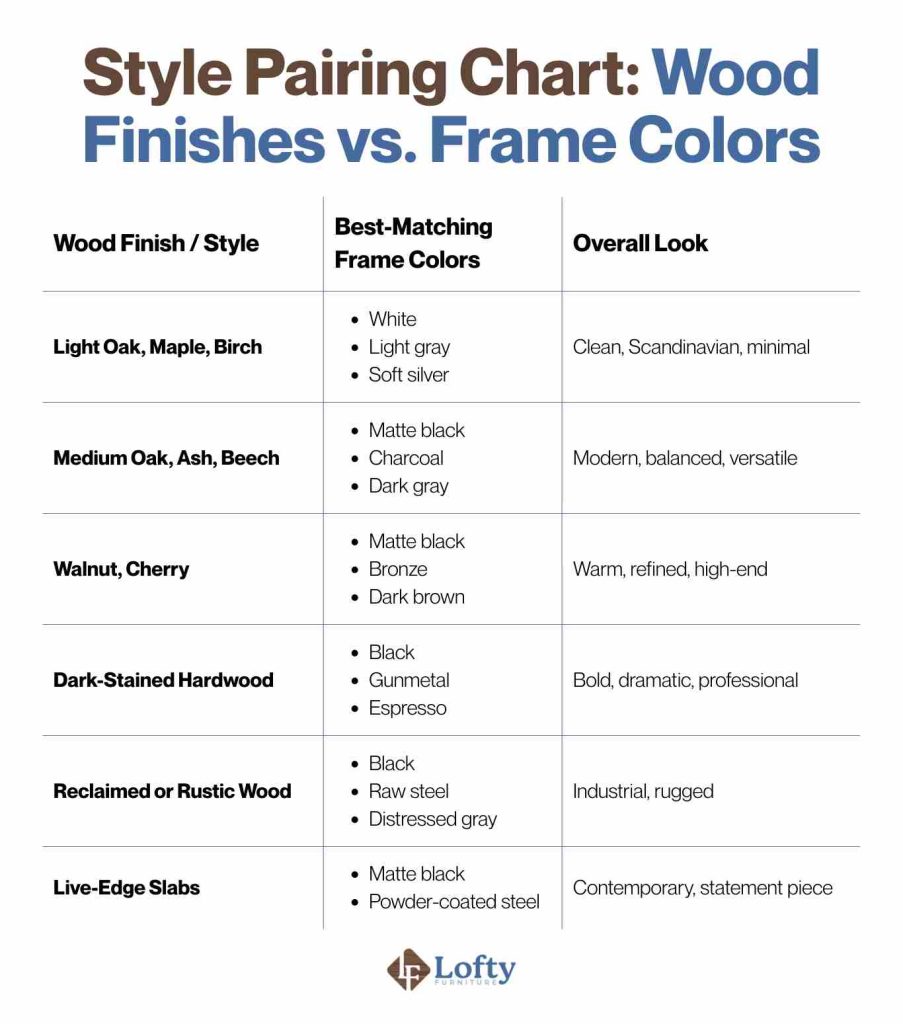
Finally, consider how the frame looks and holds up over time. Steel frames with durable finishes and long-lasting, high-quality materials tend to resist scratches and corrosion better than painted alternatives. Color and texture also matter visually. Because a standing desk conversion kit is mostly metal, the color and texture of the frame should visually support the wood, not compete with it.
Here’s a style pairing chart for your options:
Upgrade your active workspaces with executive lift desks that pair seamlessly with a standing desk conversion kit.
Installation and Wood-Safe Mounting Tips
Installing a standing desk conversion kit on a custom wood top requires a bit more care than working with factory-made surfaces. Before mounting anything, lay out the frame and hardware to confirm alignment and leg spacing, then mark drill points carefully. Pre-drilling pilot holes is essential, especially for hardwood, as it reduces the risk of splitting and helps the screws seat cleanly without stressing the wood fibers. Take your time during this step.
Protecting the wood itself is just as important as securing the frame. Use washers where appropriate to distribute pressure, avoid overtightening fasteners, and leave a slight tolerance in mounting slots to accommodate natural wood movement. If your top has a finished surface, place protective padding underneath during installation to prevent scratches or dents. A careful, wood-safe install helps preserve the finish, joinery, and structural integrity of your desktop while ensuring the conversion kit performs as intended for years to come.
Final Thoughts: Choosing a Conversion Kit That Respects Your Wood Top
Choosing the right standing desk conversion kit for a custom wood top comes down to a balance between strength and subtlety, flexibility and stability, function and design. When the kit is properly matched to your ordinary desktop’s dimensions, product weight, and material, it enhances the desk without compromising the craftsmanship that made the wood top worth keeping in the first place.
Taking the time to measure accurately, account for real-world ergonomics, and select quality components ensures your sit-stand setup feels intentional, solid, and built for long-term use. When done right, your custom wood surface remains the focal point, while the lift system quietly does its job in the background—smoothly, safely, and reliably.
Frequently Asked Questions
Do I need to reinforce my wood top before installing a lift frame?
In most cases, reinforcement isn’t necessary if the wood top is properly built and the frame is rated well above the desk’s total weight. Thick plywood and solid hardwood tops typically have enough structural strength on their own.
What motor capacity is best for thick butcher block desks?
For butcher block or solid hardwood tops, look for a conversion kit with a higher-than-average weight capacity ideally 250 lbs (113 kg) or more, including the desktop and equipment. Higher-capacity motors handle dense wood more smoothly and reduce strain during lifting.
Will a conversion kit damage or devalue a custom wood desk?
When installed correctly, a conversion kit should not damage or significantly devalue a custom wood desk. Clean pilot holes, proper fasteners, and thoughtful mounting preserve the wood’s structural integrity. In many cases, adding sit-stand functionality can actually increase the desk’s practical value, especially if the installation is neat and reversible.
Will drilling into my custom wood top void the warranty of the conversion kit or the wood itself?
Drilling into the wood top generally does not void the conversion kit’s warranty, as most manufacturers expect mounting holes during installation. However, warranties on custom or handmade wood tops vary. If the top was purchased from a maker or furniture company, it’s best to confirm their policy before drilling.