

Standing desks have become a staple in modern offices and home workspaces, promising better posture and a break from the typical chair-bound workday. But if you’ve tried standing for even a short stretch, you probably know it’s not all sunshine and productivity. Your feet, legs, and lower back start sending subtle complaints. That’s where anti-fatigue mats come in. But do they really live up to the hype, or are they just another trendy desk accessory?
Key Takeaways:
- Anti-fatigue mats are cushioned floor mats designed to reduce discomfort and strain on the feet, legs, and lower back for people who stand for long periods.
- The benefits include reducing foot and leg fatigue, improving circulation, boosting energy, supporting better posture, and enhancing focus while standing.
- Choosing the right mat and maintaining it properly ensures long-term comfort, safety, and durability in your standing desk setup.
In this article, we’ll break down what anti-fatigue mats are, how they work, and whether investing in one is worth it for your standing desk setup.
What Are Anti-Fatigue Mats and How Do They Work?
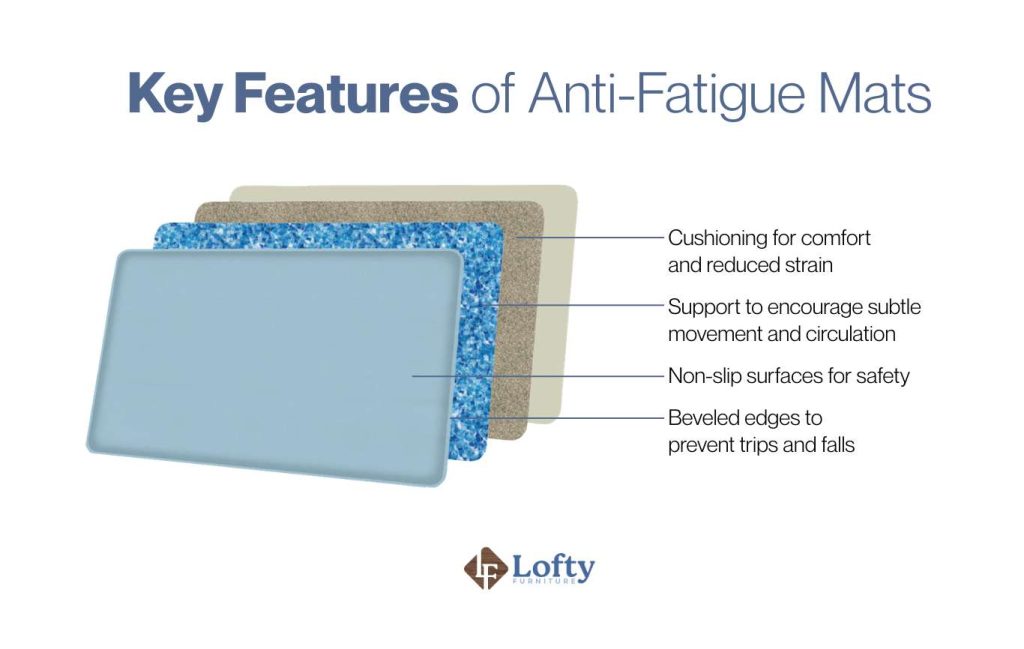
Anti-fatigue mats are cushioned floor mats designed to reduce discomfort from prolonged standing. According to the Canadian Centre for Occupational Health and Safety (CCOHS), these mats can help “decrease foot and lower limb disorders for workers who stand in one position for long periods.” Many also include non-slip surfaces and beveled edges for safety, making them a practical choice for standing desks or any task that requires long periods on your feet.
Types of Anti-Fatigue Mats
Anti-fatigue mats come in different designs to suit various standing styles, comfort preferences, and work environments.
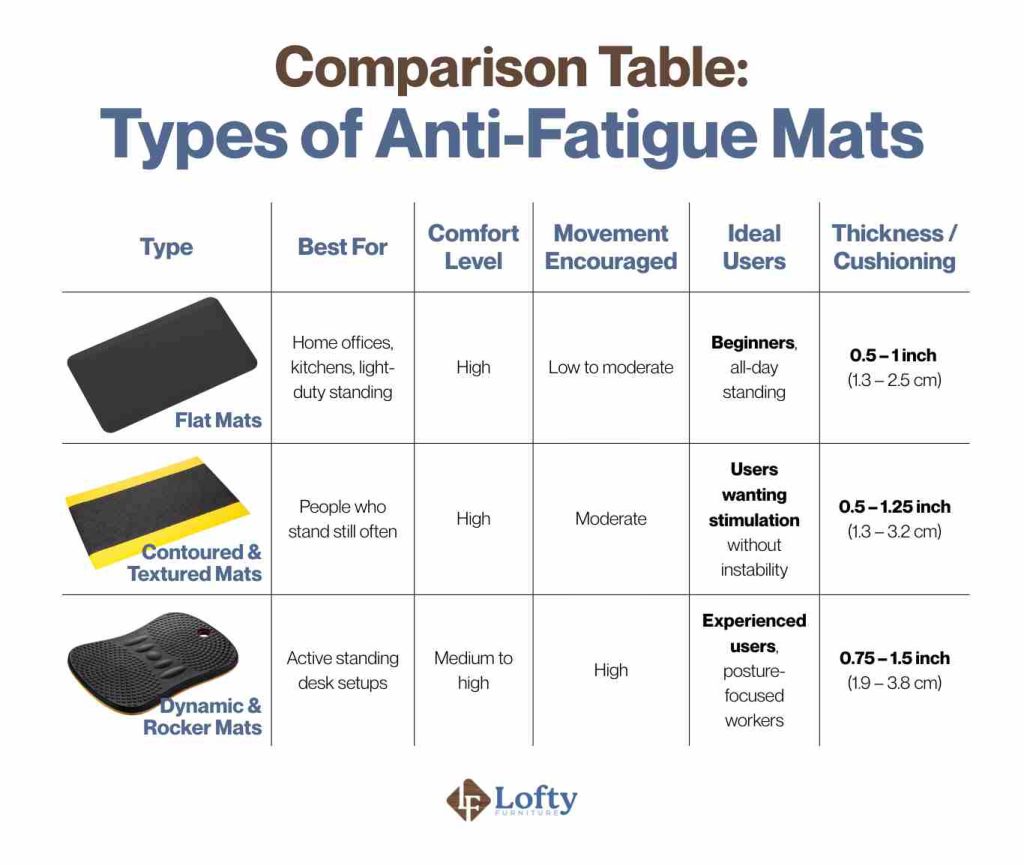
Flat Anti-Fatigue Mats
Flat anti-fatigue mats are the most common type, featuring a simple cushioned surface with a uniform thickness. They’re ideal for beginners, home offices, kitchens, and light-duty workspaces because they provide consistent comfort without feeling unstable.
Contoured and Textured Anti-Fatigue Mats
Contoured and textured mats include raised patterns, massage nodes, or shaped surfaces that stimulate foot movement. These designs encourage subtle shifts in posture and weight distribution. They’re especially useful for people who want more sensory feedback underfoot.
Dynamic and Rocker Anti-Fatigue Mats
Dynamic or rocker mats feature a curved or uneven base that gently rocks as you stand. This design promotes continuous micro-movements, engaging core muscles and encouraging active standing. They’re popular among experienced standing desk users.
Anti-Fatigue Mats vs Balance Boards
While anti-fatigue mats focus on comfort and joint relief, balance boards are designed for active movement and muscle engagement. Balance boards require more stability and coordination, making them better for short bursts of activity rather than all-day standing. Anti-fatigue mats, on the other hand, are more practical for extended use because they reduce fatigue without demanding constant effort.
Top Benefits of Using an Anti-Fatigue Mat
Using an anti-fatigue mat at your standing desk can have several practical benefits that improve your daily work experience.
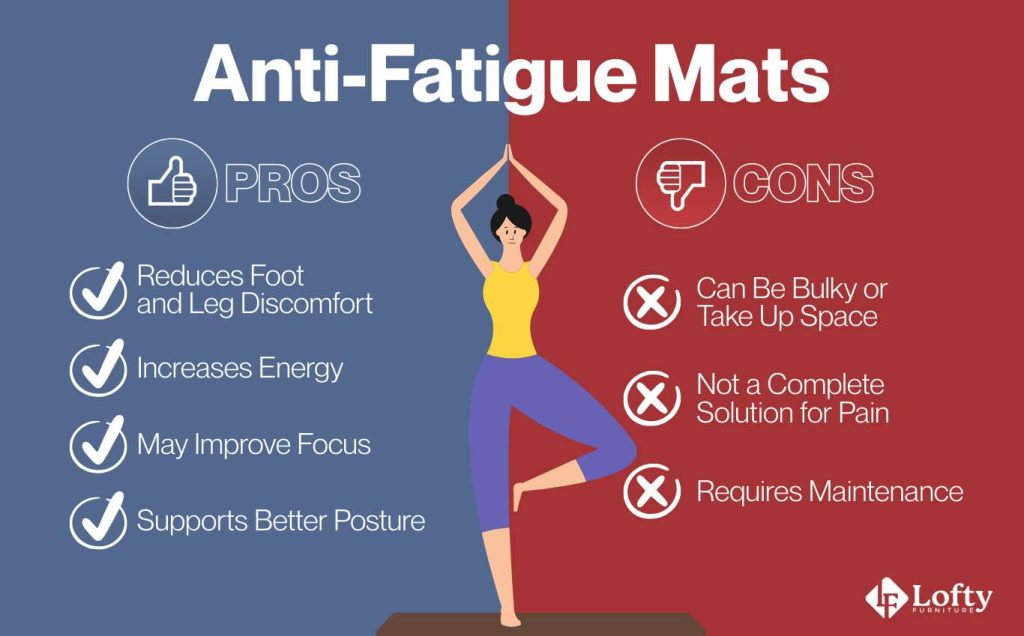
Reduces Foot and Leg Discomfort
Anti-fatigue mats provide cushioning that relieves pressure on your feet, calves, and lower legs. By encouraging subtle movement, they help prevent stiffness and soreness. This makes long periods of standing more tolerable and reduces the risk of developing foot and lower limb issues over time. According to Dr. Theerapong Poonyakariyagorn, spokesperson at Interplast Clinic:
“As a person stands for long periods of time, static muscle contraction limits blood flow and continually applies pressure to the feet and legs. Anti-fatigue mats minimize this by creating a small degree of instability that causes muscles to contract and relax naturally.”
Increases Energy and Improves Focus

Standing on a soft, supportive surface can reduce fatigue by easing muscle strain, helping you conserve energy and feel more energized throughout the day. Increased comfort also supports better focus, as fewer aches and distractions allow you to concentrate more easily on your work.
According to Andrei Genio, Occupational Therapist at Better U Family:
“Discomfort can be very distracting. Utilizing an anti-fatigue mat reduces that “aching” signal and frees that mental energy to maintain focus and productivity while engaging in work tasks.”
Supports Better Posture
The subtle movement encouraged by anti-fatigue mats promotes engagement of core and leg muscles. This can help maintain a more upright stance and reduce slouching. Over time, it may contribute to improved posture and less strain on your lower back. Andrei Genio adds:
“As fatigue sets in, individuals tend to lock their knees, or shift into a slouched position. Anti-fatigue mats reduce muscle strain, making it easier to maintain a natural, and upright posture rather than standing rigidly or bearing more weight into one hip.”
Potential Drawbacks of Anti-Fatigue Mats
While anti-fatigue mats provide noticeable comfort benefits, they are not ideal for every workspace or user. Some models can be bulky and take up valuable floor space, which may feel awkward in smaller home offices or make moving around your desk less convenient. They also are not a complete solution for ergonomic or chronic pain issues, since problems like persistent back or joint pain usually require proper desk setup, movement, and supportive footwear in addition to a mat.
Additionally, anti-fatigue mats require regular cleaning because they can collect dust, dirt, and spills, which may be an added maintenance task for some users.
Do You Really Need an Anti-Fatigue Mat for a Standing Desk?
If you use a standing desk often, an anti-fatigue or standing desk mat can improve comfort, especially on hard floors, by reducing impact, supporting circulation, and easing strain on your feet, knees, and back. However, it may not be necessary if you stand only briefly, have carpeted floors, prefer movement-based options, or work in a small space. The decision ultimately depends on how long you stand, your flooring, and personal comfort.
Dr. Theerapong concludes:
“If you only need to stand for a while, then probably not. However, for people working in a profession that requires regular standing, an anti-fatigue mat is a worthwhile investment for a healthy working experience.”
💡 Pro Tip
If you’re new to standing desks, start with short intervals of 20–30 minutes on your mat and gradually increase your standing time. This helps your legs, feet, and back adjust comfortably without overdoing it. Pair it with a mat that encourages subtle movement for the best long-term comfort.
How to Choose the Right Anti-Fatigue Mat for Your Standing Desk
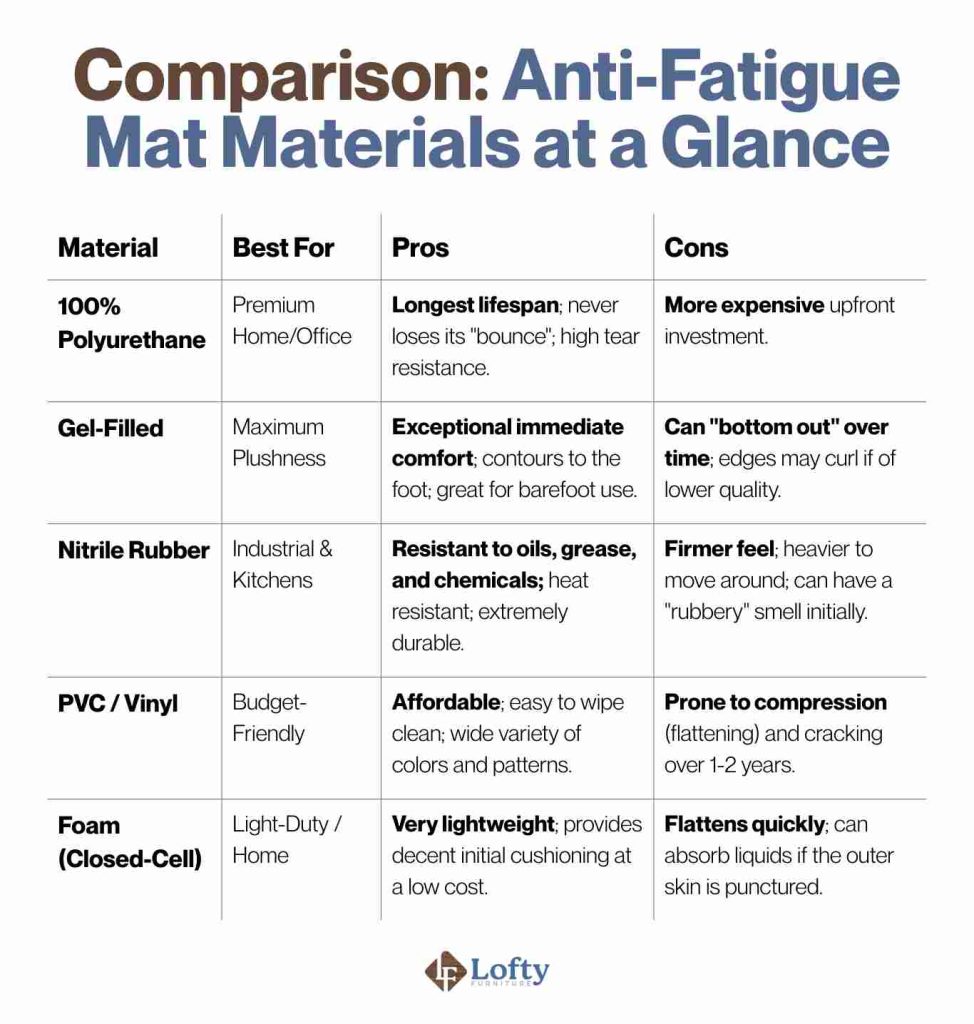
1. Consider the Material
Rubber, PVC (vinyl), and polyurethane foam all offer different levels of cushioning and durability. Rubber is long-lasting and slip-resistant, PVC is budget-friendly, and foam provides softer cushioning.
2. Check the Thickness
Thicker mats generally provide more comfort, but overly thick mats can feel unstable. A range of ¾ to 1 inch is usually ideal for standing desks.
3. Measure Your Workspace
Make sure the mat fits your standing area without crowding the space. Beveled edges help prevent trips, especially in tight setups.
4. Look for Non-Slip Surfaces
Safety is key, especially on hard floors. Mats with textured surfaces or rubber backing reduce the risk of slipping.
5. Consider Your Standing Duration
Longer standing sessions may benefit from mats with extra cushioning or ergonomic design. Shorter sessions may need only basic ergonomic support.
Ready to upgrade your workspace comfort? Shop our premium selection of standing mats & balance boards today to reduce joint strain and stay energized throughout your workday.
Caring for Your Anti-Fatigue Mat
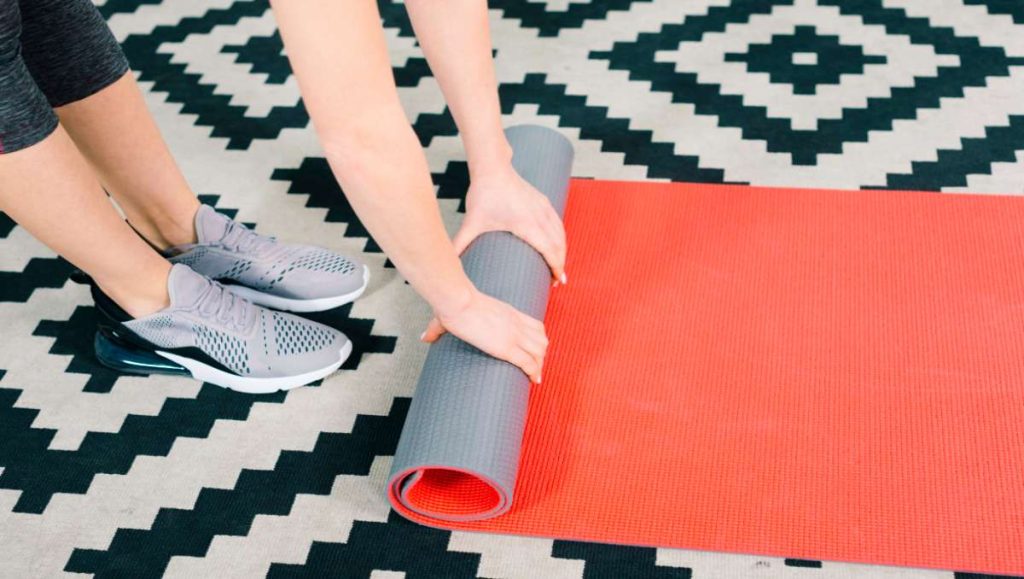
Proper care can extend the life of your anti-fatigue mat and keep it effective. Most mats can be cleaned with mild soap and water. Avoid harsh chemicals that could degrade the material. For rubber or PVC mats, wiping them down weekly helps prevent dust, dirt, and spills from building up, while foam mats may need gentler handling to avoid indentations or tears. Placement also affects longevity. Avoid exposing your mat to direct sunlight for long periods, as this can cause fading or material breakdown.
You should consider replacing your mat if it develops permanent indentations that don’t bounce back, shows cracks or tears, loses cushioning and becomes uncomfortable, or if edges begin to curl or slip, affecting stability. With regular cleaning, mindful use, and timely replacement, an anti-fatigue mat can remain comfortable and supportive for years, keeping your standing desk setup ergonomic and safe.
You might want to elevate you workspace with a walnut live edge desk.
Wrapping Up: Are Anti-Fatigue Mats Worth It?
If you spend a significant portion of your day standing at a desk, an anti-fatigue mat can be a simple but effective way to reduce discomfort, improve blood circulation, and make standing a more sustainable habit. While not a miracle solution for all aches or posture issues, mats are a small investment that can have a noticeable impact on your daily comfort and productivity. By choosing the right mat and caring for it properly, you can turn hard floors into a much friendlier workspace and support healthier standing habits for the long term.
Frequently Asked Questions
Are anti-fatigue mats better than standing on carpet?
Yes. Even thick carpet compresses over time and doesn’t encourage movement. Anti-fatigue mats are designed to maintain cushioning and promote subtle motion, which helps reduce fatigue more effectively.
Can anti-fatigue mats prevent back pain from standing?
While mats can reduce pressure on your lower limbs and promote better posture, they won’t completely prevent back pain, especially if it stems from preexisting conditions. They are most effective when combined with proper desk height and good standing habits.
How thick should an anti-fatigue mat be for a home office?
For most home office setups, a thickness between ¾ inch and 1 inch offers a good balance of comfort and stability. Thicker mats may feel soft but can be less stable for longer standing sessions.
Can I use an anti-fatigue mat with a chair, or do I have to move it every time I sit down?
You can usually leave the mat in place even when using a chair, but rolling chairs may wear down the mat or make it harder to move. If your chair has wheels, consider a mat designed to handle light rolling or slide the chair carefully.
How long do anti-fatigue mats usually last before they lose their supportive properties?
Lifespan varies by material and usage, but most quality mats last between 3–7 years with regular use and proper care. Rubber and PVC mats tend to be more durable.