

The desk is such a common part of daily life that most people rarely think about its origins. Yet this essential piece of furniture has a history spanning more than 4,000 years, evolving alongside human civilization itself. From the writing tables used by ancient scribes to today’s ergonomic workstations, the desk has continually adapted to changing ways of working and learning. But who invented the desk? The answer isn’t as simple as naming a single inventor.
Key Takeaways:
- The desk was not invented by one person; it evolved over thousands of years.
- Desk designs changed over time to support new ways of working, learning, and storing information.
- Modern desks are designed for comfort, flexibility, and technology use.
In this article, we’ll explore who invented the desk, examine its earliest origins, and trace its remarkable journey from simple writing surfaces to the sophisticated workstations we use today.
Who Invented the Desk?

The short answer is that no single person invented the desk. The desk evolved over thousands of years through the contributions of multiple civilizations.
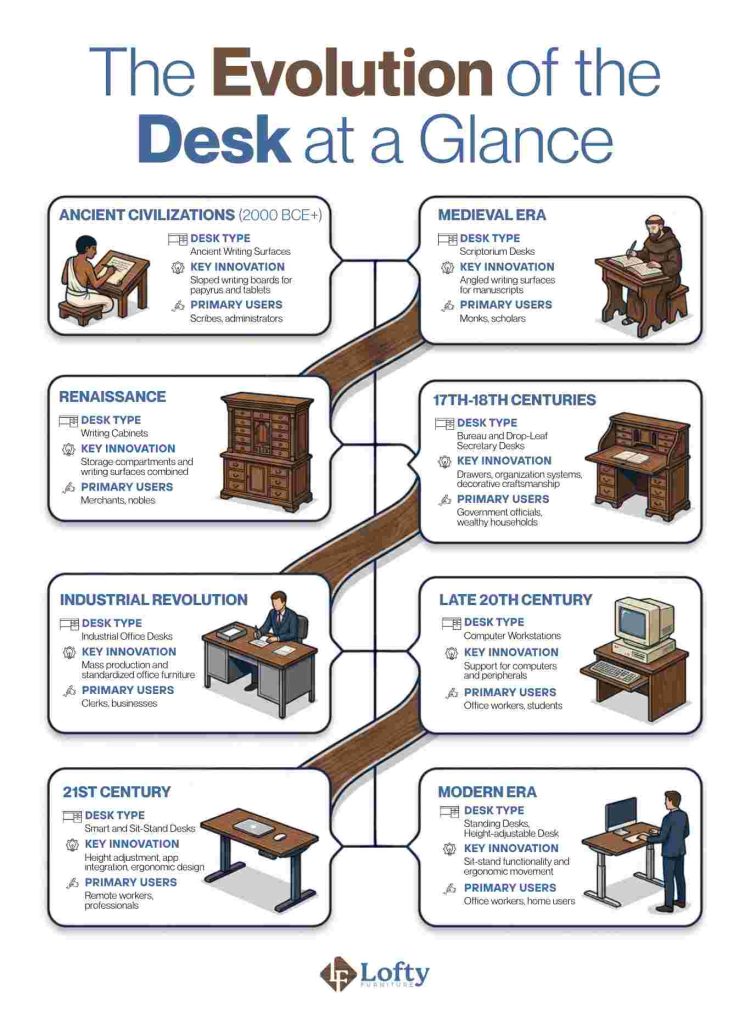
The earliest ancestors of modern desks appeared in Ancient Egypt around 2000 BCE. Egyptian scribes used slanted wooden writing tables designed to hold papyrus scrolls and writing tools. These simple structures served the same essential purpose as modern desks by providing a dedicated surface for reading and writing. Even the word “desk” reflects a long history of evolution. According to historical sources, the term originated from the Latin word desca, meaning “table”. Over time, the term became associated specifically with furniture used for writing, studying, and administrative work.
Ancient Civilizations and the Origins of Writing Furniture
Long before offices and home workspaces existed, ancient civilizations recognized the need for dedicated writing surfaces. Ancient Egypt made some of the earliest contributions to writing furniture. Scribes played a critical role in Egyptian government, religion, and commerce. To support their work, they used portable wooden writing boards and sloped tables that held papyrus scrolls at comfortable reading and writing angles.
Meanwhile, in Mesopotamia, scribes recorded information on clay tablets using styluses. Designated writing areas and specialized work surfaces were becoming increasingly common. Across ancient civilizations, the growing importance of literacy and record-keeping laid the foundation for the desk’s future development.
The Medieval Era: When Desks Became Tools for Knowledge
During the Middle Ages, desks became closely associated with scholarship, religion, and the preservation of knowledge. Monasteries throughout Europe established scriptoria, dedicated rooms where monks painstakingly copied religious texts by hand. To support this work, craftsmen developed lecterns and slanted writing desks that allowed scribes to read and write comfortably for long periods.
As universities began emerging across Europe, scholars and students also required furniture designed for reading and writing. Desks became increasingly common in educational settings, helping facilitate the spread of literacy and learning.
Renaissance Innovation and the Birth of the Modern Writing Desk
The Renaissance brought dramatic changes to art, science, education, and furniture design. Craftsmen responded by creating more sophisticated writing desks that combined work surfaces with built-in storage.
One of the most influential developments during this period was the emergence of writing cabinets and secretary desks. These pieces incorporated drawers, compartments, cubbies, and folding surfaces that allowed users to organize documents efficiently. Many furniture historians consider these Renaissance innovations to be the direct ancestors of the modern desk.
The 17th and 19th Centuries: The Golden Age of Desk Design
The 17th and 18th centuries are often considered the golden age of desk craftsmanship. The French Bureau Mazarin is widely regarded as a precursor to the modern desk, featuring multiple drawers and a kneehole design. Around the same time, renowned cabinetmaker André-Charles Boulle became famous for creating luxurious desks adorned with intricate marquetry and brass inlays.
By the 19th century, desk design began shifting toward practicality. John Loughlin received patents for desk design improvements, while Anna Breadin later patented a folding desk that reflected the growing demand for space-saving and adaptable furniture. Breadin’s invention is particularly notable as one of the earliest desk patents granted to a woman.
How the Industrial Revolution Transformed the Desk
The Industrial Revolution fundamentally changed how desks were designed, manufactured, and used. Desks became accessible to a much larger segment of society rather than remaining luxury items reserved for elites.
Large offices required furniture that could support clerical work, accounting, record-keeping, and management functions. This led to the widespread adoption of pedestal desks, partner desks, and standardized office workstations. Among the most iconic designs to emerge during this period was the roll-top desk. Its flexible wooden tambour cover could be rolled down to conceal documents and clutter, offering both security and organization in busy office environments.
The 20th Century: From Typewriters to Computers

The twentieth century introduced some of the most significant changes in desk design. One notable innovation came from George H. Abbott, who received a patent for an adjustable school desk. His design reflected growing awareness that furniture should accommodate different users and promote comfort. Adjustable features would later become a major focus of ergonomic office furniture design.
The arrival of personal computers in the late twentieth century triggered another transformation. Computer desks incorporated keyboard trays, monitor platforms, cable management systems, and dedicated spaces for electronic equipment. The desk became a technology hub supporting digital work.
The Rise of Modern Smart Desks and Future Workspaces
Today’s desks are more advanced than ever before. Technology is also reshaping desk design. Smart desks now include programmable height settings, wireless charging stations, integrated lighting, health monitoring features, and app connectivity.
The future of the desk will likely be defined by flexibility, personalization, and intelligent technology. As remote work, hybrid workplaces, and digital collaboration continue to evolve, desks will adapt alongside them. While their appearance may change dramatically, their core purpose remains the same as it was thousands of years ago: supporting human productivity, learning, and creativity.
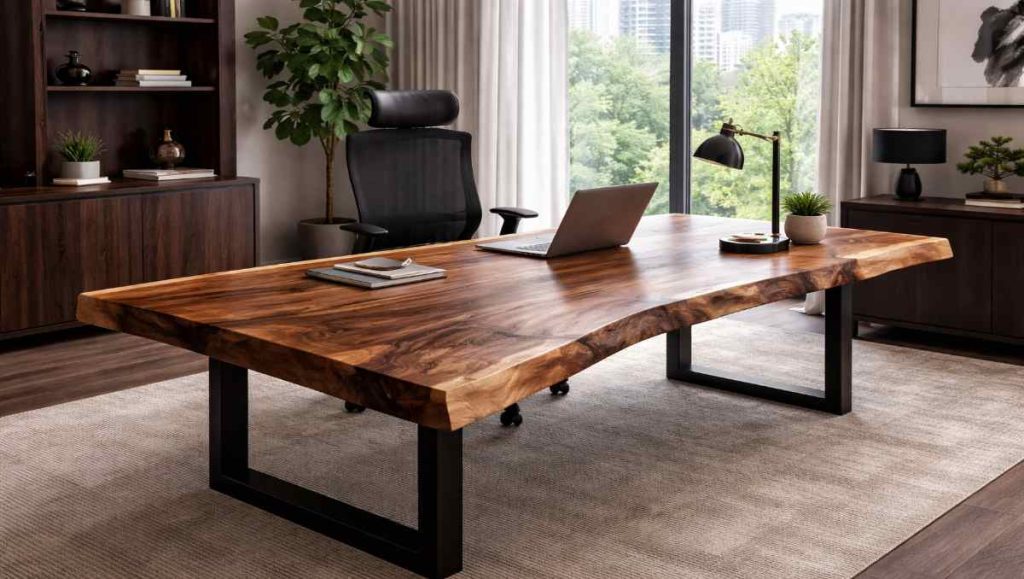
Upgrade your workspace with a piece of modern history by exploring our collection of executive lift desks, designed to bring ergonomic innovation to your daily routine.
Conclusion
So, who invented the desk? The reality is that no single individual can claim credit for inventing it. The desk evolved gradually over thousands of years through the contributions of ancient civilizations, medieval scholars, Renaissance craftsmen, industrial manufacturers, and modern designers.
In many ways, the history of the desk mirrors the history of human civilization itself. As our methods of storing information, sharing knowledge, and conducting business evolved, so did the furniture that supported those activities. The modern desk is not just a piece of furniture. It is the product of thousands of years of human innovation.
Frequently Asked Questions
When was the first desk invented?
There is no exact invention date, but the earliest desk-like writing surfaces appeared in Ancient Egypt around 2000 BCE. These sloped wooden tables were used by scribes to hold papyrus scrolls while writing.
What was the first type of desk?
The earliest known desk-like furniture consisted of slanted writing tables used by Ancient Egyptian scribes around 2000 BCE. These simple wooden surfaces helped support papyrus scrolls during writing and record-keeping tasks.
When did desks become common in homes and offices?
Desks became increasingly common in wealthy homes during the Renaissance and the 17th and 18th centuries. They became widespread in offices during the Industrial Revolution as businesses expanded and clerical work increased.
When were computer desks invented?
Computer desks became popular in the 1980s and 1990s as personal computers entered homes and offices. These desks were designed to accommodate monitors, keyboards, printers, and other computer equipment.