
A small workspace does not have to feel cramped or distracting. With smart office space planning and the right layout, even a compact room or nook can become an efficient and comfortable office. The best small office ideas for work focus on maximizing every inch of space while improving organization, productivity, and daily comfort. From multifunctional furniture to clever storage solutions and ergonomic setups, small changes can make a big difference in how your workspace looks, feels, and performs throughout the day.
Key Takeaways:
- Smart layout choices are the key to making a small office feel more spacious and functional.
- Multi-functional furniture and vertical storage help maximize space by reducing clutter and increasing usable storage.
- Good lighting, cable management, and minimal decor improve focus by keeping a small office clean, organized, and visually simple.
From smarter furniture choices to better lighting and storage solutions, let’s explore some practical small office ideas for work that maximize space and productivity.
Understanding the Challenges of Small Office Spaces
Small office spaces often come with limitations that affect comfort, movement, and efficiency. Tight layouts, limited storage, and oversized furniture can make the space feel cramped and cluttered. It can also be difficult to create a workspace that feels productive and motivating without overfilling it, which often leads to visual clutter and distractions. The key is to balance functionality, comfort, and simplicity so the space stays practical and easy to work in.
7 Small Office Ideas That Maximize Space and Productivity
Small offices work best when every piece has a purpose. The right layout, furniture, and desk organization systems can help you create a workspace that feels open and efficient. Here are some practical ideas that can help maximize both space and productivity:
1. Use Smart Layouts to Improve Workflow and Movement
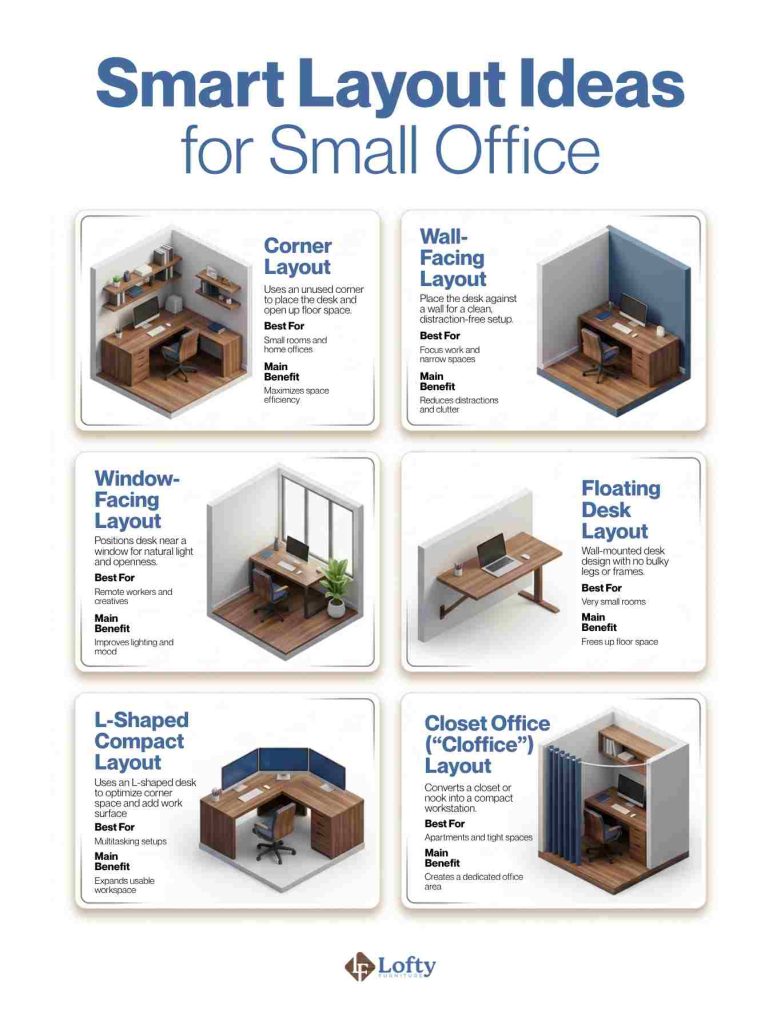
Office layout directly affects comfort, efficiency, and how spacious the room feels. Strategic furniture placement improves movement and reduces cluttered pathways. Placing desks against walls frees up central space, while corner layouts make use of underutilized areas. For narrow rooms, wall-facing setups reduce distractions and maximize usable space.
Here’s a quick comparison of smart office layouts and where they work best:
2. Utilize Multi-Functional Furniture That Reduces Clutter
In small offices, every piece of furniture should serve more than one purpose. Storage ottomans, filing cabinets that double as printer stands, and rolling carts all help maximize flexibility and reduce clutter. Desks with built-in storage and cable management also keep essentials organized and out of sight.
A simple rule: if you use something less than once a week, it shouldn’t occupy desk space.
3. Choose Compact Desks That Support Proper Ergonomics
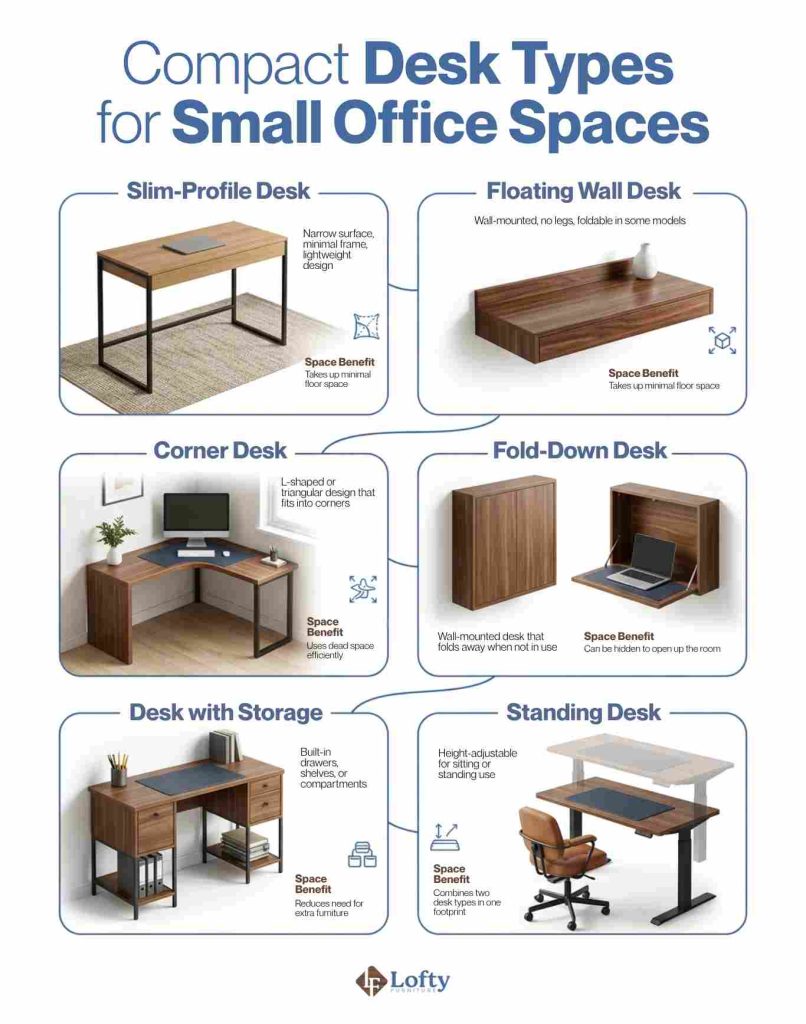
Space-saving desks should still support comfort and posture. Ensure enough depth for proper monitor distance and adequate legroom underneath. Fold-down desks work for occasional use, but stable, ergonomic designs such as a small standing desk are better for full-day work.
Here’s a comparison of compact desk options and when you should use them:
4. Install Vertical Storage Solutions to Maximize Every Inch
When floor space is limited, vertical storage becomes essential. Floating shelves often outperform additional cabinets in very small offices by freeing up floor space while adding storage capacity. Over-desk shelving keeps frequently used items within reach, while pegboards and hanging organizers help manage tools, cables, and accessories in a structured way rather than adding visual clutter.
5. Improve Cable Management for a Cleaner Workspace
Managing cords properly helps create a cleaner, safer, and more productive environment. Cable trays mounted underneath desks help keep wires hidden and organized. Clips and sleeves also prevent cords from tangling while making charging stations easier to manage. Another smart approach is to use wireless accessories whenever possible. Wireless keyboards, mouse, and charging pads reduce visible clutter and make small desks feel more spacious.
6. Maximize Lighting to Expand Visual Space
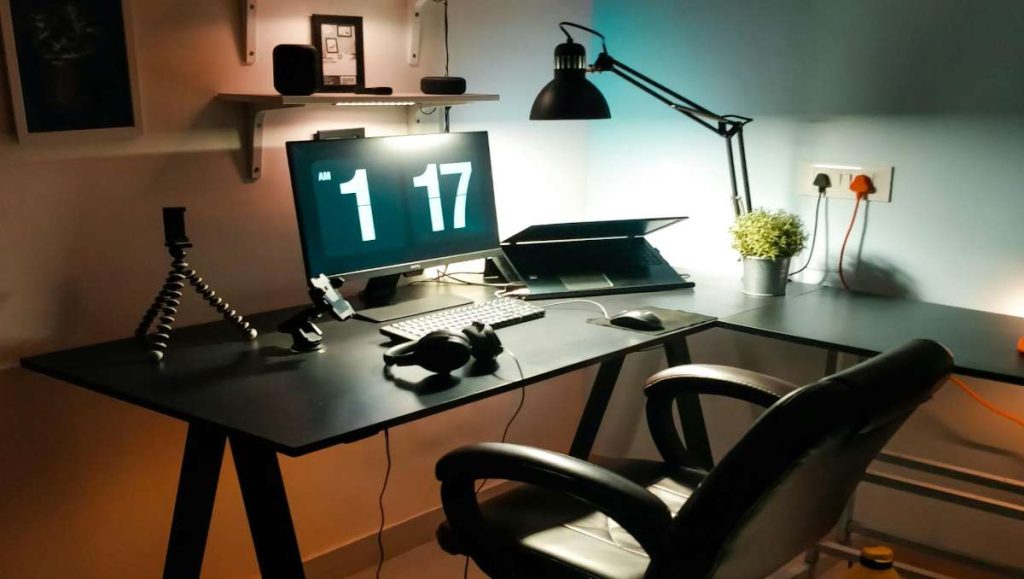
Lighting strongly influences comfort and perceived space in small offices. Layered lighting, such as natural light, overhead fixtures, and task lamps creates balance and reduces eye strain. Good lighting improves mood and focus, while glare reduction (through blinds, diffused light, and monitor positioning) enhances comfort. Cooler light supports concentration, while warmer tones create a relaxed feel.
You might want to rethink your layout using our complete guide on where to put desk in room with window to maximize natural light and boost your daily productivity!
7. Use Color and Minimal Decor to Support Focus
Light colors like white, beige, and soft gray reflect light and make small spaces feel larger. Accent colors such as blue and green can improve focus and calmness when used sparingly. Keep décor minimal and intentional. A few plants, framed artwork, or textured accents are more effective than overfilling the space.
Conclusion: Build a Smarter, More Productive Small Office Space
A small office does not have to feel limiting. With thoughtful layouts, compact furniture, smart storage solutions, and better lighting, even the smallest workspace can become functional, comfortable, and efficient. The key is not simply fitting more into the room, but designing the space in a way that supports how you work every day.
When every element has a purpose, a small office can transform from a cramped and distracting area into a workspace that improves focus, reduces stress, and encourages productivity. With the right design choices, limited space becomes an advantage rather than an obstacle, creating an environment that feels organized, motivating, and built for long-term success.
Frequently Asked Questions
What is the ideal layout for a small office?
The ideal layout depends on the shape of the room, but wall-facing and corner desk setups are often the most space-efficient. These layouts free up floor space while improving movement and organization.
How do I maximize productivity in a small office space?
Focus on reducing clutter, improving lighting, and choosing furniture that supports organization. A clean and well-lit workspace helps minimize distractions and improve concentration.
What are common small office design mistakes?
Small offices often suffer from cramped layouts, limited organization, and workspaces that don’t support employees’ daily needs. Another common issue is designing for current requirements only, without considering future expansion or changes.