
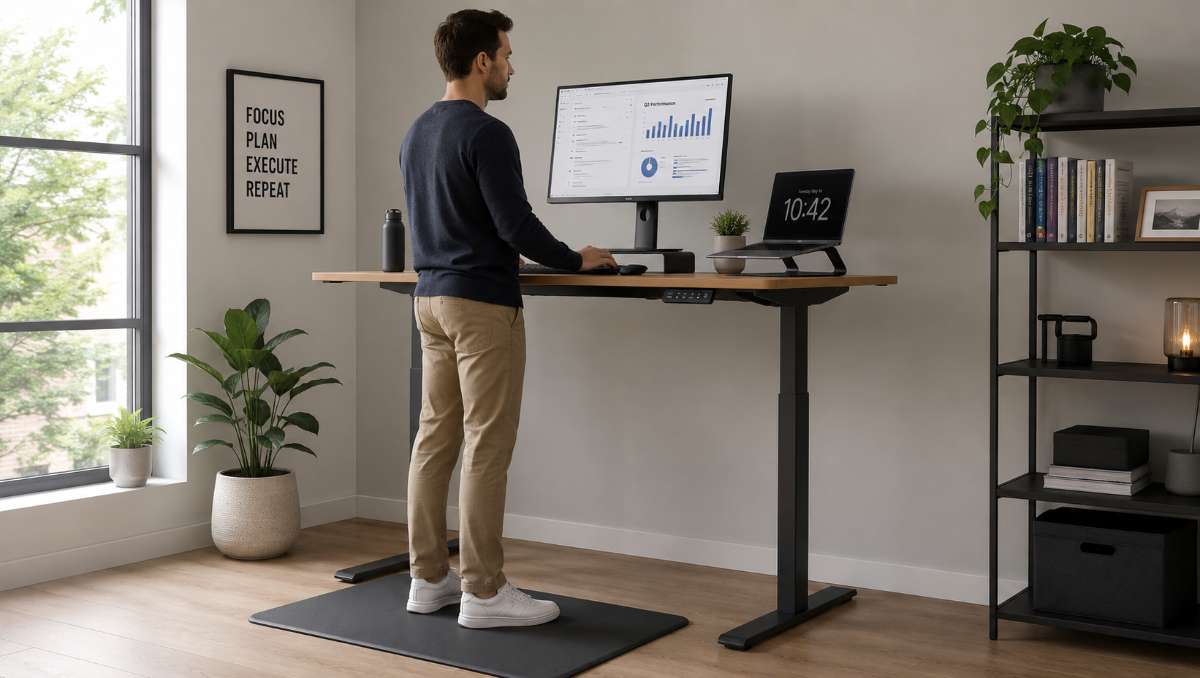
Most people don’t think of sitting as inactive, but long hours at a desk can quietly reduce daily calorie burn. That’s why standing desk weight loss has become a popular search topic. Many people are looking for simple ways to stay more active during the workday without changing their entire routine. A standing desk can help reduce the amount of time you spend sitting, but the real question is how much that actually affects weight loss.
Key Takeaways:
- Standing does burn a few more calories than sitting, but the difference isn’t huge.
- Alternating between sitting, standing, and moving is more effective than staying in one position.
- Good setup and posture matter to avoid discomfort and sustain use long-term.
In this guide, we’ll break down what the research says about standing versus sitting, how many calories are actually burned in each, and whether a standing desk can meaningfully support weight loss over time.
How Sitting All Day Affects the Body
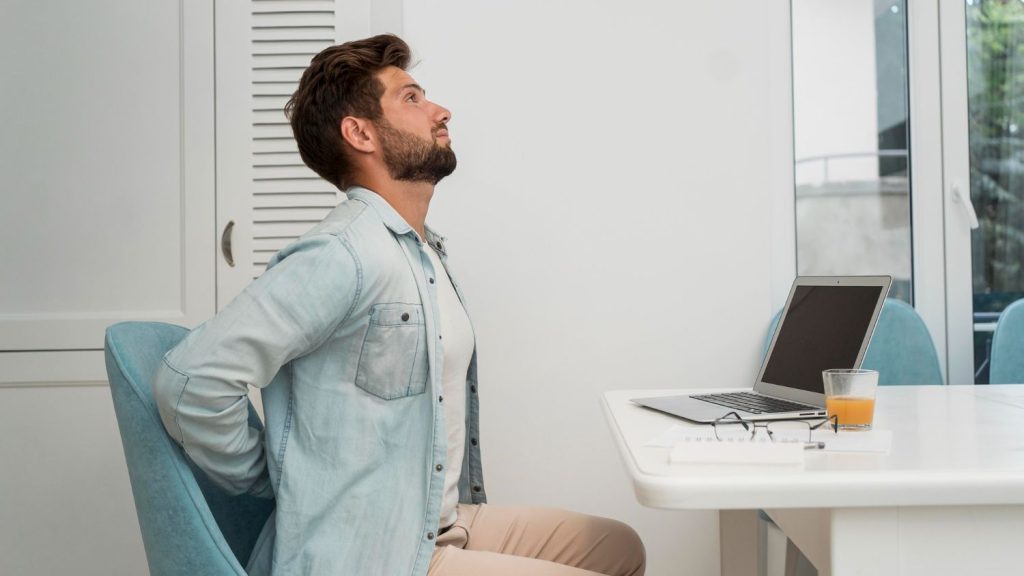
Sitting for long hours each day can affect more than posture. Prolonged sedentary time slows circulation, reduces calorie burn, and contributes to stiffness in the back and hips. It also lowers NEAT (Non-Exercise Activity Thermogenesis), the everyday energy burned through non-exercise movement like standing and shifting positions. Over time, too much inactive time has been associated with higher risks of weight gain, high blood pressure, and other health concerns.
The health risks aren’t really about sitting itself. They’re more about staying inactive for long stretches without moving around. Even people who work out regularly can still feel the effects if they spend most of the day sitting. Research published in the Journal of the American College of Cardiology found that prolonged sedentary behavior is associated with increased cardiovascular and overall health risks, which is one reason standing desks and movement-friendly workstations have become more popular in modern offices.
Do Standing Desks Really Help With Weight Loss?
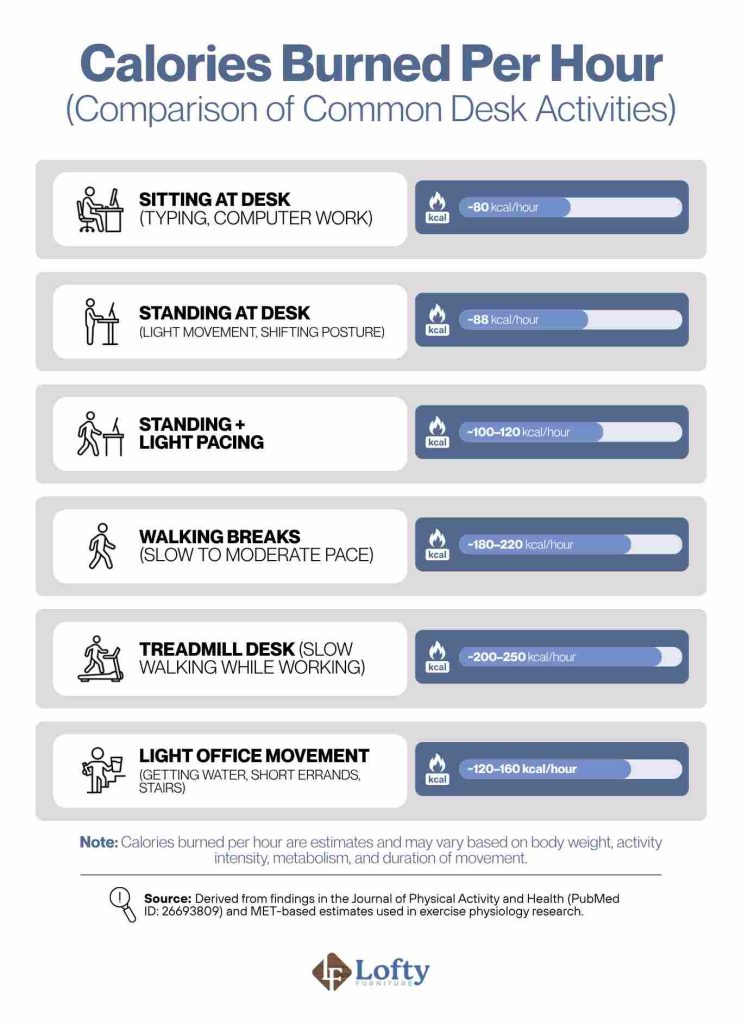
Standing desks can help support weight loss goals, but they’re not a quick way to burn a lot of calories. A study published in the Journal of Physical Activity and Health found that people burned about 80 calories per hour while sitting and around 88 calories per hour while standing. Walking, on the other hand, burned roughly 210 calories per hour. So while the
Another review published in Applied Ergonomics looked at how sit-stand desks affect behavior, comfort, and overall health. Researchers found that these desks helped reduce sedentary time and improved discomfort, although the overall health benefits were considered modest. In other words, standing desks are most useful when they encourage people to move around more during the day, instead of just swapping hours of sitting for hours of standing.
To better understand the difference, here’s a simple comparison of estimated calories burned during an hour workday.
Best Ways to Maximize Weight Loss With a Standing Desk
A standing desk alone won’t drive major weight loss, but how we use it throughout the day can make a real difference. At Lofty Furniture, we often remind people that the goal is not to stand more, but to move more. Here are the best ways to maximize weight loss with a standing desk:
Use Timed Standing Intervals
One of the easiest ways to avoid overstanding or slipping back into long sitting periods is to use structured intervals. Instead of staying in one position for hours, alternate between sitting, standing, and moving at set times. It’s a good idea to start slow, especially for beginners, so the body can adapt without discomfort or fatigue.
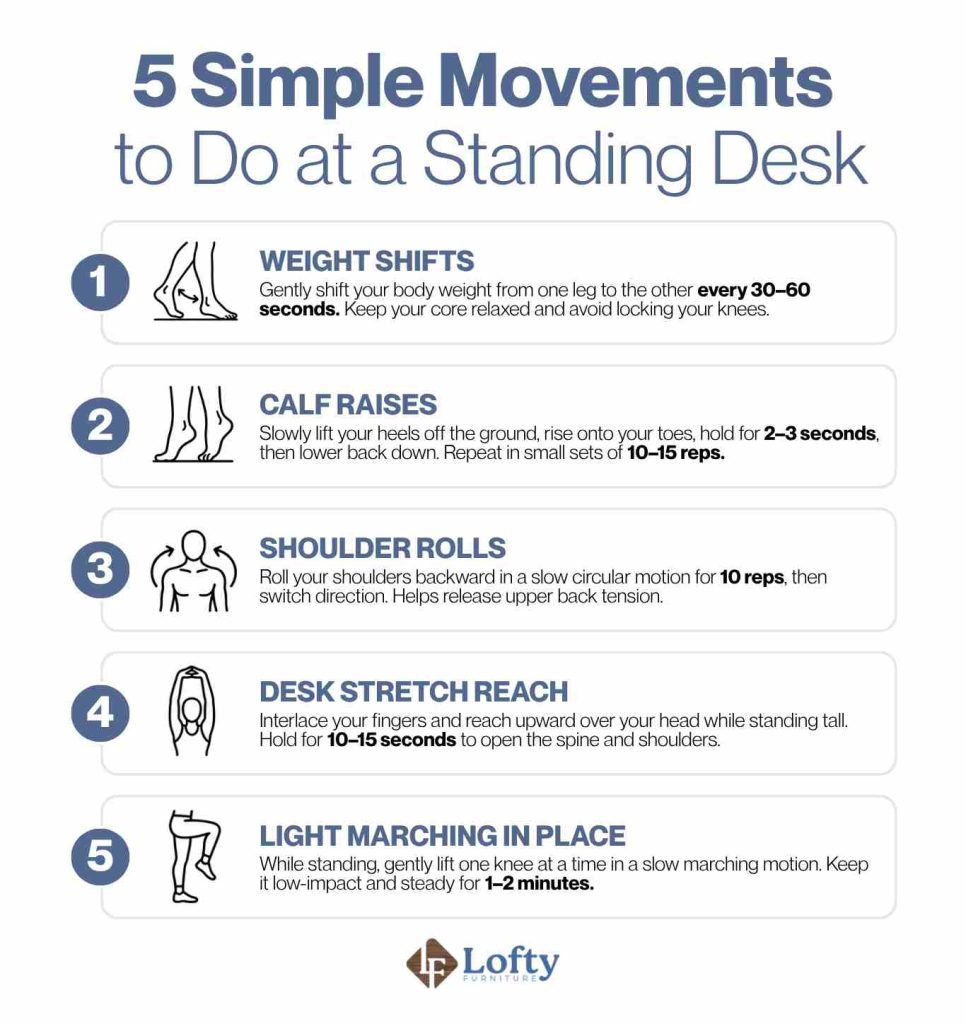
Add More Micro-Movements While Standing
Small movements add up more than most people expect. While standing, do gentle shifts like stretching, shifting weight between legs, or light mobility exercises. Even brief actions like standing calf raises or shoulder rolls help keep blood flowing and reduce stiffness during long work sessions.
Consider Accessories That Encourage Movement
The right setup can make staying active feel effortless. Anti-fatigue mats and standing desk mats make standing more comfortable, while balance boards and under-desk steppers add light movement during work. For more consistent activity, some people pair adjustable desks with walking pads or treadmill bases. The goal is simply to keep the body moving throughout the day.
Ready to supercharge your weight loss journey? Burn more calories throughout the workday by upgrading your workspace with a beautifully crafted Amish standing desk built to last a lifetime.
Final Thoughts: Can a Standing Desk Help You Lose Weight?
A standing desk can support weight loss, but it is not a miracle solution on its own. Its real value comes from reducing long periods of sitting and encouraging more natural movement throughout the day. Small increases in calorie burn can add up, but they work best when combined with consistent habits over time rather than quick fixes.
What matters most is long-term consistency. Standing, sitting, walking, and stretching all play a role in keeping the body active and balanced. At Lofty Furniture, we’ve seen that people get the best results when they treat their desk as part of a broader lifestyle shift rather than a standalone solution. The most practical approach is simple: move more, sit less, alternate often.
Frequently Asked Questions
Is standing for 8 hours better than sitting for 8 hours?
Not necessarily. Standing all day can also cause fatigue and discomfort. The healthiest approach is alternating between sitting, standing, and moving throughout the day.
Can standing reduce belly fat?
Standing alone has a very small impact on calorie burn, so it is unlikely to significantly reduce belly fat without overall lifestyle changes like diet and regular movement.
Does standing burn fat or muscle?
Standing does not burn muscle. It burns a slightly higher number of calories than sitting, but the difference is small compared to walking or other active movement.
How long should you stand at a standing desk each day?
A common recommendation is to aim for 2 to 4 hours of standing spread throughout the workday, rather than standing continuously.