
Bum sweat can be an all-too-common problem for office workers, especially during long hours of sitting. It can leave you feeling sticky and even cause visible sweat marks on your chair or clothing. Fortunately, the right combination of proper seating and smart workspace habits can help keep you cool and comfortable throughout the day. When shopping for ergonomic office furniture, choosing a well-designed chair with breathable materials and supportive construction can make a noticeable difference in staying comfortable during long work sessions.
Key Takeaways:
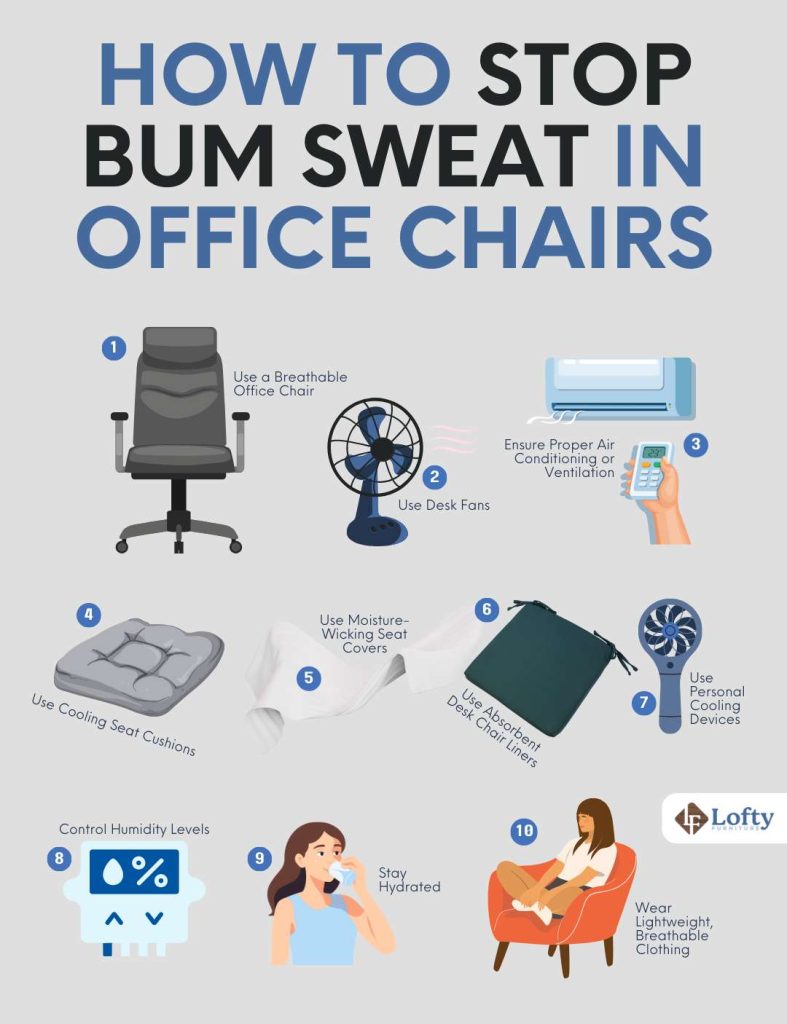
- To stop bum sweat on chairs, wear breathable clothing, choose a chair with ventilated or mesh materials, and use moisture-wicking products to keep the area dry.
- Add cooling gel cushions, memory foam cushions with cooling technology, or bamboo seat covers to your chair, and consider using desk fans for extra cooling.
- Maintain a cool office with good air circulation, wear breathable clothes, stay hydrated, and practice good hygiene. If you sweat excessively, see a doctor.
The Science Behind Sitting and Bum Sweat
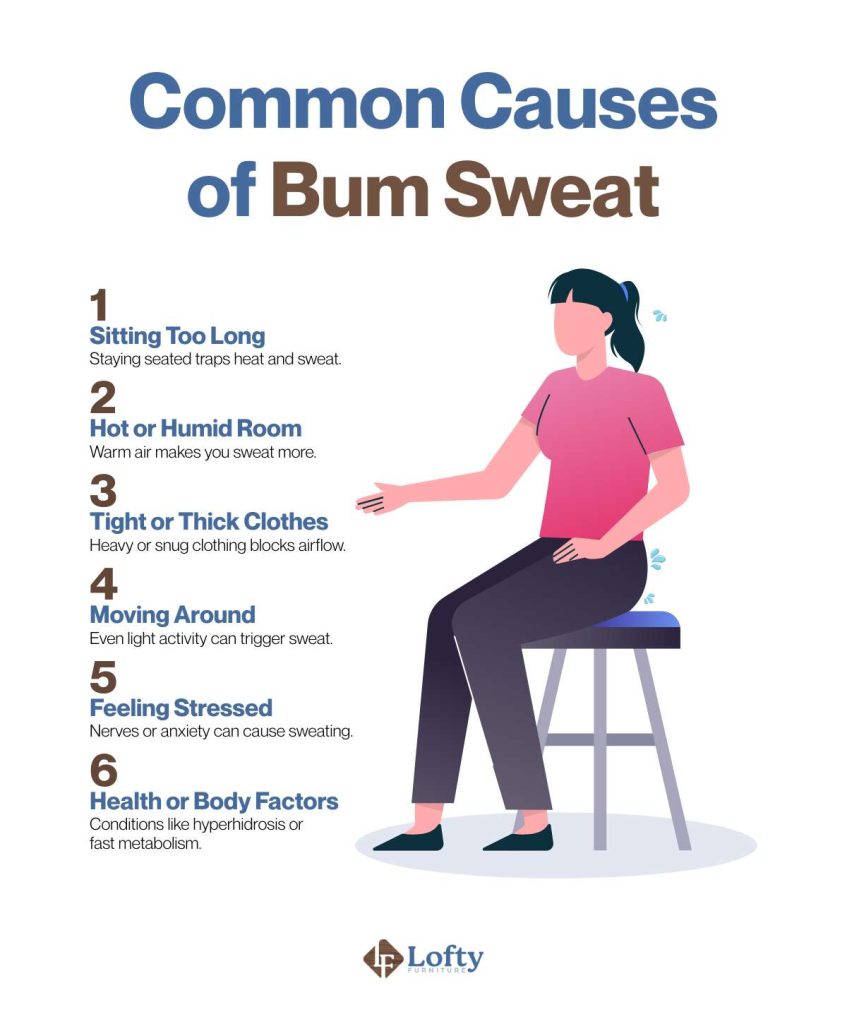
Bum sweat is a normal part of sweating but can become more noticeable when sitting in an office chair for long periods. Your body has sweat glands all over, including in your glutes, which release sweat to cool you down when you’re physically active, stressed, or in a warm environment. The materials of your chair and tight clothing can worsen the problem, and a warm room temperature can contribute too. Certain medical conditions, like hyperhidrosis, as well as factors like body weight, metabolism, and diet, can also increase sweating.
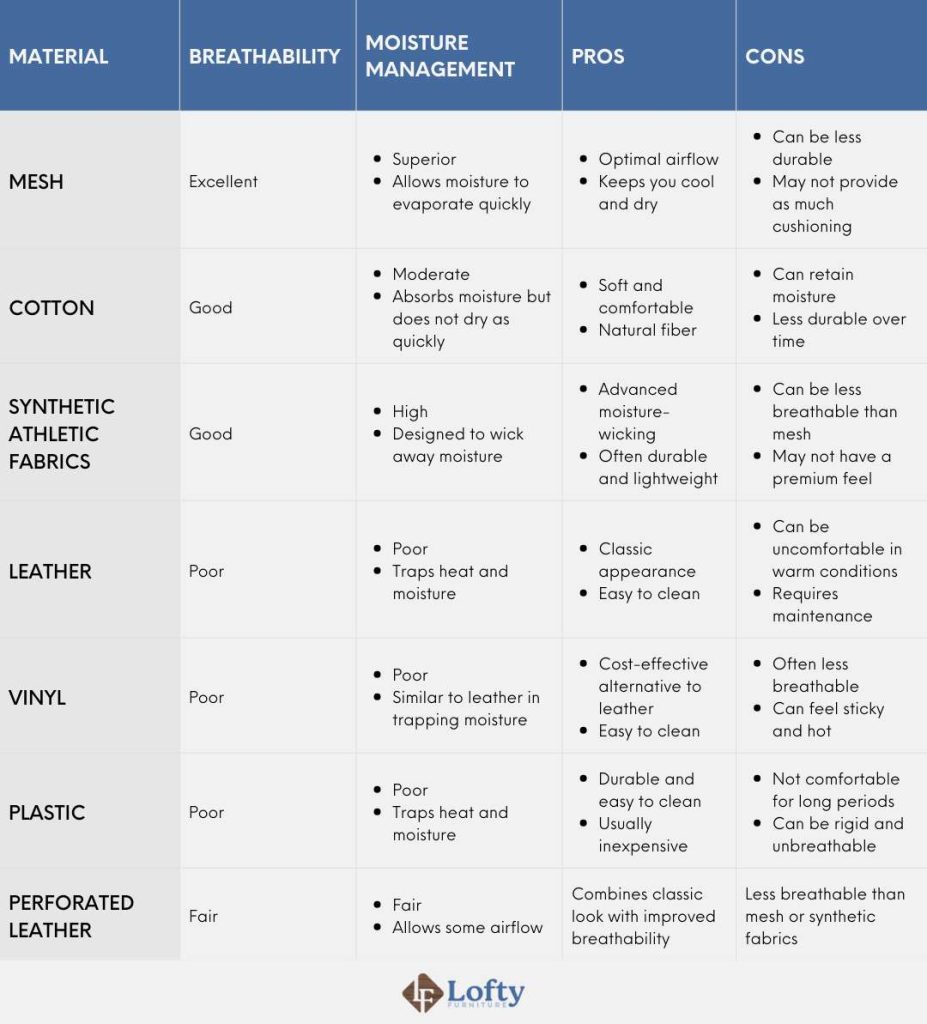
Your office chair can play a role in exacerbating the issue. Many office chairs, especially older or budget models, are made from non-breathable materials like leather or vinyl and lack ventilation features such as mesh backrests or perforations. This can trap heat and moisture, making bum sweat more likely.
How to Stop Bum Sweat on Office Chairs
To stop bum sweat on office chairs, your strategy should focus on three key areas: boosting airflow, leveraging moisture-wicking materials, and maintaining a cool environment. Think about upgrading to a more breathable chair, using seat covers or cushions designed to wick away moisture, and optimizing your office’s ventilation. Don’t forget that what you wear matters too. Opt for breathable clothing and underwear.
Pick the Right Material for Your Office Chair
The material of your office chair can significantly impact how much you sweat while sitting. Opting for the right fabric can make a big difference in comfort and help manage bum sweat, turning your chair into a more pleasant and practical workspace.
Here’s a closer look at the different office chair materials and their effects on bum sweat:
Look for the Right Design Features
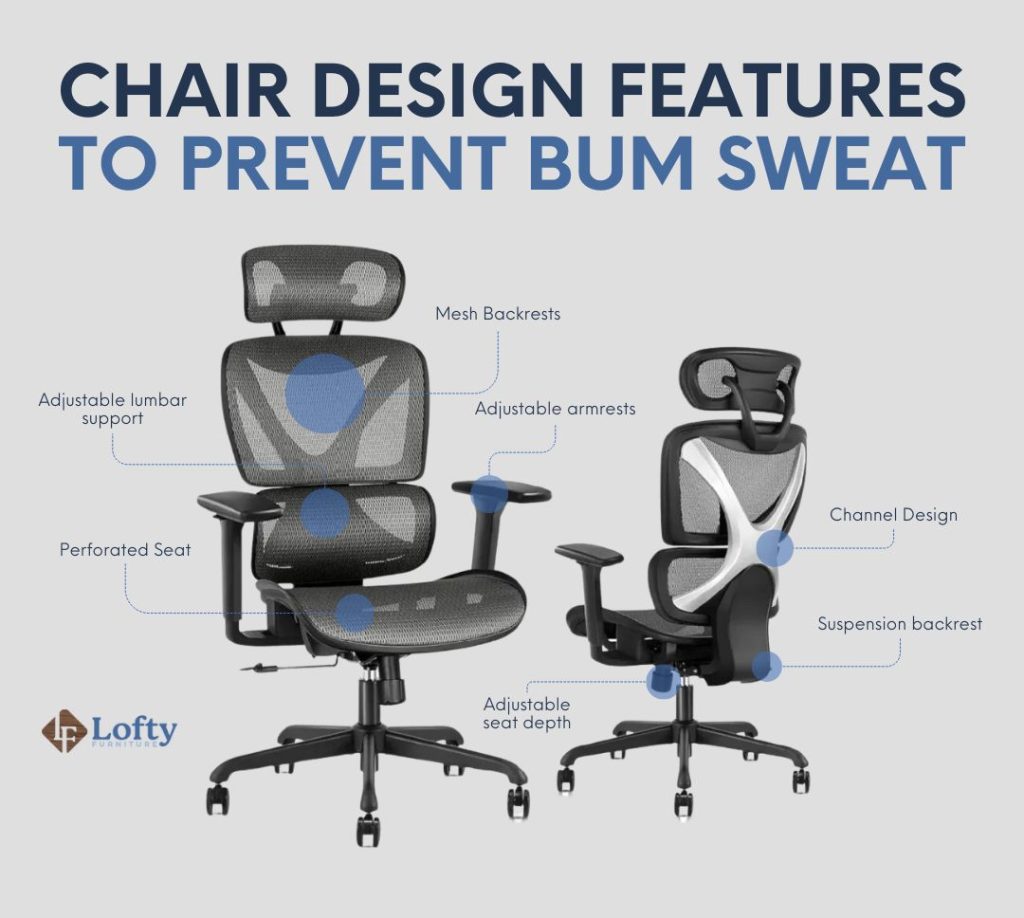
The design features of a chair can greatly impact its breathability and overall comfort, helping to reduce sweat. Chairs with perforated seats, which have small holes or slots, improve airflow and are particularly beneficial for leather or vinyl chairs that typically don’t breathe well. Chairs with a channel design in the seat or backrest create gaps that enhance airflow.
Features like suspension backrests, which create a space between your back and the chair, or built-in fans for active cooling, can also increase comfort. Ergonomics are important too. A chair that supports proper posture reduces pressure points, which helps keep you cooler and drier.
Use Cooling Seat Cushions and Chair Accessories
Even if your current office chair isn’t ideal for breathability, several accessories and add-ons can significantly improve your comfort and reduce bum sweat.
- Cooling Gel Cushions: Gel cushions are designed to distribute weight evenly and dissipate heat.
- Memory Foam with Cooling Technology: Opt for memory foam cushions with cooling technology, such as gel infusions or open-cell designs that promote airflow.
- Bamboo Seat Covers: Bamboo is a naturally breathable and moisture-wicking material.
- Desk Fans: A recent study from the Journal Building and Environment found that using a desk fan significantly reduced perceived thermal discomfort in office workers.
Make Changes in Your Office Environment
Aim for a temperature between 68°F (20°C) and 72°F (22°C), which is generally considered comfortable for most people. If your office environment is humid, using a dehumidifier or air conditioner can help reduce moisture in the air, making you feel less hot.
Wear the Right Clothes
Opt for natural fibers like cotton or linen, as they allow air to circulate and wick away moisture. Avoid synthetic fabrics like polyester, which can trap heat and sweat. Tight clothing restricts airflow and traps sweat against your skin. Choose loose-fitting pants or skirts that allow for better ventilation. Additionally, wear breathable underwear made from natural fibers or moisture-wicking materials.
Pay Attention to Your Hydration, Diet, and Hygiene
Drinking plenty of water throughout the day helps regulate your body temperature and can reduce sweating.
“Dehydration can lead to the body overcompensating by sweating more, so make sure to drink plenty of water throughout the day. But steer clear of sugary or caffeinated drinks, both of which can actually encourage sweating. Foods that are high in magnesium like leafy greens can regulate nerve function, which alleviates excessive sweating.” — Dr. Kevin Huffman, CEO, Ambari Nutrition
Additionally, regular showers help remove sweat and bacteria from your skin, reducing the risk of odor and irritation. Consider applying an antiperspirant to your buttocks if you experience excessive sweating.

Improve Your Sitting Habits
Avoid sitting still for too long, as static postures trap body heat and restrict circulation. Stand up every 30–60 minutes to get your blood flowing and give your body a chance to cool down. Use a sit-stand desk to easily transition between sitting and standing throughout the day. Incorporate quick stretches throughout the day to relieve muscle tension and improve overall airflow around your body.
Escape the discomfort of a sweaty seat! Discover how ergonomic office chairs can keep you cool and comfortable while maximizing productivity.
Addressing Psychological Factors and Stress-Related Sweating
Beyond environmental factors and chair design, it’s crucial to acknowledge the powerful mind-body connection to sweating. Work-related stress, anxiety about deadlines, or even social pressures in the office can independently trigger or exacerbate localized perspiration, a phenomenon often referred to as “emotional sweating” or “stress sweat.” Skin Pharmacology & Physiology research demonstrates a direct physiological link between heightened stress levels and increased sweat gland activity, independent of external temperature.
To mitigate this, integrating stress-reduction techniques into your workday can be highly effective. Simple practices like short mindfulness exercises, deep breathing techniques during a tense moment, or taking brief mental breaks to clear your head can help regulate your sympathetic nervous system, thereby reducing stress-induced perspiration.
When Excessive Sweating May Need Medical Attention
If you’re still experiencing excessive perspiration despite losing weight or making other lifestyle changes, or if it interferes with your daily life and comes with other symptoms, it’s worth consulting a doctor to check for underlying issues and discuss treatment options. Body weight can also be a factor in sweat volume, since more body surface area can mean more sweat glands are active. If this applies to you, that’s simply useful context, not something you need to “fix” — many people manage bum sweat effectively through chair choice and clothing alone.
Dr. Kevin Huffman adds:
“For overweight or obese people, weight loss also makes a difference. In our bariatric practice, we’ve noted that patients who lost even 10 percent of their body weight saw a significant reduction in sweating.”
Transform your workday with an ergonomic stand-up desk. Experience the benefits of better posture and reduced discomfort. View Collection!
Conclusion
Bum sweat in office chairs is a common and often frustrating issue, but it doesn’t have to interfere with your comfort or productivity. Choosing a chair with breathable materials and good airflow, along with using cooling cushions, moisture-wicking fabrics, or other simple accessories, can make a noticeable difference during long workdays.
If excessive sweating persists despite these changes, it’s worth consulting a healthcare professional to rule out any underlying medical conditions. Investing in a well-designed ergonomic chair, such as those available from Lofty Furniture, can also help create a cooler, more comfortable workspace that supports you throughout the day.
Frequently Asked Questions
Is bum sweat in office chairs a common problem?
Yes, it’s a very common problem, especially in warm or humid environments or when using chairs made of materials that are non-breathable.
Can bum sweat on my office chair damage it?
Over time, excessive moisture from sweat can potentially damage certain chair materials, particularly leather or fabric. Using a seat cover or cushion can help protect your chair.
Are there any quick fixes for bum sweat when I’m already at work?
If you’re already at work and experiencing bum sweat, try standing up and walking around for a few minutes to allow for some airflow. You can also try placing a handkerchief or tissue on your chair to absorb moisture.
How do you remove sweat from an office chair?
To remove sweat from an office chair, first check the material for specific cleaning instructions. For most fabric or mesh chairs, slightly blot stained areas with a cloth dampened in a mild soap and water solution. For odors, sprinkle baking soda, let it sit for a few hours, then vacuum thoroughly, and allow the chair to air dry completely.
Put a couple of bounce fabric softener sheets underneath a stylish hand towel and sit your bum on that. Change the sheets out every week or so but, one or two sheets should last a good while. Lastly, stop releasing gas while sitting in your office chair, take a walk and air things out. LOL