

Your desk is where you spend hours working, attending meetings, and staying productive, so the type of wood you choose matters more than you might think. The best types of wood for desks fall into two categories: solid hardwoods like oak, maple, walnut, and cherry for maximum durability, and budget-friendly alternatives like pine, bamboo, and engineered wood for lighter use or tighter budgets. The right wood affects durability, stability, and appearance, making it an important decision for any remote workspace.
Key Takeaways:
- The best wood to build a desk is hardwood, with top choices including oak, maple, and walnut.
- Cherry, pine, and bamboo give budget-conscious or eco-minded workers practical alternatives.
- Match your wood to your desk type, environment, and work habits to get the best results.
Best Wood to Build a Desk: Top Options for 2026
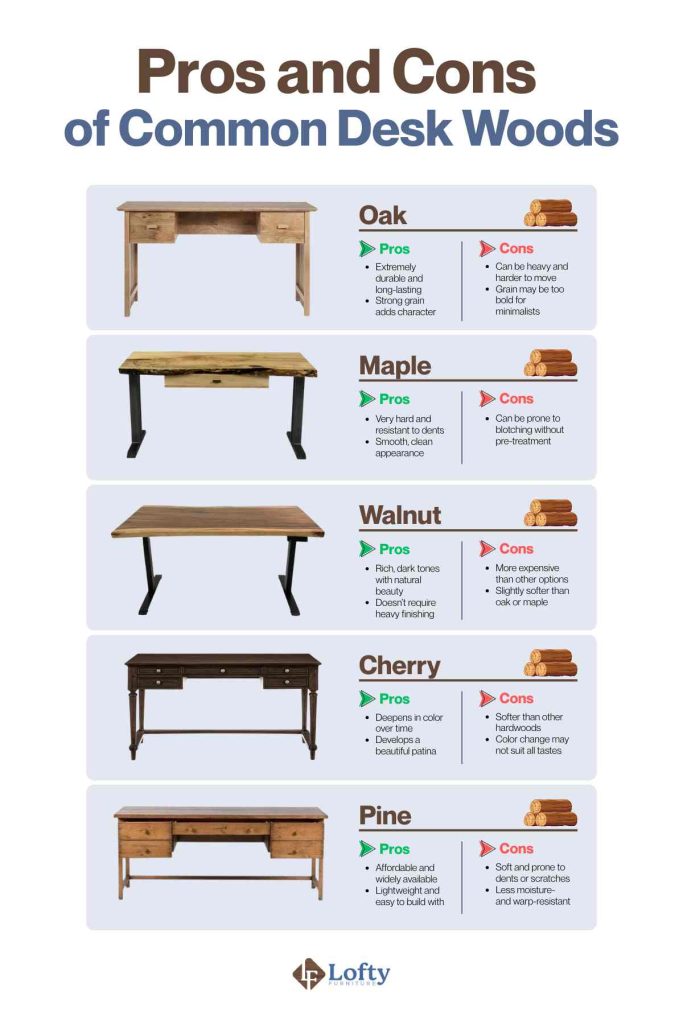
Here are the best wood options to build a desk in 2026, each offering a unique balance of durability, appearance, cost, and maintenance.
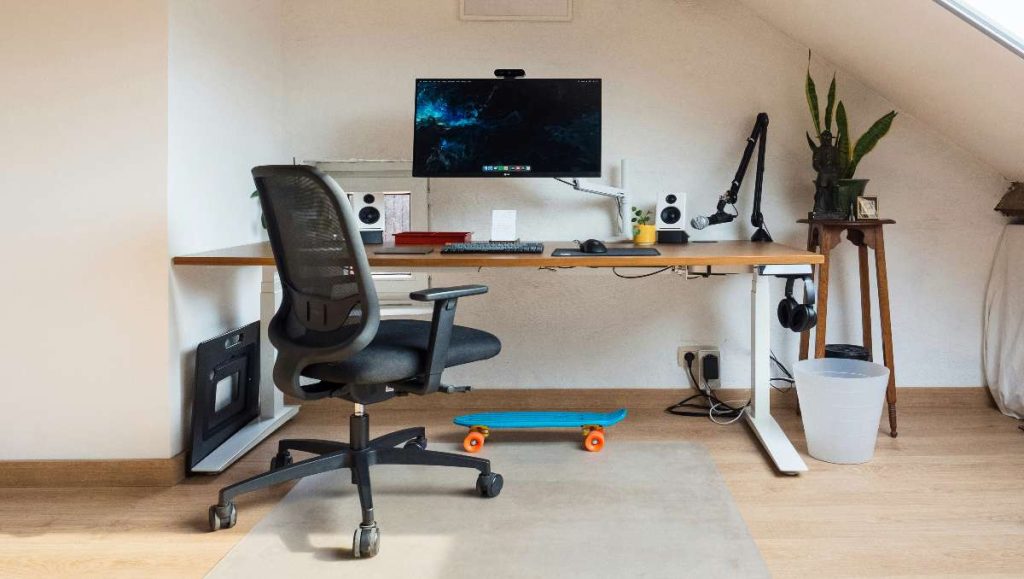
Oak
Oak is one of the strongest and most classic choices for a desk. Known for its resilience, oak desks can handle heavy equipment like dual monitors without sagging or weakening. Its grain pattern also gives it a timeless, traditional look. When crafted using traditional Amish woodworking techniques, oak’s natural strength is complemented by durable joinery that helps the desk remain sturdy for decades.
Maple
Maple offers a smooth, light finish that fits seamlessly into minimalist, modern workspaces. Despite its lighter color, it’s strong and resistant to wear, making it a solid pick for everyday use. Plus, it’s often more affordable than walnuts or cherries. Handcrafted maple desks often showcase precise craftsmanship and smooth, furniture-grade finishes that highlight the wood’s subtle grain.
Walnut
Walnut is a favorite for its rich, dark tones and luxurious feel. While it’s on the pricier side, walnut is one of the best woods for desk if you’re looking for elegance paired with long-lasting strength. Skilled Amish artisans often preserve walnut’s natural character with hand-applied finishes that enhance its depth without masking the grain.
Cherry
Cherry wood offers a balance of beauty and durability. Its reddish-brown tones deepen over time, giving your desk character as it ages. If you want a desk that looks even better years down the line, cherry is a solid choice. Because cherry develops a richer patina with age, handcrafted construction allows the desk to age gracefully while remaining structurally sound for years.
Bamboo
While technically a grass, bamboo is one of the most sustainable options for 2026. It’s lightweight, eco-friendly, and surprisingly strong. Bamboo desks are trending among remote workers who want a modern look with an environmentally conscious edge. If sustainability is a priority for you, bamboo might be the best wood to build a desk in your home office.
Ready to bring one of these woods into your home office? Explore our handcrafted, Amish-built desks built to last for decades, not just years.
Factors to Consider When Choosing the Best Types of Wood for Desks
Before settling on a specific wood type, it’s important to consider how your office desk will hold up to daily use. The right wood choice balances practicality with personality.
Durability & Lifespan
A good home office desk should age gracefully, not fall apart after two years of Zoom meetings. Hardwoods like oak, maple, or walnut offer excellent resistance to wear and tear, making them ideal for everyday use.
Cost-Effectiveness, Finish Quality, and Aesthetics
Some woods look stunning raw and only get better with a quality finish — cherry, for example, deepens into a richer reddish tone over the years. But beauty doesn’t have to break the bank. Softwoods like pine or rubberwood can be budget-friendly while still offering clean aesthetics.
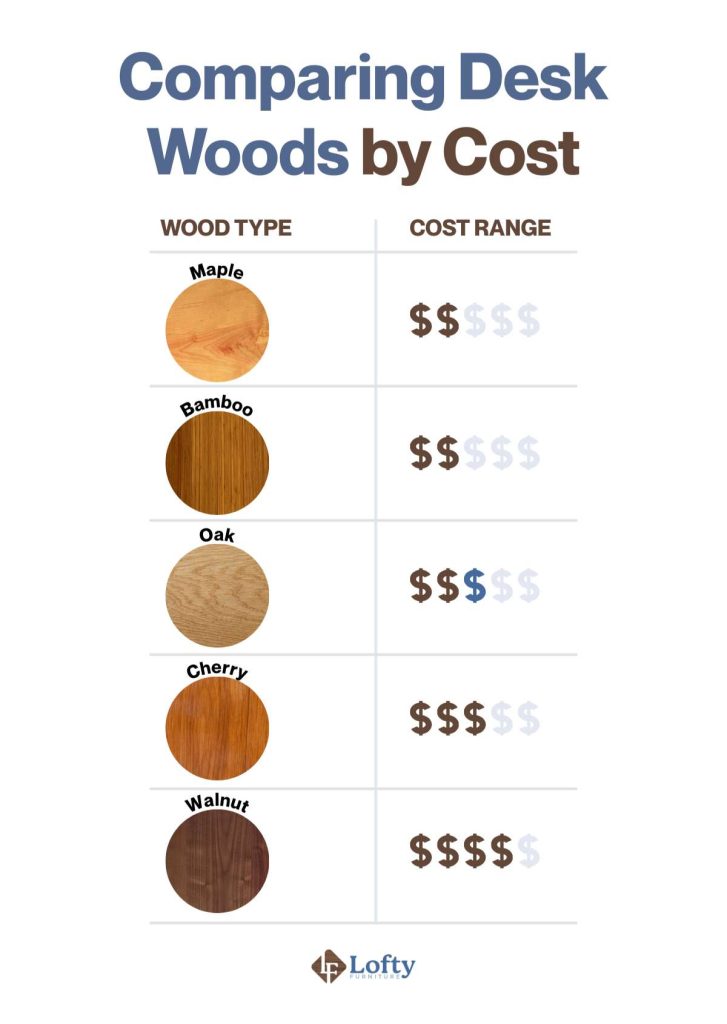
Budget is often one of the biggest deciding factors when choosing the best wood to build a desk, and the price can vary widely depending on the type you select. Here’s a price comparison of the most common options:
Resistance to Moisture, Stains, or Warping
If you live in a humid climate or occasionally forget to use coasters, wood behavior matters. Denser hardwoods like oak and walnut naturally resist moisture and warping better than softer options like pine. On the other hand, untreated or poorly sealed woods can swell or crack over time.
Solid Wood vs. Engineered Wood Desks
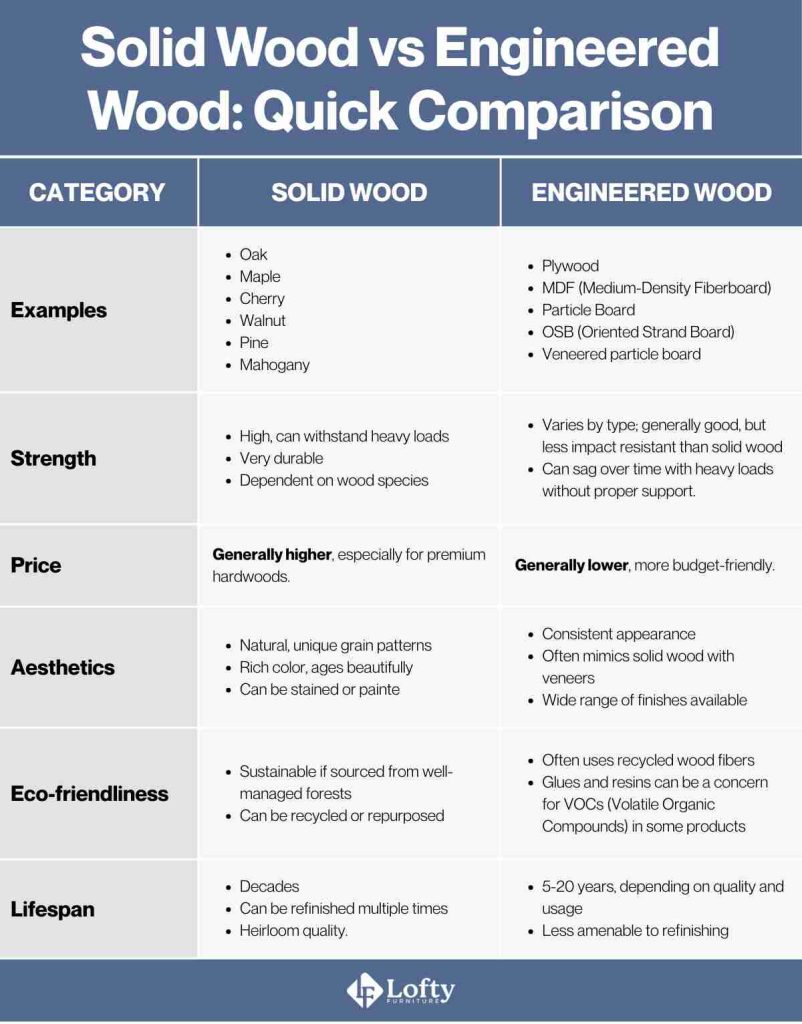
Choosing between solid wood engineered wood is one of the biggest decisions when building or buying a desk. Solid hardwoods like oak, maple, walnut, and cherry are known for their strength, longevity, and natural beauty. Engineered wood products and wood alternatives offer a more affordable path without sacrificing functionality. While they generally don’t match the lifespan of solid hardwood, many provide excellent stability and attractive finishes, making them practical for first-time home offices or budget-conscious buyers.
Here are the most common engineered wood materials and alternatives for building desk:
- MDF (Medium-Density Fiberboard): MDF is a popular choice for budget desks because it’s smooth, consistent, and easy to work with. Made by compressing wood fibers with resin, it doesn’t have visible grain but finishes well with paint or veneer.
- Plywood: Plywood is made by layering thin sheets of wood veneer, making it stronger than you’d expect for its weight. It’s often used in both DIY and commercial desks thanks to its durability and ability to hold wood screws well.
- Particle Board + Laminate: This is one of the most budget-friendly desk materials, often used in ready-to-assemble furniture. Particle board is made from wood chips and resin, and the laminate layer gives it a clean, wood-like appearance.
- Bamboo: Bamboo is technically a grass, not a hardwood, which is why it’s included here as well as among the top wood options above. It’s incredibly fast-growing, making it an eco-friendly choice, and when pressed into panels, it becomes strong and stable.
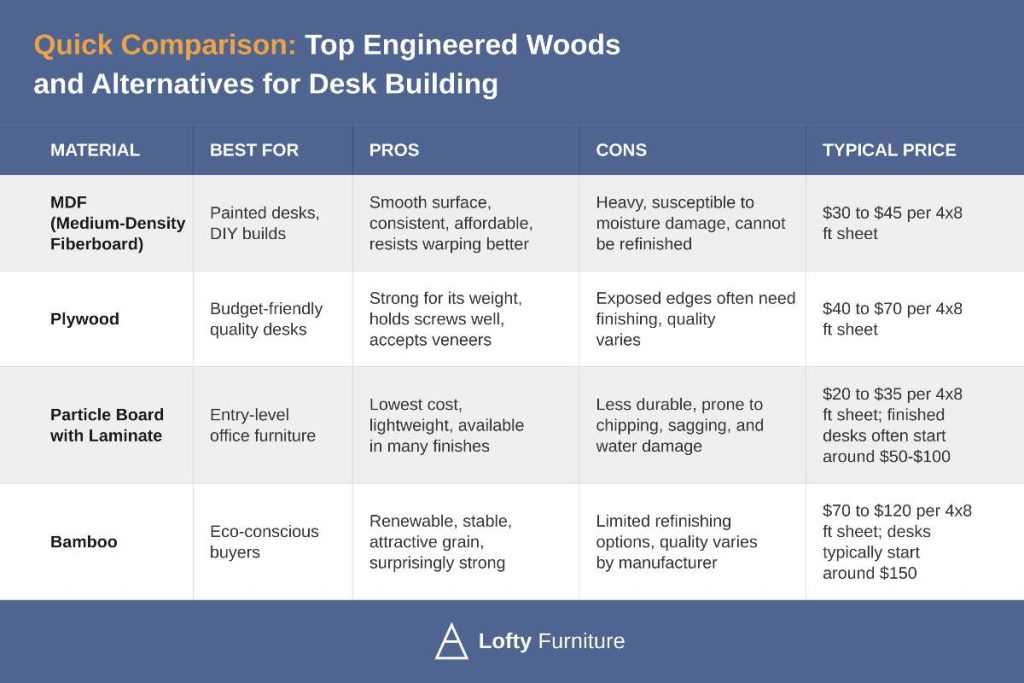
Note: Prices are approximate estimates for 4×8 ft sheets (or typical starting prices for finished desks where noted) and may vary depending on material grade, thickness, brand, and your location.
Desk Styles That Work Best with Different Woods
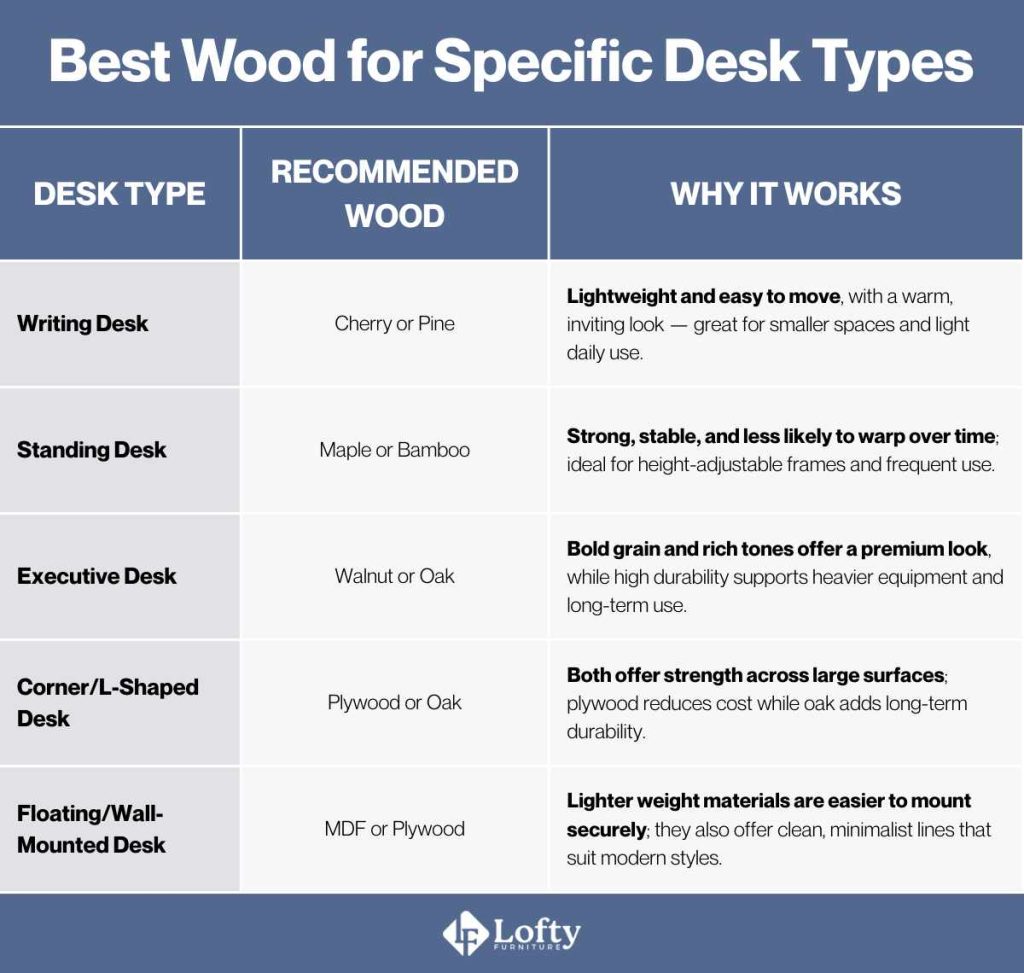
Not all desks serve the same purpose. A compact writing desk has very different demands than a hefty L-shaped workstation or a standing desk. The type of wood you choose should reflect not only your style but also how the desk will be used.
Here’s a quick guide to help match wood types with common desk designs, so you get the right balance of form, function, and longevity.
Caring for a Wooden Desk to Extend Its Lifespan
A well-built, solid wood desk can last decades, but only if you treat it right. Basic maintenance like regular dusting with a microfiber cloth, using coasters for drinks, and cleaning up spills immediately can go a long way. For most solid woods, a light application of furniture polish or beeswax every few months helps preserve the finish and keeps the surface looking fresh. Engineered woods like MDF or particle board need a gentler approach; avoid abrasive cleaning solutions or excess moisture, which can cause swelling or delamination.
It’s also important to consider your environment. If your workspace tends to be humid or overly dry, wood can expand or contract. Placing your desk away from direct sunlight, vents, or heaters can help prevent warping or cracking.
Conclusion: Choosing the Best Wood to Build a Desk in 2026
At the end of the day, the best wood to build a desk depends on what you value most. Oak and maple offer unmatched durability for everyday use. Walnut brings elegance and style to your workspace. Cherry adds warmth and character as it ages. Bamboo stands out as a sustainable, modern option.
For remote workers, choosing the right wood is an investment in comfort, productivity, and long-term quality. Whether you prioritize budget, aesthetics, or sustainability, the perfect wood is out there waiting to become the foundation of your workspace.
Frequently Asked Questions
What is the most durable wood for a home office desk?
Hardwoods like oak and maple are among the most durable woods, making them ideal for timber office desks that need to endure daily use. These woods resist dents, scratches, and warping.
Are there eco-friendly options that don’t sacrifice durability?
Yes. Bamboo is one of the most sustainable options out there. It’s fast-growing, renewable, and surprisingly strong when manufactured into furniture-grade panels. Reclaimed wood is another great option if you want a solid wood desk with a lower environmental impact.
What is the cheapest wood to build a desk?
The cheapest wood to build a desk is usually pine or maple, as both are widely available and affordable. They offer decent durability for light to moderate use without a premium price tag.
Is plywood strong enough for a desk?
Yes, high-quality plywood is strong enough for a desk if it’s thick and well-supported with a sturdy frame. Many modern desks use plywood with a veneer finish for both strength and style.
Is pine too soft for a desk?
Pine is softer than hardwoods like oak or walnut, so it’s more prone to scratches and dents. However, with proper care and protective finishes, pine can still be a budget-friendly option for a home desk.