
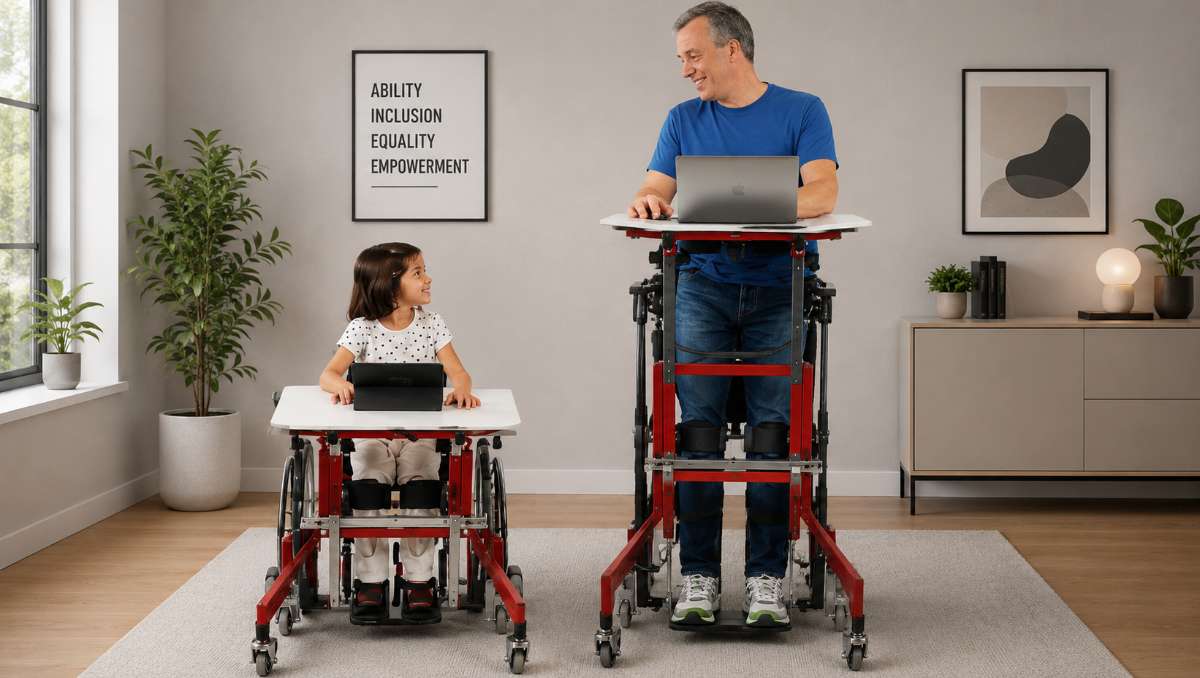
A workspace that isn’t designed around your needs can quickly become frustrating—or even unusable. For individuals with mobility limitations, standard desks often restrict movement, limit accessibility, and make everyday tasks more difficult than they should be. A standing table for disabled users addresses these challenges by offering adjustable height, better access, and support for different working positions.
Key Takeaways:
- A standing table for disabled users improves independence by adapting to different mobility needs and working positions.
- Features like extended height range, stability, and accessibility controls directly impact usability.
- The right table depends on mobility level, environment (home vs workplace), and required support.
In this article, we’ll explore what makes a standing table truly accessible for disabled users, the different types available, and how to choose the right setup for both home and professional environments.
What Is a Standing Table for Disabled Users?
A standing table for disabled users is a specially designed workstation that allows individuals with physical limitations to work comfortably in a supported standing position. These tables are often built with features like extended height ranges, wheelchair clearance, smooth lift mechanisms, and ergonomic controls.
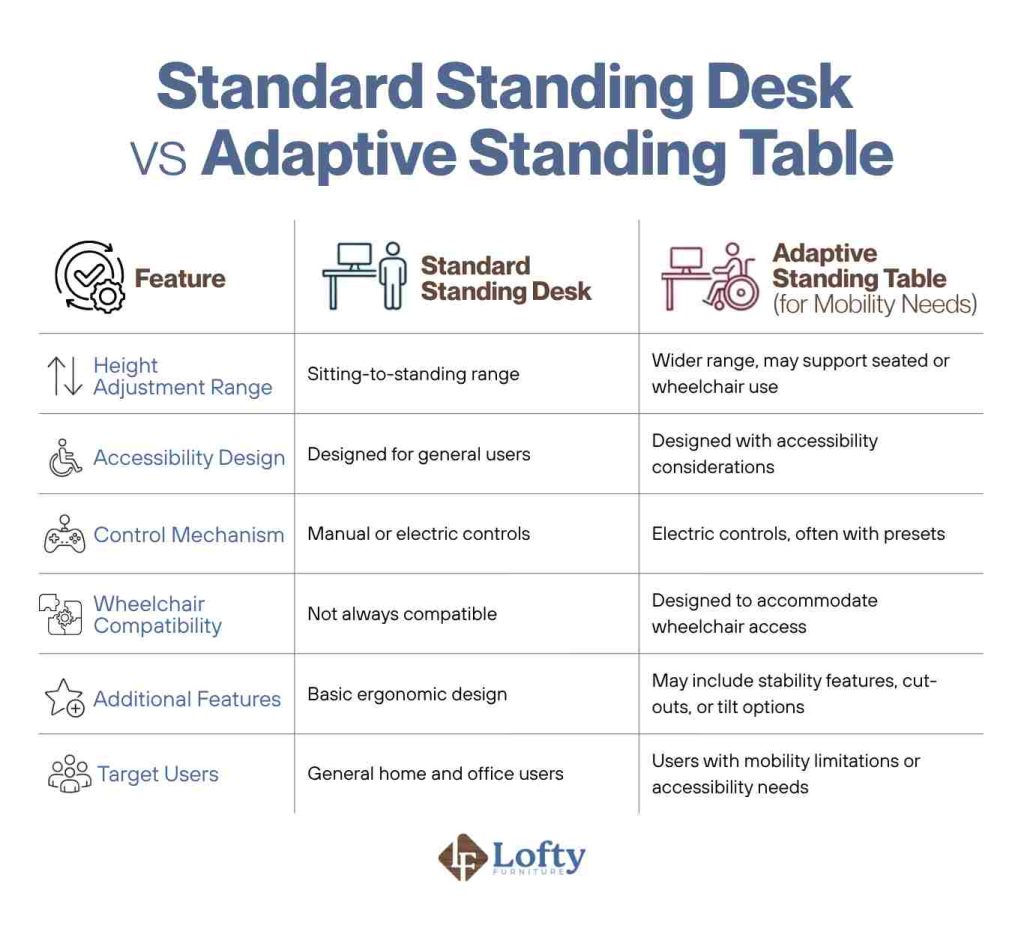
Unlike standard types of standing desks, which are typically designed for able-bodied users switching between sitting and standing, adaptive standing tables prioritize inclusivity from the ground up. They consider users with mobility impairments, cerebral palsy, spinal cord injuries, and elderly who may need additional support.
Understanding the difference between a standard standing desk and an adaptive standing table is essential when choosing equipment that truly meets diverse physical needs. Here’s a quick comparison:
Why Standing Can Make a Difference for People with Disabilities
Standing, even with support or assistance, can make a meaningful difference in daily comfort and overall well-being for individuals with disabilities. Research in Physiotherapy Canada shows that standing improves circulation, reduces muscle stiffness, and enhances quality of life over time. Beyond physical health, standing can boost productivity and confidence. A study in the Journal of Clinical Medicine found that 76.8% of users with lower limb impairments notice health benefits and report noticeable improvements in how efficiently they complete tasks.
Dr. Sarah Boss, Clinical Director at The Balance Rehab Clinic, emphasizes:
“For people with disabilities, a height-adjustable table makes a neutral activity semi-passive. Standing during work benefits the body and the mind.”
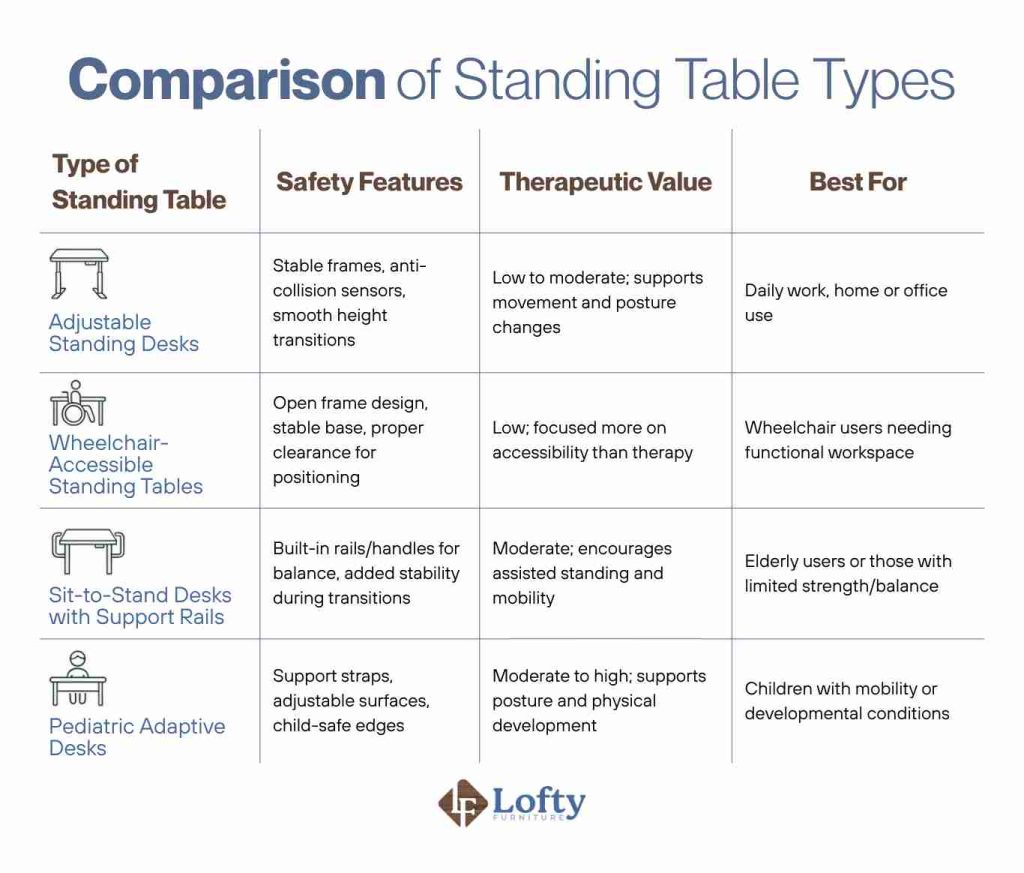
Types of Standing Tables for Disabled Users
Below are the different types of standing tables designed with a specific level of support, mobility, and therapeutic purpose in mind.
Adjustable Standing Desks
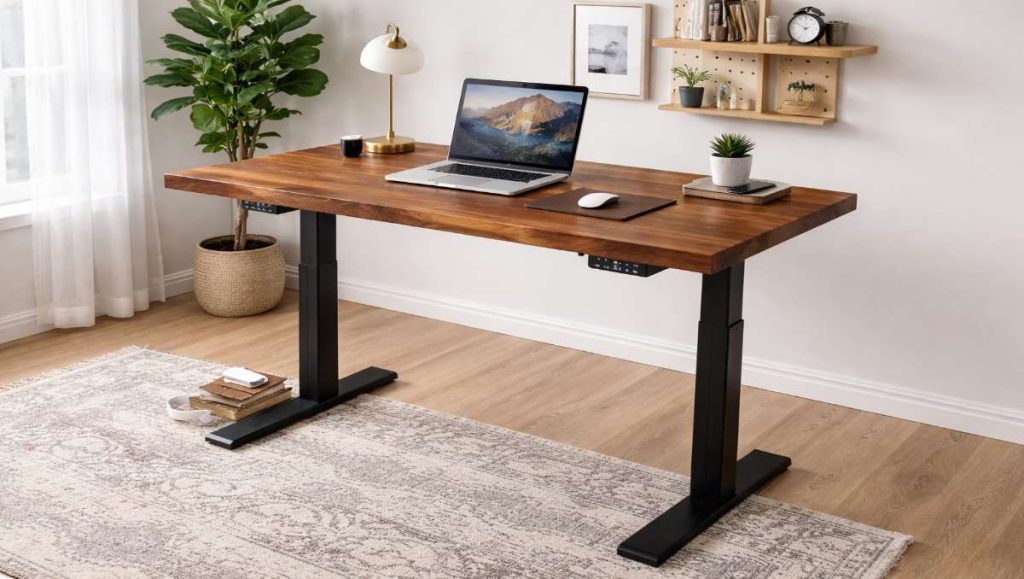
Adjustable standing desks are the most versatile option for everyday use. They allow users to move between sitting and standing with manual or electric controls. Models designed for accessibility typically offer wider height ranges and simple, low-effort adjustments, making transitions easier and more consistent.
Wheelchair-Accessible Standing Tables
These tables are built specifically for wheelchair users, with open frames, proper knee clearance, and lower minimum height settings. Some designs include cut-out surfaces for closer reach, improving comfort and usability during work or daily tasks.
Sit-to-Stand Desks with Support Rails
This type adds stability to a standard sit-stand desk by incorporating support handles or rails. It’s a practical option for users who need assistance with balance or strength during position changes, without requiring full clinical equipment.
Pediatric Adaptive Desks
Pediatric models are designed for children with mobility or developmental conditions. They often include adjustable surfaces and supportive features to promote proper posture, participation, and long-term physical development in learning environments.
Key Features to Look for in a Standing Table for Disabled Users
The right features determine whether a table feels safe, supportive, and practical in everyday life. Here’s what to prioritize and why it matters.
Adjustability, Stability, and Weight Support
A wide height range ensures the table works across sitting, supported standing, and wheelchair use without awkward positioning. Tilt functions also make it easier to read, write, or perform therapy-based activities without straining the neck or shoulders. This is especially helpful for users who spend long periods at the table or need angled support for rehabilitation.
Just as important is stability. A table that wobbles or shifts can make even simple tasks feel unsafe. The frame should remain solid throughout adjustments and support weight without flexing or feeling unstable. With the right balance of adjustability and structural support, users can transition more confidently and maintain better posture throughout the day.
Accessibility for Wheelchairs
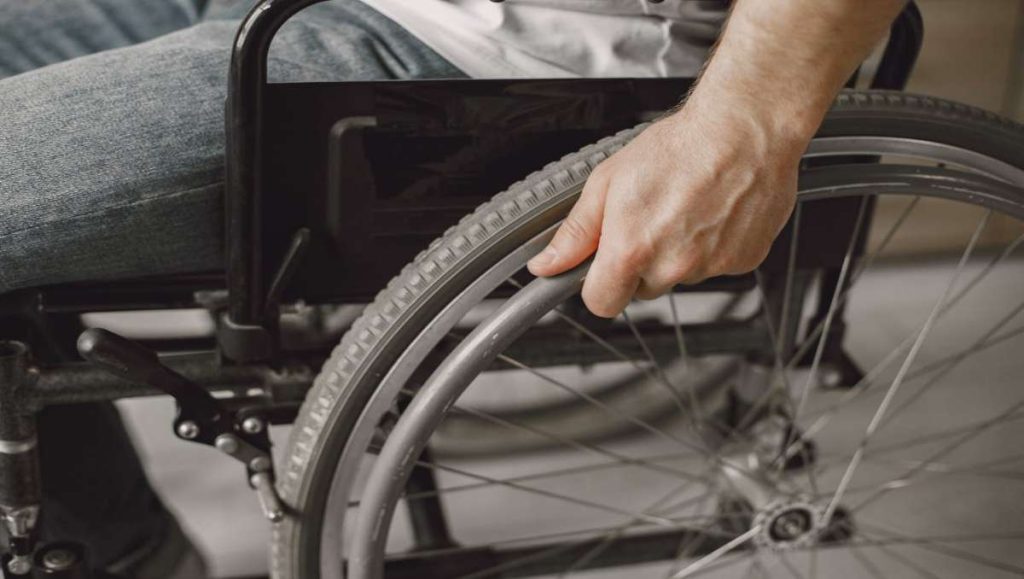
Proper knee clearance and an open frame allow wheelchair users to position themselves close enough to work comfortably, rather than reaching or adjusting awkwardly. This directly impacts independence and ease of use.
Dr. Sarah Boss notes:
“Features should be easily open and shut, stable when open and shut, and have sufficient clearance between the front edge of the table and floor for a wheelchair to pass through. The design should remove barriers rather than add them.”
Safety and Caregiver-Friendly Features
Safety is especially important for users with limited balance or reduced muscle strength. Features may include safety straps, chest or pelvic supports, footrests, anti-slip surfaces, and secure locking systems. A safe reach design can also help users approach the table without awkward transfers.
Matt Grammer, LPCC-S, founder of Therapy Trainings, advises:
“Safety is very important. The table should have adequate weight support, a safe reach design to help the user roll up, secure locking systems, and a design that allows access without awkward transfers.”
Upgrade your workspace with an Amish smart desk, handcrafted to provide the perfect blend of traditional durability and modern motorized accessibility.
Common Challenges and How to Overcome Them
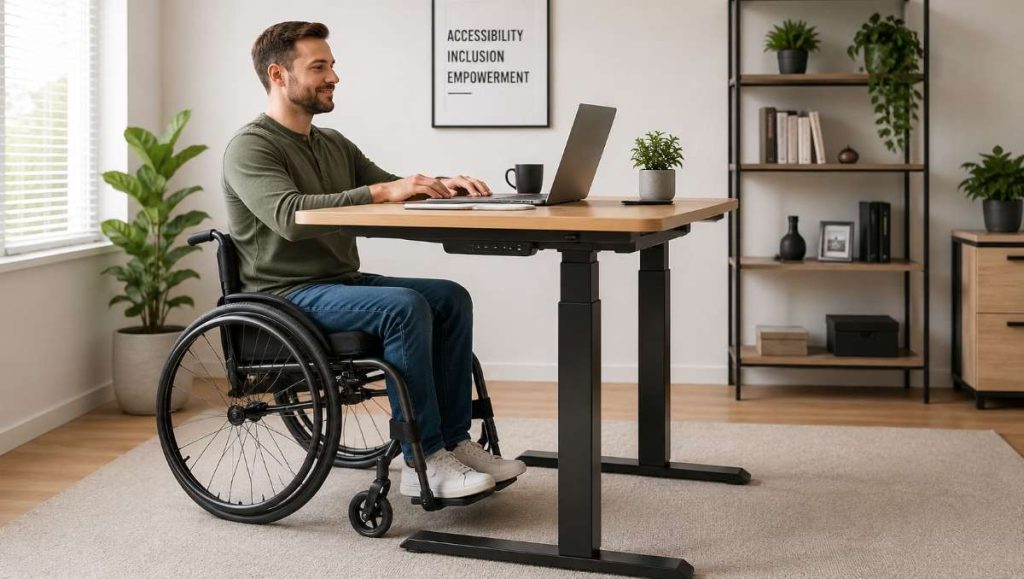
Adopting a standing table for disabled users isn’t always seamless. Many individuals face practical barriers such as high upfront costs or uncertainty about which type of table truly fits their needs. At Lofty Furniture, we’ve also seen how improper setup or lack of guidance can lead to discomfort, fatigue, or even discouragement, especially for first-time users. These challenges can make the entire process feel overwhelming, even when the long-term ergonomic and health benefits are clear.
The good news is that most of these obstacles can be addressed with the right education, setup, and expectations. Starting with a needs-based selection helps ensure the table actually supports the user’s mobility level and daily activities. We often recommend seeking input from professionals such as occupational therapists, as their guidance can significantly improve both safety and comfort. Gradually introducing standing into daily routines, rather than forcing long sessions early on, also helps build confidence and reduce strain.
Making Standing Part of Your Routine
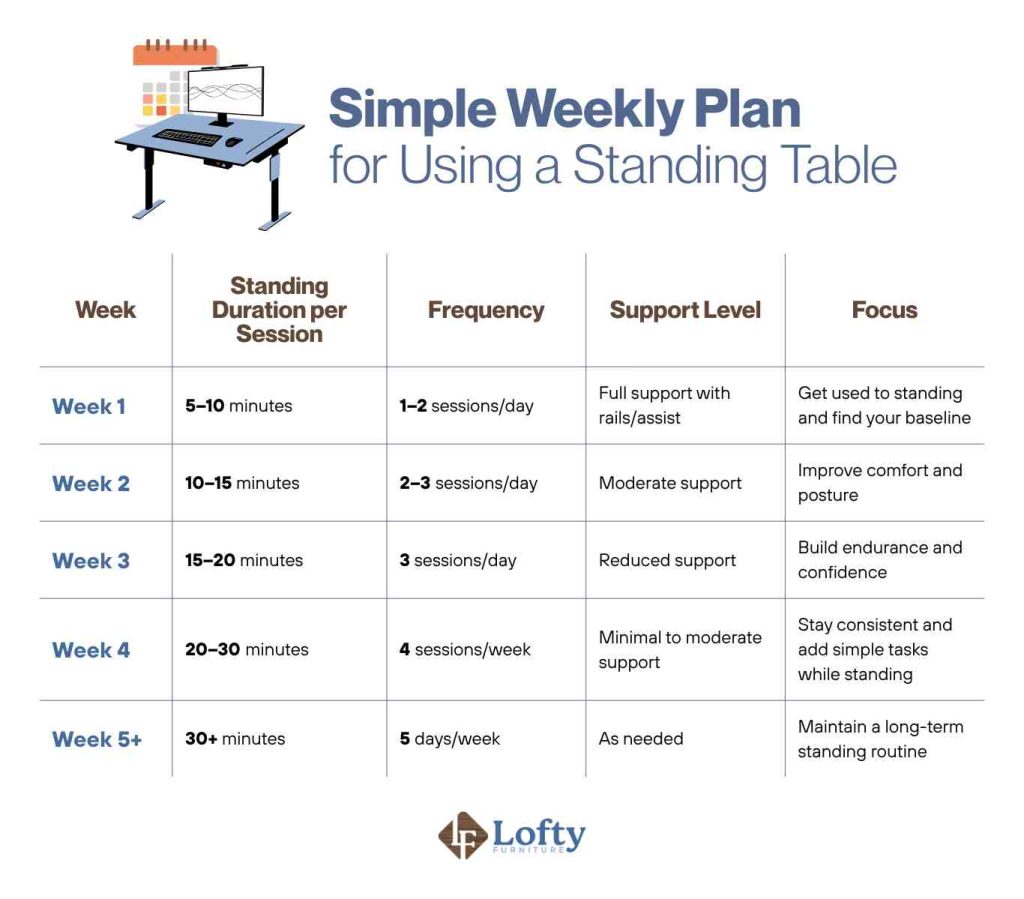
Getting used to a standing table doesn’t have to feel strict or overwhelming. For most people, easing into it works best. Start with just a few minutes at a time, then gradually increase as your body gets more comfortable. Some people work up to 30 to 60 minutes over time, but there is no need to rush. What matters most is finding a pace that feels right and sustainable for you.
Standing often feels more natural when it is part of something you are already doing. Instead of treating it like a separate exercise, try using your standing time to work, organize your space, or reach for everyday items. As occupational therapist Matt Grammer notes, routines are most effective when they are personalized, and adding meaningful activities can make standing easier to stick with. Having the right support, such as proper bracing or positioning, can also improve balance and make the experience safer and more comfortable.
To provide a bit of structure, here’s a simple weekly chart based on evidence-informed standing goals.
Final Thoughts: Why Standing Tables Are a Game-Changer
A standing table for disabled users is a transformative tool that enhances independence, comfort, and participation in daily life. By offering customizable height, tilt, and accessibility features, these tables allow users with mobility and neurological impairments, cerebral palsy, spinal cord injuries, or age-related limitations to engage safely in work, study, and rehabilitation activities.
Beyond physical benefits like improved circulation, reduced stiffness, and better posture, standing tables can also boost confidence, social inclusion, and productivity. For both home and workplace settings, they provide a practical, long-term solution that helps users reclaim control over their environment and their daily routines.
Frequently Asked Questions
Can a standing table fully replace a seated desk for disabled users?
Not always. While standing tables offer flexibility, most users benefit from a combination of sitting and supported standing throughout the day. The goal is to reduce strain and improve comfort, not to stay in one position for long periods.
Are standing tables safe to use without supervision?
It depends on the user’s condition and the table’s features. Many modern standing tables are designed for independent use, especially those with stable frames and simple controls. However, users with balance challenges or severe mobility limitations may still require supervision or additional safety support to ensure safe use.
What is the difference between a standing table and a rehabilitation standing device?
A standing table is typically designed for everyday activities like work, studying, or light tasks, with a focus on accessibility and comfort. In contrast, rehabilitation devices such as tilt tables are used in clinical settings and provide full-body support for therapeutic purposes.
Is a standing desk good for blood pressure?
Yes, using a standing desk, even a wheelchair accessible desk or adaptive one, can help improve circulation and may support healthy blood pressure levels, especially when combined with periodic movement or posture changes. Consistent use has been linked to reduced sedentary behavior, which contributes to a healthy cardiovascular system.