
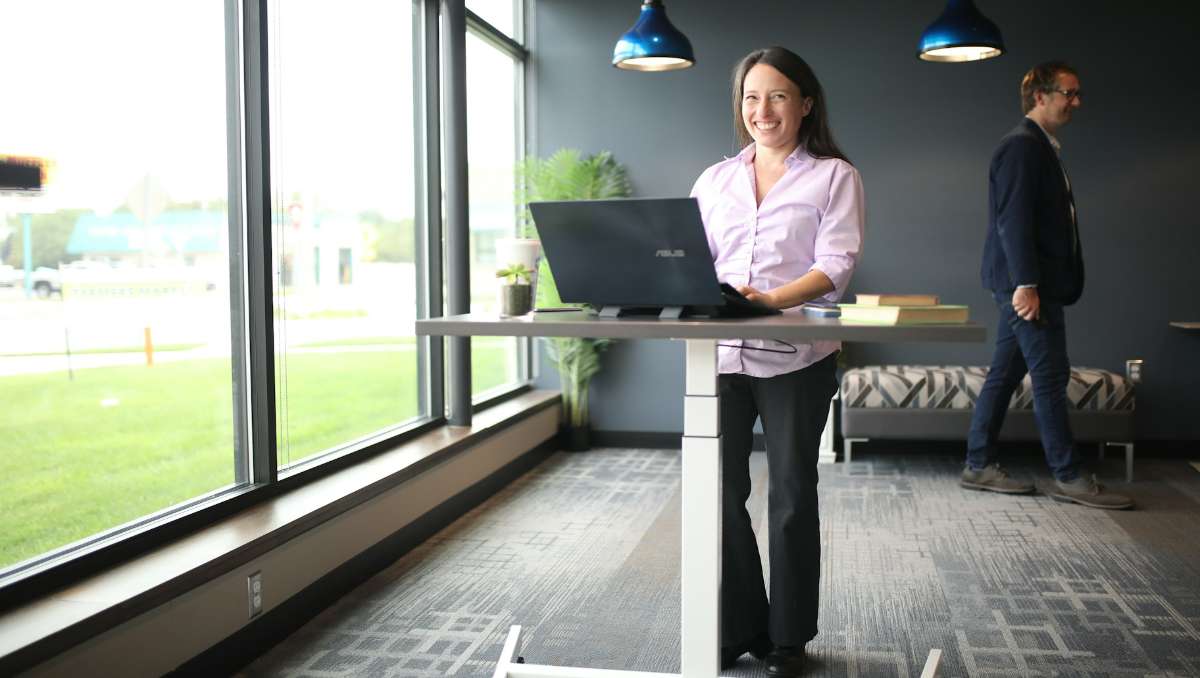
A well-designed workspace can shape how you think, focus, and perform every day. As more people shift to working from home, the need for office furniture that supports both productivity and well-being continues to rise. Not everyone wants bulky desks filled with unnecessary features, which is why many home office buyers are now turning to a minimalist standing desk.
Key Takeaways:
- A minimalist standing desk supports focus, posture, and a clutter-free workspace.
- Choosing the right type and features ensures it fits your space, workflow, and budget.
- A clean workspace and proper ergonomic setup are essential to maximize its long-term benefits.
In this guide, we’ll explore what makes a minimalist standing desk ideal for modern home offices, and how to choose one that aligns with your ergonomic needs.
What Is a Minimalist Standing Desk?
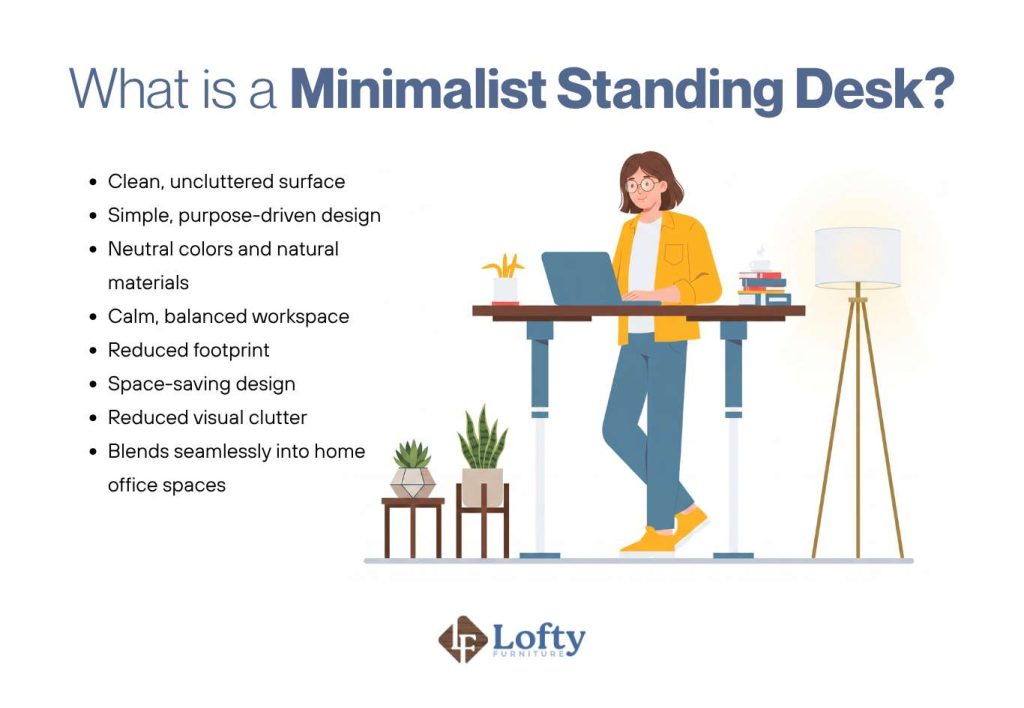
A minimalist standing desk is built around simplicity, focusing on clean design and essential function rather than extra features. It typically uses a streamlined frame, neutral tones, and materials like wood or matte steel to create a calm, uncluttered workspace that blends easily into a home office. Compared to bulkier traditional standing desks, minimalist versions are more space-efficient and visually light. They reduce unnecessary visual clutter while still supporting the core function of a sit-stand setup.
Types of Minimalist Standing Desks
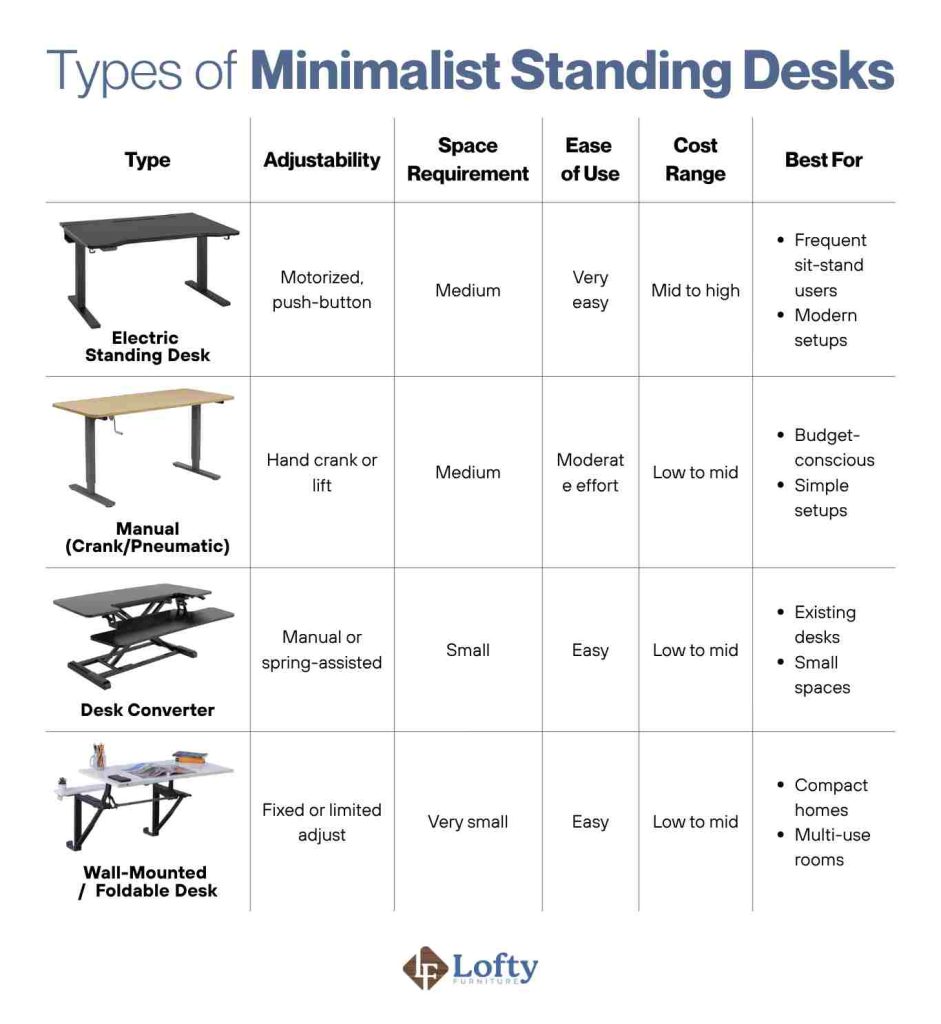
Minimalist standing desks come in a variety of designs to suit different work styles, spaces, and budgets.
1. Electric Standing Desks: Electric standing desks use a motorized system to adjust height with the push of a button. They offer smooth, precise transitions and often include preset height settings, making them ideal for users who switch between sitting and standing frequently.
2. Manual (Crank or Pneumatic) Desks: Manual desks rely on a hand crank or pneumatic lift system for height adjustments. They are typically more affordable and require no electricity, appealing to users who prefer simplicity and reliability.
3. Desk Converters (Minimalist Options): Manual standing desk converters sit on top of an existing desk, allowing you to switch between sitting and standing without replacing your entire desk set up.
4. Wall-Mounted or Foldable Standing Desks: Wall-mounted or foldable desks are designed for maximum space efficiency. These small standing desks can be folded away when not in use, making them ideal for compact homes or multi-purpose rooms.
Benefits of Choosing a Minimalist Standing Desk
A minimalist standing desk directly supports how you work, feel, and use your space every day. Below are the key benefits:
Focus and Mental Clarity
A clean, uncluttered workspace helps reduce distractions and improves concentration. Research from Princeton University found that visual clutter competes for your attention, making it harder to focus and process information efficiently. By limiting unnecessary items and keeping the surface simple, a minimalist standing desk creates a calmer environment that supports clearer thinking and more sustained productivity.
Health and Ergonomic Support
Standing desks encourage you to alternate between sitting and standing, which helps reduce the risks linked to prolonged sitting. Studies show that sit-stand workstations can improve cardio-metabolic markers such as blood sugar and cholesterol over time. Just as important is proper ergonomics, a well-designed desk should allow smooth, stable height adjustment so you can switch positions without strain, noise, or disruption. This helps reduce tension in the back, neck, and shoulders throughout the day.
What to look for: Smooth, reliable height adjustment (whether manual or electric) that transitions seamlessly between positions without jerking or noise.

Efficient Use of Space
Minimalist standing desks are especially valuable in smaller home offices or multi-purpose rooms. By removing bulky components and unnecessary features, they make it easier to maintain a functional workspace without overcrowding the room. The key is intentional design, every part of the desk should serve a purpose without adding visual or physical bulk.
What to look for: Every inch should serve a purpose without creating unnecessary bulk.
Aesthetic Simplicity and Versatility
One of the defining strengths of minimalist desks is their ability to blend into different interior styles. Neutral tones, natural materials, and clean lines allow them to complement a space rather than dominate it. For example, well-crafted hardwood designs, such as Amish adjustable desks, combine durability with timeless visual appeal, making them suitable for both modern and traditional interiors.
What to look for: Durable, clean materials like solid wood and powder-coated steel.
Durability and Practical Functionality
Even with a simple design, a minimalist standing desk should be built for long-term use. A stable frame, balanced weight distribution, and strong load capacity are essential for daily work setups. Practical features like discreet cable management also help maintain a clean look without sacrificing functionality, keeping the workspace organized and efficient.
If your standing desk is throwing an ASR error code, check out our quick troubleshooting guide to fix it in seconds and get back to work.
How to Set Up a Minimalist Standing Desk Workspace
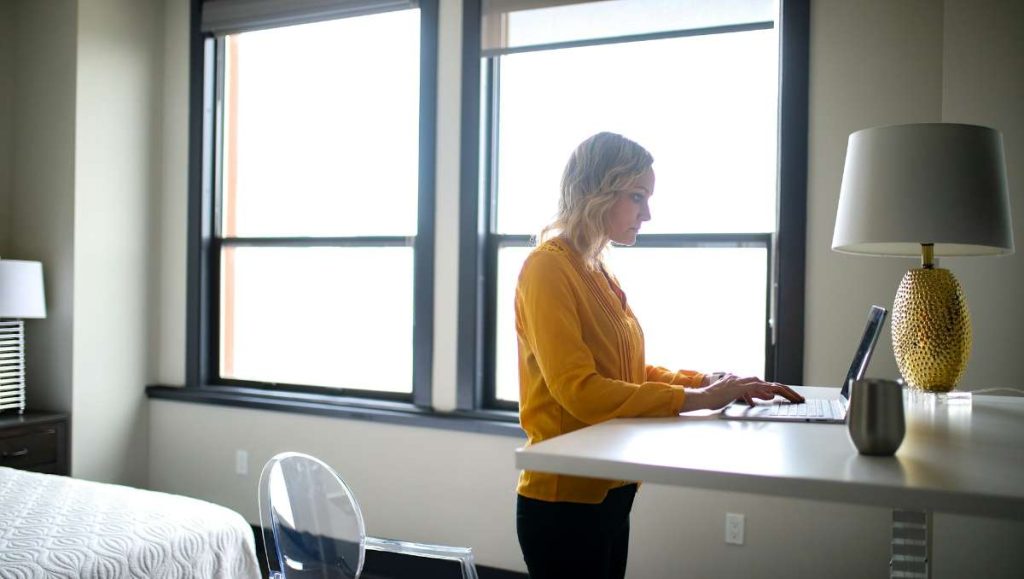
A truly effective workspace is about how you intentionally design and maintain the environment around it. We always recommend starting with a “less but better” mindset. A minimalist standing desk works best when only essential items are kept on the surface. We also encourage sticking to a cohesive color palette, such as neutral tones like white, black, beige, and natural raw wood, to help create a calm, unified workspace.
To further enhance a clean setup, we advise going wireless wherever possible. Smart use of vertical space, such as wall shelves or monitor mounts, can also free up valuable desk surface while keeping essentials within reach. Finally, taking just a few minutes at the end of each day to clear your desk ensures your minimalist standing desk remains functional and visually clean.
💡 Pro Tip
Minimalism should never come at the cost of comfort. Your monitor height, chair support, and standing posture should all be properly aligned to prevent strain and ensure long-term health while working.
What a Minimalist Standing Desk for Your Home Office Usually Costs
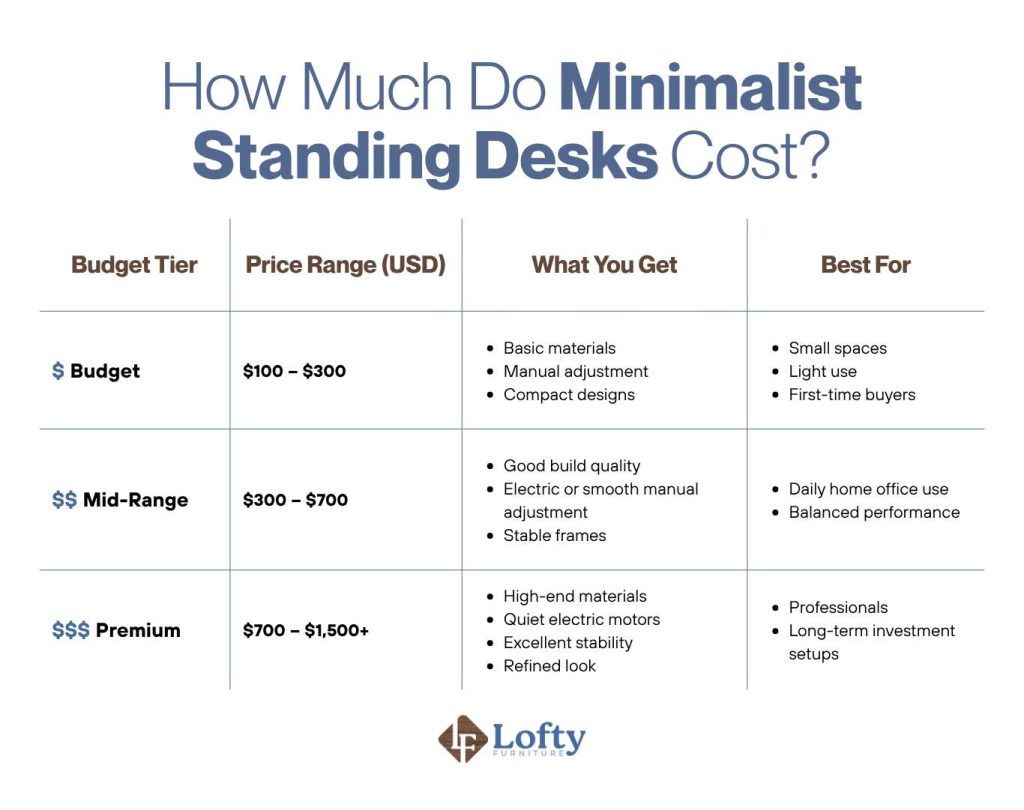
When shopping for the best standing desk, your budget will largely depend on the type, materials, and adjustment range you choose. Entry-level options are typically more affordable but may use lighter materials or manual adjustment systems. Mid-range desks often strike the best balance, offering improved durability and cleaner finishes that align well with minimalist design. Higher-end models, on the other hand, feature premium materials, advanced electric systems, and enhanced stability for long-term use.
In our experience at Lofty Furniture, investing slightly more upfront often leads to better performance and longevity. However, a well-chosen desk at any price point can still meet your needs if it aligns with your space and workflow. The key is understanding what features matter most to you and prioritizing accordingly.
To help you make a more informed decision, the chart below outlines typical price ranges and what you can expect at each budget tier when choosing a minimalist standing desk.
Upgrade your setup by pairing your standing desk with the Greystone minimalist ergonomic desk chair, designed to provide seamless lumbar support without cluttering your aesthetic.
Final Thoughts: Is a Minimalist Standing Desk Right for You?
A minimalist standing desk is a practical investment in focus, comfort, and long-term productivity. By reducing visual clutter and encouraging better posture through sit-stand flexibility, it helps create a workspace that supports both mental clarity and physical well-being. For many home office users, especially those working in smaller or shared spaces, its compact and clean design makes it an ideal solution that adapts easily to different lifestyles and work habits.
If you value simplicity, functionality, and a clean aesthetic, then a minimalist standing desk setup is absolutely worth considering. Ultimately, the best choice is one that fits your daily routine, supports your health, and helps you stay focused on what matters most.
Frequently Asked Questions
Are minimalist standing desks durable enough for daily use?
Yes, when built with quality materials and a stable frame, minimalist standing desks are more than capable of handling daily use. The key is choosing solid construction, whether it’s reinforced steel legs or durable wood surfaces, rather than focusing on appearance alone.
What size minimalist standing desk is best for a small home office?
For small office ideas, desks around 40 to 48 inches wide typically offer a good balance between functionality and space efficiency. This size provides enough room for essential items while maintaining a compact footprint that fits comfortably in tighter areas.
Do minimalist standing desks support dual monitors?
Many do, especially mid-range to premium models with higher weight capacities. Using a monitor arm can also help maximize space and maintain a clean, minimalist look while supporting dual monitor setups effectively. Learn more here about dual motor standing desks.
How do I hide power strips and cables on a desk with a thin, minimalist profile?
Use under-desk cable trays, adhesive clips, or mounted power strips to keep wires out of sight. Choosing wireless accessories where possible and routing cables along the desk frame can also help maintain a clean and uncluttered appearance.
Is it best to use standing desks for home office use?
Yes, especially height-adjustable models that let you alternate between sitting and standing throughout the day. This flexibility helps offset the extended sedentary time common when working from home.
Is standing desk actually healthy?
Yes, but the benefit comes from movement, not standing still. Research shows sit-stand desks can reduce back and neck pain and improve energy levels. However, standing all day carries its own risks. The healthiest approach is alternating positions regularly and taking short walking breaks.