

Choosing a desk for studying seems simple until you actually sit down and try to focus for hours. A desk that is too high can leave shoulders aching, while one that is too small quickly turns into a cluttered mess of books, laptops, and notes. That is why understanding student desk dimensions matters far more than most people realize. The right desk size can make studying more comfortable, improve posture, and even help students stay productive for longer periods.
Key Takeaways:
- Most student desks fall within standard size ranges of 24 to 48 inches wide, 18 to 30 inches deep, and 28 to 30 inches high.
- The ideal desk dimensions depend on the student’s age, height, and study needs.
- A comfortable study setup requires the right desk size, proper ergonomics, adequate legroom, and a well-matched desk chair.
Why Desk Dimensions Matter for Students
Desk dimensions directly affect how comfortably and efficiently a student can study. A properly sized desk promotes good ergonomics by keeping the arms, shoulders, and back in a natural position. The right desk size also supports a healthy writing posture, providing enough surface area to position things comfortably without forcing awkward arm or wrist angles.

For students who use computers, appropriate desk depth helps maintain the recommended screen distance, reducing the need to lean forward or sit too close to the monitor. This, in turn, can help minimize eye strain and neck discomfort during extended screen time. When students have enough room to work comfortably, they are more likely to stay focused, productive, and less fatigued throughout their study sessions.
Standard Student Desk Dimensions Guide
While desk sizes vary depending on age and purpose, most student desks follow a few standard measurements.
Width
Student desk widths generally range from 24 to 48 inches. Younger children often need only 24 to 30 inches of width, while older students and college learners benefit from desks that are at least 40 inches wide to accommodate laptops, textbooks, and notebooks.
Depth
Desk depth usually falls between 18 and 30 inches. A desk depth of 20 to 24 inches works well for most students because it provides enough room for writing and computer use without taking up excessive floor space.
Height
The standard desk height for older students and adults is around 28 to 30 inches. Younger children typically require lower desks that range from 20 to 27 inches depending on their height.
Leg Clearance
A comfortable desk should provide at least 24 inches of leg clearance in width and around 18 inches in depth. Adequate legroom allows students to shift positions naturally and avoid feeling cramped.
Knee Space
Most students need approximately 18 to 20 inches of vertical knee space under the desk. This ensures enough room for comfortable seating and proper posture throughout extended study periods.
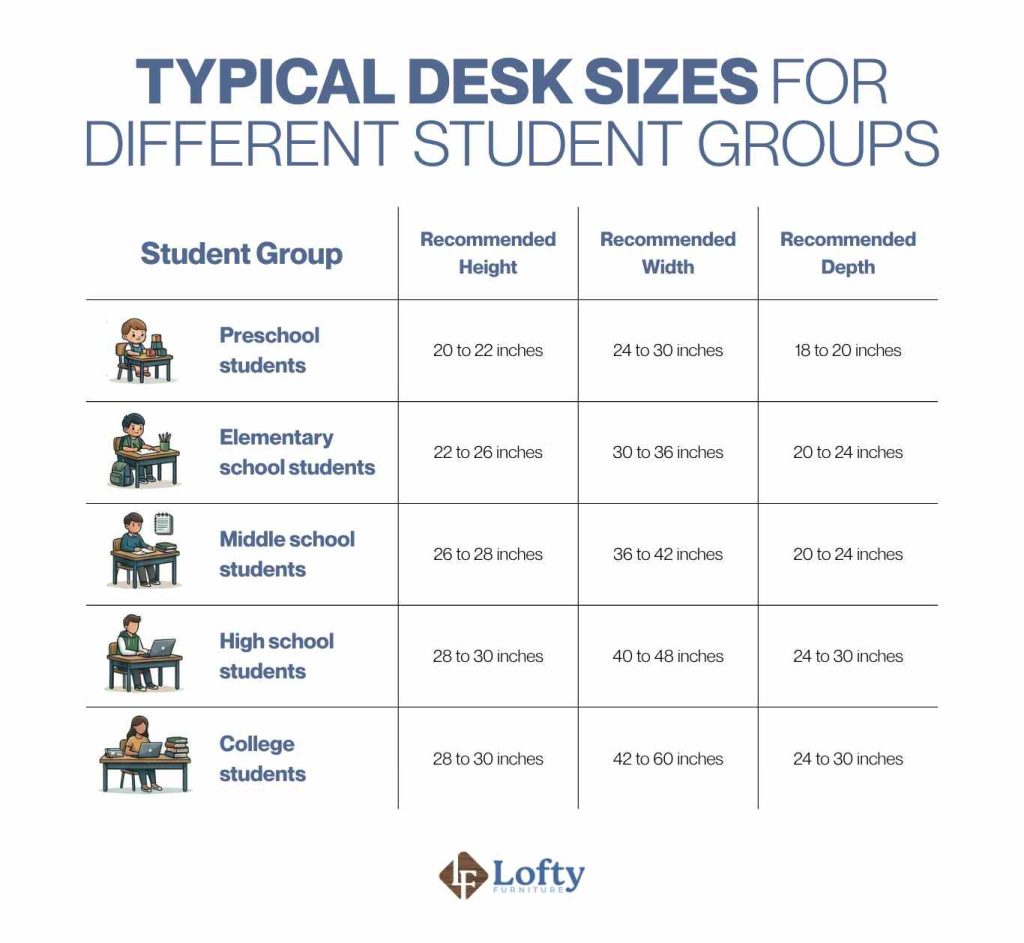
Different age groups have different physical needs, which is why desk dimensions often change as students grow. The table below offers general recommendations for common student age ranges.
How to Choose the Right Desk Dimensions Based on Student Age and Height
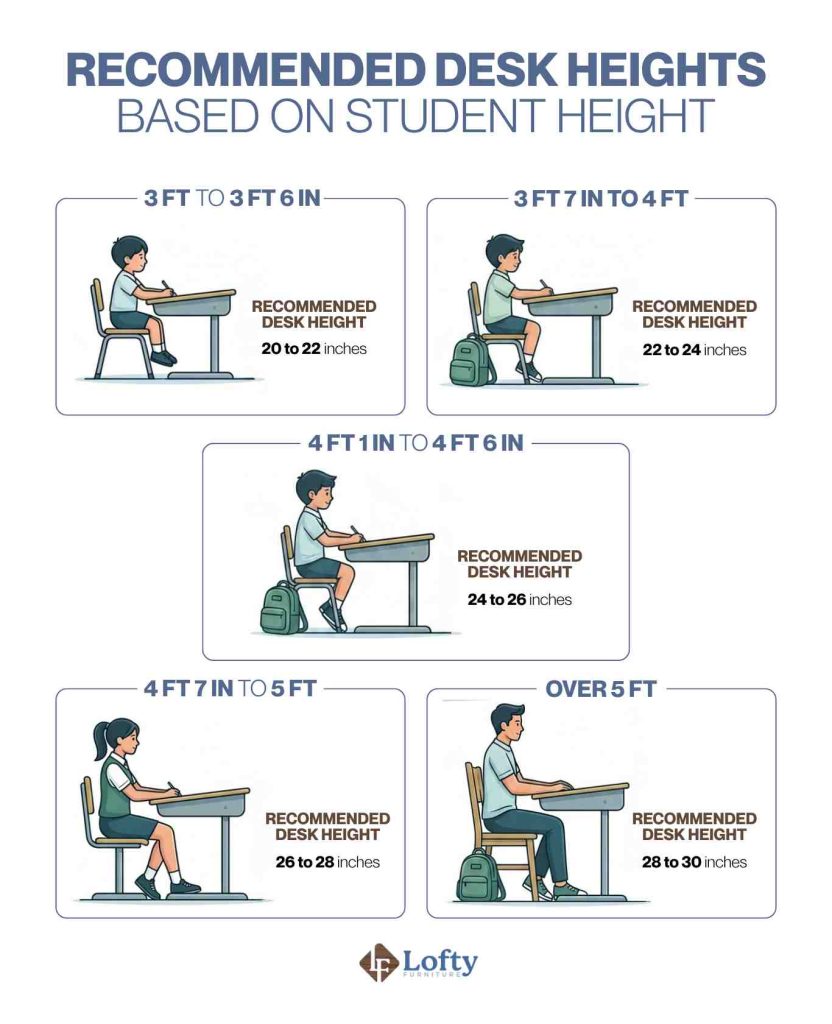
Choosing the right student desk starts with finding a size that matches the student’s height. While age can be a helpful guide, height is usually a better indicator because children grow at different rates. Before buying a desk, measure the student’s height and check that. When seated, the elbows should rest comfortably on the desktop, their shoulders stay relaxed, and their feet are flat on the floor.
The chart below can help you choose an appropriate desk height based on the student’s height.
Once you’ve chosen the right desk size, these ergonomic tips can help create a more comfortable study space:
- Maintain proper sitting posture: Sit with your back fully supported by the chair, shoulders relaxed, and elbows bent at about 90 degrees while writing or typing. The best way to sit on the chair provides better spinal support than sitting on the edge.
- Match the desk and chair height: The desk and chair should work together. Forearms should rest comfortably on the desktop without raising or lowering the shoulders. If the desk is too high, raise the chair and use a footrest so the feet remain supported.
- Position books and screens correctly: Keep books, tablets, and monitors about 18 to 28 inches from the eyes. Computer screens should be at or slightly below eye level, and frequently used supplies should be within easy reach to reduce unnecessary stretching or twisting.
- Support the feet and legs: Feet should rest flat on the floor or on a footrest, with enough space under the desk to move the legs comfortably. Proper leg support helps improve circulation and makes it easier to stay comfortable during longer study sessions.
Adjustable Student Desks: Are They Worth It?
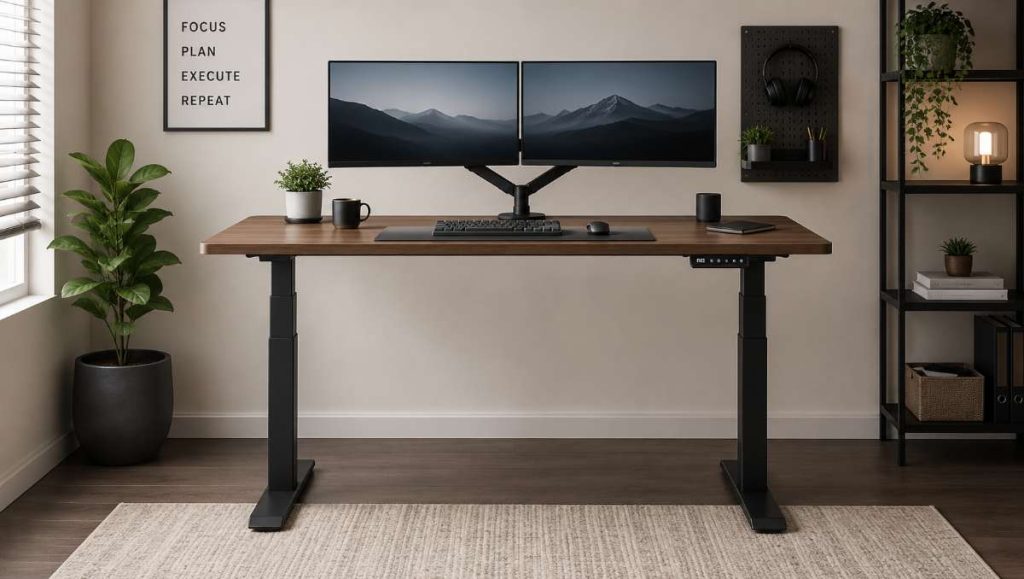
Adjustable student desks are designed to change height as a child grows, and some models also feature tilting desktops and other ergonomic enhancements. Because they adapt to different stages of development, they can provide excellent long-term value and reduce the need to replace furniture every few years. The biggest advantages are flexibility, improved ergonomics, and extended usability.
However, adjustable desks are not always the best investment. They typically cost more than standard desks and may require occasional maintenance to keep the adjustment mechanisms working smoothly. They may also be unnecessary if the desk will only be used for a short period.
For growing children or families looking for a long-term solution, an adjustable student desk is often worth the higher upfront cost. For older students with stable furniture needs or tighter budgets, a well-sized fixed-height desk can be a more practical and cost-effective choice.
Ready to upgrade your study sessions? Swap your cramped setup for a two leg lift desk to effortlessly switch between sitting and standing for better focus and energy.
Final Thoughts: Finding the Ideal Student Desk Dimensions for Long-Term Comfort
The right student desk dimensions can make a surprising difference in a student’s comfort, focus, and productivity. Width, depth, desk height, and legroom all play important roles in creating a workspace that supports healthy study habits.
When choosing a desk, think beyond the student’s current age. Consider future growth, intended use, and whether the desk needs to accommodate computers, textbooks, or multiple activities. Measuring both the student and the available room before purchasing is the best way to find a desk that will remain comfortable for years to come.
Frequently Asked Questions
What is the standard height of a student desk?
The standard height of most student desks ranges from 28 to 30 inches (71 to 76 cm). However, the ideal height depends on the student’s age, height, and chair size. Younger children typically need shorter desks, while teens and college students are usually comfortable with standard adult desk heights.
How much desk space does a student need for a laptop and books?
For comfortable studying, a desktop that is at least 36 to 48 inches wide and 20 to 24 inches deep is recommended. This provides enough room for a laptop, textbooks, notebooks, and other study materials without making the workspace feel cramped.
Are adjustable desks better for growing children?
Yes. Adjustable desks can be an excellent investment for growing children because the height can be changed as the child grows. This helps maintain proper ergonomics over time.
How much clearance should there be under a student desk?
A student desk should generally provide at least 24 inches of width, 18 to 20 inches of depth, and 24 to 27 inches of height for knee and leg clearance. Adequate under-desk space allows students to sit comfortably, move their legs freely, and maintain proper posture while studying.